Last updated September 25, 2026
Italy
11-Day Northern Italy Road Trip from Milan: Lake Como, the Dolomites & Lake Garda
Eleven days, five bases: one night in Milan, two in Varenna, four in Ortisei, two in Malcesine and one in Verona. The idea is fewer bases and deeper stays — two nights on Lake Como with the car parked and the ferries doing the work, four in Val Gardena so the Dolomites get real days rather than one frantic pass drive, two on Lake Garda for a slow lake day, and Verona to finish, where the car goes back. That is where the time Venice and Florence would take goes instead. The route runs one way and never doubles back: north to Como, east past Bergamo, up the Adige into the Dolomites, down to Garda's northern tip and on to Verona. Only two days put three hours or more behind the wheel; one more is a full day of mountain driving, and the rest are deliberately light. Two things to settle before you book: the day numbers are an order, not a fixed schedule — reorder Days 5–7 according to the mountain weather — and fly home from Verona rather than Milan, which is what keeps the last day relaxed.
Quick facts
- Duration
- 11 days
- Pace
- Balanced
- Best time to go
- June to September
Route map
Trip overview
| Day | Region | Main highlights | Book ahead | Pace |
|---|---|---|---|---|
| Day 1 | Milan, on Foot | Duomo di Milano and the roof terraces | Duomo di Milano and the roof terraces | Relaxed |
| Day 2 | Collect the Car, Then Park It on Lake Como | Pick up the car at Milano Centrale; Drive up to Varenna and park for two days; Villa Monastero and its garden terraces | — | Packed |
| Day 3 | Lake Como by Boat | Ferry across to Bellagio; Villa Carlotta at Tremezzo | Optional: Villa del Balbianello, if the boats line up | Balanced |
| Day 4 | East to the Dolomites, With Bergamo on the Way | Bergamo Città Alta; The drive to Ortisei | — | Balanced |
| Day 5 | Alpe di Siusi, the Slow Way Up | Ride the gondola up to Mont Sëuc; Walk the plateau toward Compatsch | — | Balanced |
| Day 6 | Seceda's Ridge, and Val di Funes If You Want It | Seceda by cable car from Ortisei | Seceda by cable car from Ortisei | Relaxed |
| Day 7 | Four Passes Around the Sella | Passo Gardena; Passo Campolongo and Passo Pordoi; Passo Sella and back down | — | Packed |
| Day 8 | Down the Dolomites Road to Lake Garda | Passo Costalunga and Lago di Carezza; Down to Riva del Garda; The eastern shore road to Malcesine | — | Packed |
| Day 9 | A Lake Day, On Purpose | Monte Baldo by rotating cable car; Cross to Limone sul Garda | — | Balanced |
| Day 10 | Sirmione, Then Verona | Rocca Scaligera, Sirmione; Grotte di Catullo and the point; Verona: the Arena and Piazza Bra | — | Packed |
| Day 11 | Verona, and Home | Castelvecchio and the Ponte Scaligero; The drive out | — | Balanced |
Transportation & practical information
A self-drive trip with two deliberate exceptions at the start. Day 1 in Milan runs on foot and on the metro, and the car is collected on Day 2 morning from a rental office at Milano Centrale: the station is outside Area C, Milan's weekday congestion charge, and the road north from there to Lecco doesn't enter it — confirm the same holds for the office you actually book. On Lake Como the car stays at the hotel in Varenna for two days while the ferries between Varenna, Bellagio and the western shore do the moving. From Bergamo eastward the car does everything. Italy drives on the right, the A4 and A22 motorways are ticket-and-barrier tolls, and most historic centres on this route are limited-traffic zones: for this route the simplest option is to park outside and walk in, whatever the satnav suggests, unless your hotel has registered the car for access.
A car is what Days 4 to 11 are built on — the Dolomite passes, Val di Funes, the Gardesana Orientale and the run down to Sirmione have no realistic alternative at this pace. Days 1 and 3 don't need it at all, and Day 2 only for the transfer up to Varenna, which is why it is picked up on Day 2 morning rather than on arrival. A small or mid-size car is much easier on the hairpins, the rock tunnels of the Garda shore and the tight hotel garages of the old towns than anything larger. This trip drops the car in Verona rather than back in Milan, so check the one-way drop-off fee before booking, as it can materially change the rental cost.
Day-by-day itinerary
Day 1: Milan, on Foot
A deliberately car-free first day: the rental waits until tomorrow morning, and a jet-lagged afternoon runs on the metro instead of a one-way system. One real stop — the cathedral and its roof — and an evening down by the canals.
Arriving late, or would rather start driving today? Collect the car at the airport instead and go straight to Varenna: it turns Day 2 into a full lake day and drops Milan from the trip altogether.
Tonight: Milan, within walking distance of the Duomo
- Midday · Optional
Arrive, and leave the car for tomorrow
Whichever airport you land at, come into the city by train or bus — both Malpensa and Linate connect to the centre. Check in, drop the bags, and take the metro rather than a taxi: the M3 line runs Centrale to Duomo in about ten minutes. There is nothing to schedule today beyond the cathedral roof, and that is on purpose.
- Afternoon
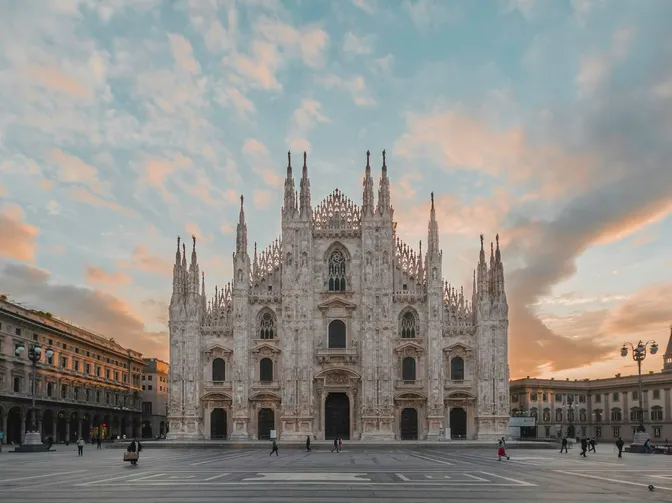
Duomo di Milano and the roof terraces
15 min from the previous stop
Book a timed slot before you leave home, and make it mid-afternoon rather than late — the terraces stop admitting people well before the cathedral closes, and a slot that looks like early evening on the booking page isn't one. The interior is worth twenty minutes; the roof is the reason to come. Take the stairs rather than the lift if your legs are up to it — it costs less and puts you out among the flying buttresses rather than above them. Allow two hours for both, then leave through the Galleria Vittorio Emanuele II next door instead of doubling back; it points you toward the rest of the evening.
Time here: 2 hr
- Evening · Optional
The Navigli canals in the evening
20 min from the previous stop
About twenty minutes south-west to Porta Genova — three stops on the M1 to Cadorna, then two on the M2 — and the Naviglio Grande is where Milan stops being a business city after dark. Walk the towpath outward from the Darsena basin and choose somewhere for the aperitivo hour by looking rather than researching; my rule here is that the places with tables out and a crowd standing around them are usually the ones to trust. Skip it entirely if the flight has flattened you; nothing later in the trip depends on it.
Time here: 1 hr 30 min
Day 2: Collect the Car, Then Park It on Lake Como
The driving day that isn't. Roughly an hour and a half gets you from Milano Centrale to Varenna, and then the car goes into the hotel's space and stays there until the morning of Day 4. Varenna is the base rather than Bellagio or Como town for a specific reason: the ferry pier, the station and one of the lake's best gardens all sit within a few hundred metres of each other, so nothing here needs wheels.
Arriving on a Tuesday in spring or autumn? Villa Monastero's house museum is closed that day, but the garden stays open, and the garden is the reason to go — buy the garden-only ticket and you lose nothing. If you'd rather climb than stroll, walk up to Castello di Vezio instead: twenty minutes of steps above the village to a ruined tower looking straight down on the point where the lake forks.
Tonight: Varenna, Lake Como (two nights)
- Morning
Pick up the car at Milano Centrale
Take the earliest slot you can book, and check the office's opening hours — they vary by company. Picking up here rather than at a downtown branch keeps you out of Area C on the way north to Lecco. Check the fuel policy and photograph the bodywork before you leave the bay; arguments at drop-off are usually about a scratch nobody wrote down.
Time here: 45 min
Compare car rental prices - Midday
Drive up to Varenna and park for two days
1 hr 20 min from the previous stop
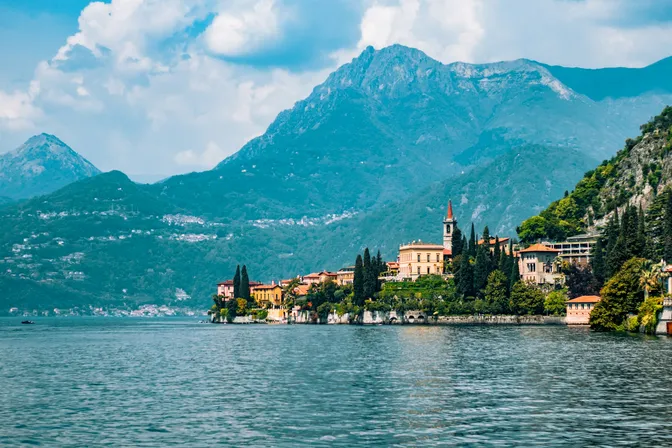
About an hour and twenty on the SS36 up the eastern side of Lake Lecco, more if Milan's ring roads are slow, and the last stretch is the good part — the road runs under the Grigna massif with the water directly below, and the lake opens out at Varenna. Parking should already be settled with your hotel: Varenna's own spaces are few and mostly resident-only, and the public lots above the village fill by mid-morning in summer. Once the car is in, you're done with it until Day 4.
Time here: 1 hr
- Afternoon
Villa Monastero and its garden terraces
10 min from the previous stop
Ten minutes on foot from the centre along the lakeside path. The house museum is a furnished nineteenth-century interior and pleasant enough, but the reason to come is the botanical garden strung out along the water for the best part of two kilometres — cypress, agave, citrus and a run of statues and follies, with the lake a couple of metres below you the whole way. The garden-only ticket is enough if interiors don't appeal. Give it an hour and a half and take the far end slowly; the path stays level the whole way, and the second half is the quieter half — don't turn back at the first pavilion.
Time here: 1 hr 45 min
- Evening · Optional
Passeggiata degli Innamorati at dusk
10 min from the previous stop
The walkway pinned to the rock between the ferry pier and the old village, a short walk from anywhere in Varenna. It takes ten minutes to walk and most people do it twice. Come back up into the village afterward — the stepped lanes behind the waterfront are where Varenna keeps its restaurants, and nothing is more than a few minutes from anything else.
Time here: 1 hr
Day 3: Lake Como by Boat
No driving at all today, and the one day on the route that runs on someone else's timetable. The plan is Bellagio in the morning and Villa Carlotta in the afternoon, a short ferry hop apart, then the boat home to Varenna — a complete day on its own. Villa del Balbianello is an optional extension for when the sailings line up, not part of the core plan. Build the sequence from the ferry timetable for your exact date before you set off. This is the day that justifies basing on the eastern shore.
Bellagio and Villa Carlotta are the day; Balbianello is the extra, added only if it is open on your date, you have booked, and the boats line up. If Balbianello matters more to you than Carlotta, swap them rather than trying to fit both into a tight timetable.
Tonight: Varenna, Lake Como
- Morning
Ferry across to Bellagio
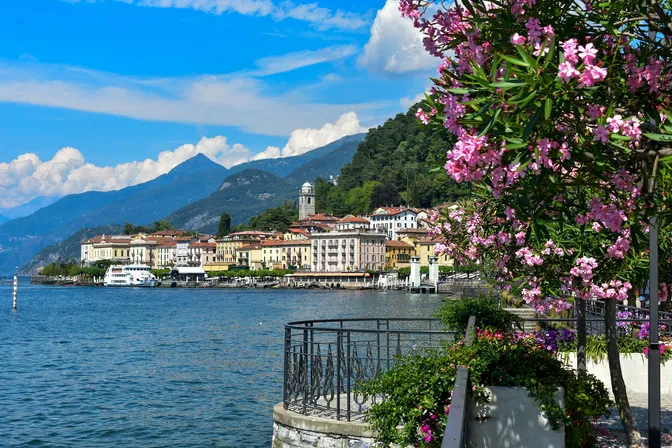
Take an early boat; it is a short crossing and the early sailings are usually the quietest. Bellagio earns its reputation in the stepped lanes climbing from the waterfront — Salita Serbelloni and its neighbours — which take about an hour to wander properly. Then walk north to Punta Spartivento, ten to fifteen minutes to the tip of the promontory where the lake splits into its two southern arms, with a small bar, a bench, and a view straight up both branches. Be back at the pier by late morning.
Time here: 3 hr
- Afternoon
Villa Carlotta at Tremezzo
30 min from the previous stop
Another short hop west to Cadenabbia or Tremezzo, and the villa gate is a few minutes' walk from either landing. Villa Carlotta is a seventeenth-century house holding a nineteenth-century art collection, with around eight hectares of terraced garden climbing behind it — rhododendrons and azaleas if you catch late spring, tree ferns and bamboo at any time. Allow two hours for the garden and a walk through the house. From here the boat back to Varenna finishes the day.
Time here: 2 hr
- Evening · Optional
Optional: Villa del Balbianello, if the boats line up
30 min from the previous stop
An extension, not part of the plan. It is the best thing on the western shore and also the stop most easily wrecked by a timetable, so before you commit, check two things: the sailings on to Lenno, and — the one that actually catches people — the last boat back to Varenna. If either doesn't work, skip it; Bellagio and Carlotta have already made a full day. If they do: one more stop south at Lenno, then either a taxi boat around the headland or a level walk of about twenty minutes through the woods from Lenno's waterfront. Balbianello is the one on the promontory, with the loggia between two stretches of water that turns up in half the photographs ever taken here. Its opening days change through the season, and both the gardens and the guided interior tours have to be booked for a specific date in advance.
Time here: 2 hr
Day 4: East to the Dolomites, With Bergamo on the Way
One of the trip's two long driving days — around four hours behind the wheel in total — and worth planning around rather than resenting. Bergamo's walled upper town sits close enough to the natural route that the stop costs little extra driving, and it breaks the day neatly in two. Leave Varenna early, give Bergamo the late morning, then let the motorway do most of the work: the A4 and the A22 Brennero north through Verona and Trento to Bolzano, with a slower, scenic climb into Val Gardena at the end.
If the drive worries you, the fix is an earlier start rather than cutting Bergamo — the time goes on the stop, not the detour. What you can cut is the tail: Bolzano makes a decent overnight if you'd rather split the day, at the cost of an evening in the mountains. The A4 and A22 around the Verona junction can back up badly on summer weekends, so a weekday is generally the better day for this drive if your dates allow it.
Tonight: Ortisei, Val Gardena (four nights)
- Morning
Bergamo Città Alta
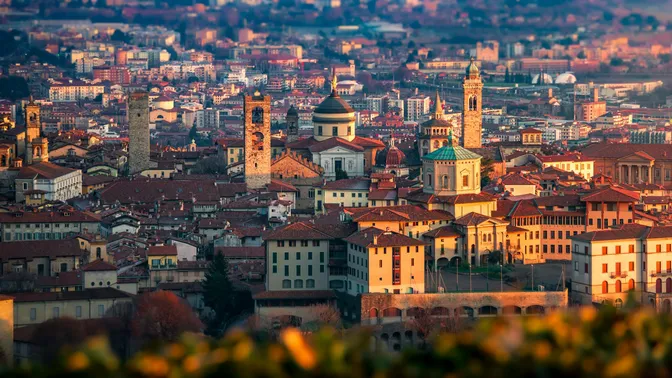
Around an hour and ten from Varenna. Park in the lower town and take the funicular up rather than driving in — the upper town is a limited-traffic zone, and the funicular is the nicer way to arrive anyway. Two hours is enough: Piazza Vecchia with the Palazzo della Ragione and the Contarini fountain, the Colleoni Chapel's extravagantly carved facade next door, and a walk along a stretch of the sixteenth-century Venetian walls that ring the whole town. If you do one thing, sit in Piazza Vecchia for twenty minutes rather than crossing it — every side of the square is a different century and none of them argue.
Time here: 2 hr 30 min
- Evening
The drive to Ortisei
3 hr 5 min from the previous stop
Roughly three hours from Bergamo, almost all of it motorway: the A4 east past Brescia and Verona, then the A22 Brennero north up the Adige valley through Trento and Bolzano. The scenery starts earning its keep from Trento onward, with terraced vineyards and the first real rock walls closing in. Leave the motorway at Chiusa or Bolzano Nord and climb into Val Gardena — the last half hour or so is steep hairpins out of the Isarco valley, slower than the satnav suggests behind summer traffic, and Ortisei appears in a bowl of meadow with the Odle ridge standing behind it. Four nights here, which means unpacking once.
Day 5: Alpe di Siusi, the Slow Way Up
A vast rolling meadow at around two thousand metres sits directly above Ortisei, and the gondola from the middle of the village goes straight up to it — which neatly sidesteps a road that is closed to visitors' cars for most of the day and car parks that now have to be booked. This is the easy day of the three: one lift, a long flat walk at altitude, and an afternoon back in the village.
Low cloud on the plateau? The gondola runs anyway, but there is nothing to see up there, and this is the day to swap out. Drive the forty minutes down to Bolzano instead for the archaeological museum and Ötzi the Iceman, and move Alpe di Siusi to whichever of the next two days looks clearest — that flexibility is exactly why this base gets four nights.
Tonight: Ortisei, Val Gardena
- Morning
Ride the gondola up to Mont Sëuc
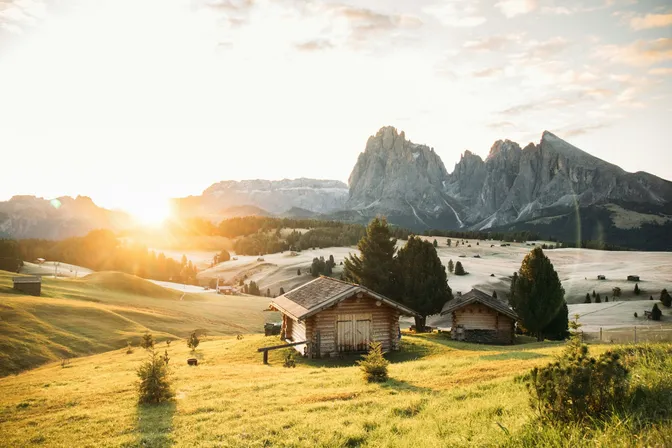
The valley station is in the middle of Ortisei, walkable from most of the village, and it runs from 08:30. Going early matters more for light and space than for queues. The ride takes a few minutes and puts you out at Mont Sëuc on the northern edge of the plateau. Take twenty minutes at the top station before walking anywhere — the Sassolungo and the Sciliar are both in front of you, and the shape of the day makes more sense once you've looked at them properly.
Time here: 1 hr
- Midday
Walk the plateau toward Compatsch
1 hr 30 min from the previous stop
Three or four hours of very easy walking on gravel farm tracks, almost all of it level, past wooden hay barns and grazing cattle with the rock wall of the Sciliar on one side. The classic line runs from Mont Sëuc across to Compatsch and, if the legs are willing, on down toward Saltria. The way home is back the same way to the Mont Sëuc gondola — the plateau bus only runs between Compatsch and Saltria — so turn round with enough left in your legs for the return. Bring water and something for lunch, or plan on one of the rifugi — they're farm huts serving plates of dumplings rather than restaurants, which is the point. The main tracks are signed and well used, so a map is a backup rather than a necessity.
Time here: 1 hr 20 min
- Evening · Optional
Ortisei in the late afternoon
1 hr 40 min from the previous stop
Back down by gondola, and the village deserves an hour on foot rather than a glance on the way to dinner. The main street is pedestrianised, the wood-carving workshops the valley has traded on for generations still have windows worth stopping at, and the Luis Trenker promenade loops out above the rooftops for a view back across the valley. Val Gardena speaks Ladin before Italian or German — you'll see all three on the street signs, in that order.
Time here: 1 hr 30 min
Day 6: Seceda's Ridge, and Val di Funes If You Want It
Two views of the same mountains from opposite sides, and the day is built around getting the first one early. Seceda's tilted grass ridge falls away into the Odle spires, and it is what most people ride this cable car for — the top station has a crowd on it from late morning onward, which is exactly why an early ascent matters. The afternoon goes over the shoulder into Val di Funes for the view from below — the same peaks, a green valley floor, and two very small churches.
Three big views in one day is the most this itinerary asks of anybody, and the alternative is not a consolation prize — it may be the better day. Skip Val di Funes, stay on the ridge, and walk from Seceda out toward the Pieralongia rocks and back down to the mid-station: two to three hours on easy ground, and the only stretch of the trip where you are among the Odle rather than looking at them. Take the Funes half instead when the weather is mixed — a valley floor is worth seeing under cloud and a ridge isn't.
Tonight: Ortisei, Val Gardena
- Morning
Seceda by cable car from Ortisei
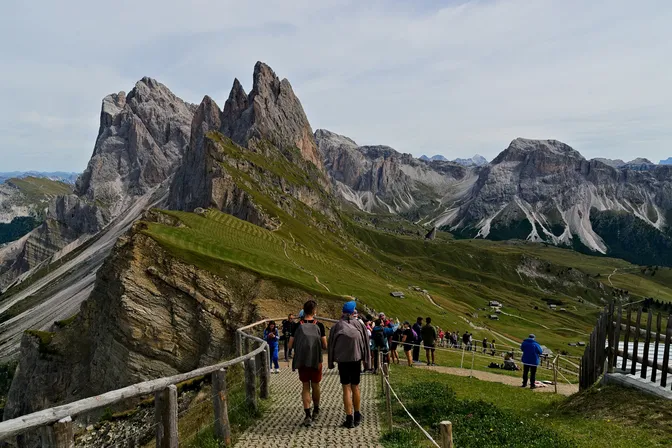
Two stages from the village — a small gondola up to Furnes, then a larger cabin to the ridge at around 2,500 metres. It is comfortably the most expensive lift on this trip, and the one most worth paying for. Aim for the morning: Dolomite cloud more often builds through the day than burns off. At the top, walk ten minutes north away from the station and the ridge does the rest. Budget three hours up here; it won't feel like too much.
Time here: 3 hr
- Afternoon · Optional
Over to Santa Maddalena in Val di Funes
1 hr from the previous stop
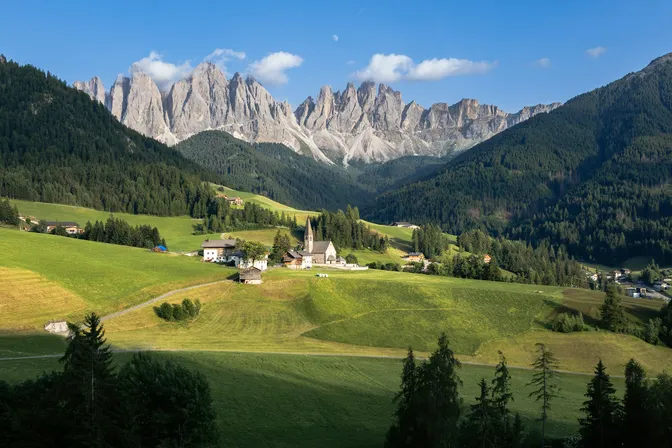
Down by cable car, then about forty-five minutes by road around the shoulder of the Odle into the next valley — call it an hour door to door. Something changed here in 2026 and it matters: a barrier now keeps non-resident cars off the road up to Santa Maddalena's church from May to November, so you park lower down and walk — plan on twenty to thirty minutes uphill, more if the valley lot is full and you're sent further down. To my mind it's a better arrival than the car park ever was. The view is the church on its knoll with the whole Odle ridge behind it — the same rock you stood on this morning, seen from underneath.
Time here: 2 hr 30 min
- Evening · Optional
San Giovanni in Ranui
10 min from the previous stop
Ten minutes further up the valley: a small baroque chapel standing alone in a meadow, photographed from a marked viewing point beside the farm that owns it, for a small fee. It takes fifteen minutes and there's nothing to go inside for. Worth it if you like the picture, entirely skippable if you've had enough mountains for one day, and no real loss either way.
Time here: 45 min
Day 7: Four Passes Around the Sella
The drive the Dolomites are famous for, and a genuine full day rather than a morning: the Sella Ronda is only about fifty-five kilometres, but it's two and a half hours of hairpins before you stop anywhere, and you will want to stop constantly. Going clockwise from Ortisei — Gardena, Campolongo, Pordoi, Sella — keeps the Sella massif on your right the whole way and puts the cable car at Pordoi in the middle of the day.
Rain or low cloud makes this day pointless: there's nothing to see and the hairpins get greasy. Swap it with Day 5 or 6. If it closes in once you're already out, the turn-back point is Passo Gardena — much closer to home from there than finishing the circuit. From Pordoi onward that flips, and completing the loop is the shorter way back. If you want more of the same afterward, Passo Fedaia and the Marmolada hang off the Pordoi end of the loop — but that road is open May to October only. Check the date as well as the sky: on the two Sellaronda Bike Days, one in June and one in September, all four passes close to cars for most of the day and belong to cyclists.
Tonight: Ortisei, Val Gardena
- Morning
Passo Gardena
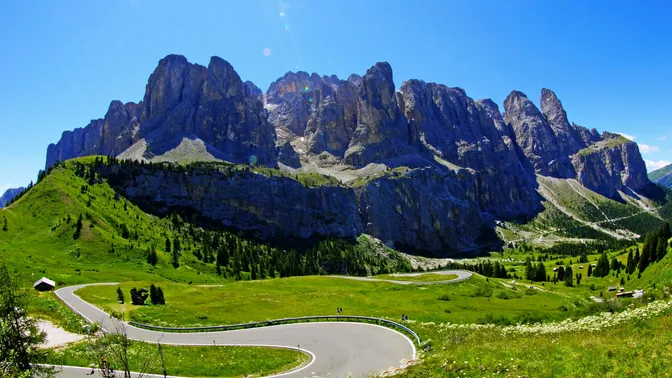
Forty minutes up the valley from Ortisei, on a road climbing steadily past Santa Cristina and Selva. The pass is a broad saddle above two thousand metres with the Sella's wall on one side and the Cir peaks on the other, plus a car park and a couple of huts. Give it an hour, including the short walk out to the viewpoint above the road — the Alta Badia valley drops away eastward in a way the pass itself hides from the car.
Time here: 1 hr 15 min
- Midday
Passo Campolongo and Passo Pordoi
1 hr from the previous stop
An hour of driving covers both, dropping through Corvara and Arabba in between, and the second half is the more dramatic — a long stack of numbered hairpins climbing to Pordoi at 2,239 metres. At the top, take the cableway: three minutes puts you on the Sass Pordoi terrace at 2,950 metres, looking across a high stone desert to the Marmolada. Allow three hours here with the ride, the terrace and lunch at the pass.
Time here: 3 hr
- Afternoon
Passo Sella and back down
25 min from the previous stop
Twenty-five minutes on from Pordoi, and arguably the pick of the four: the road runs directly under the Sassolungo's south face with the Sella cliffs behind you, and there's a broad pull-in where everyone stops for the same photograph and it's still worth taking. An hour here, then the last half hour drops back into Val Gardena past Selva and into Ortisei. If the light is good, this is the pass to linger at rather than the one to hurry past.
Time here: 1 hr 15 min
Day 8: Down the Dolomites Road to Lake Garda
A transfer day that earns its three and a half hours behind the wheel. Rather than heading straight down the motorway, the route takes the western end of the Great Dolomites Road over Passo Costalunga to Lago di Carezza, then drops through Bolzano and Trento to arrive at Lake Garda from the top, so your first sight of it is the cliff-walled northern end rather than the flat southern shore. The last half hour, the cliff road south from Riva to Malcesine, is the day's reward.
In a hurry, or driving in bad weather? Skipping Carezza and going straight down the A22 from Bolzano saves about an hour and costs you one lake and one pass — a fair trade on a grim day, a poor one otherwise. Either way, don't swap Riva and the eastern shore road for the motorway to Affi: the motorway is a little quicker and misses the entire point of arriving at Garda.
Tonight: Malcesine, Lake Garda (two nights)
- Morning
Passo Costalunga and Lago di Carezza
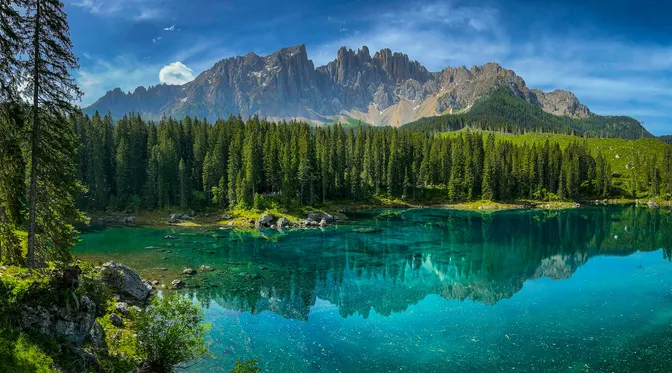
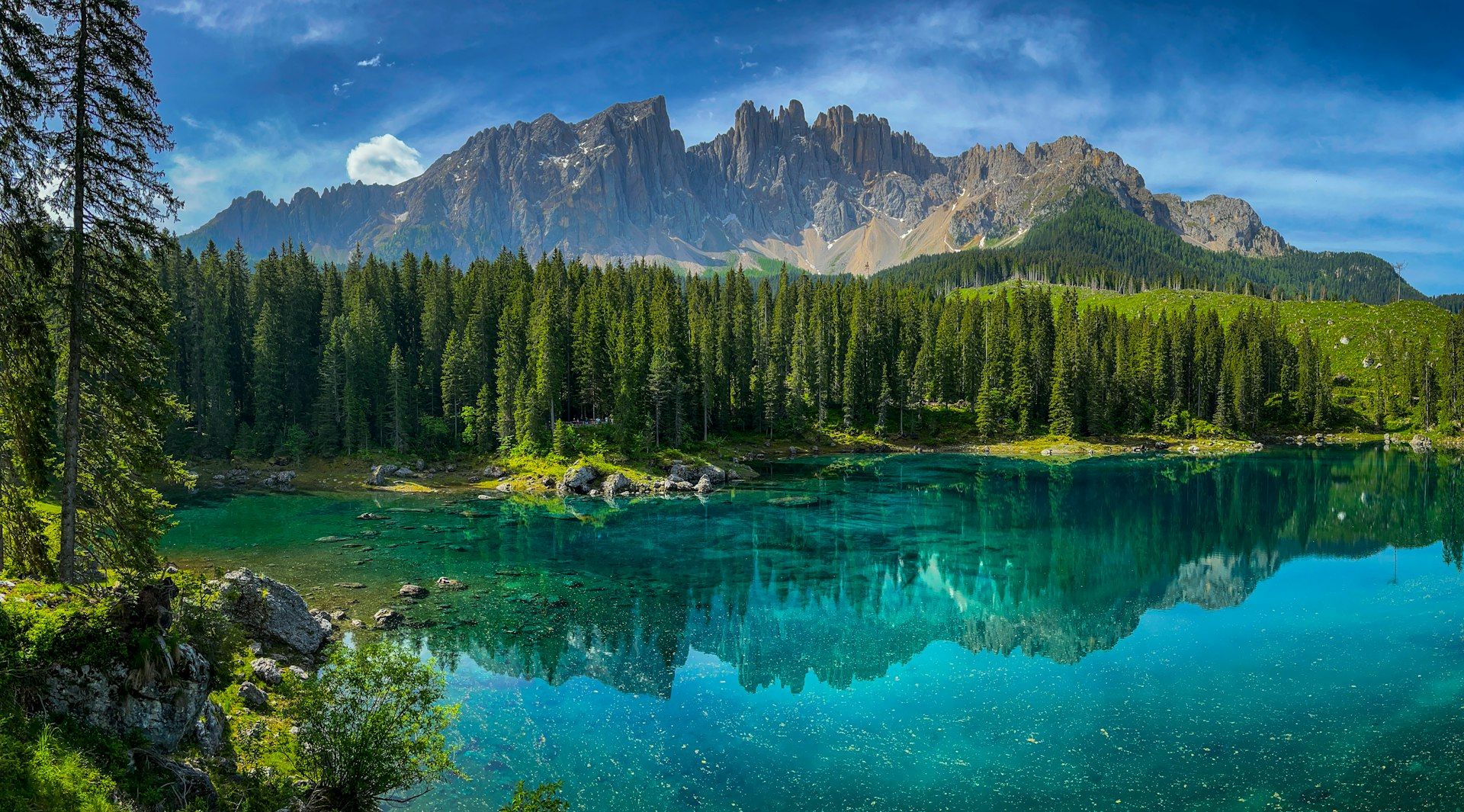
About an hour from Ortisei, dropping toward Bolzano's outskirts and then up the Val d'Ega to Costalunga. Lago di Carezza is a small green lake right beside the road with the Latemar range reflected in it, and it works exactly as advertised in the first half of the day, before the wind picks up and breaks the surface. There's a paid car park with a tunnel under the road; the loop around the water takes twenty minutes, and the viewing platform at the northern end is where the reflection lines up. An hour is plenty. Costalunga stays open year-round, unlike some of its neighbours.
Time here: 1 hr 15 min
- Afternoon
Down to Riva del Garda
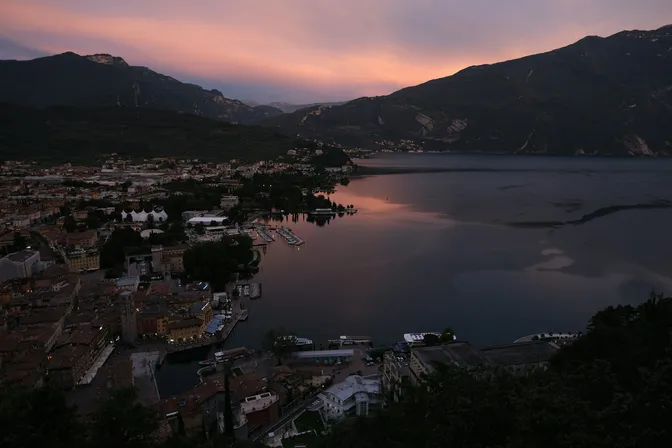
2 hr from the previous stop
A long descent — about two hours, most of it on the A22 south from Bolzano through Trento, then west at Rovereto. Riva sits at the head of the lake with fifteen-hundred-metre cliffs standing directly over it, which is not what most people expect from Lake Garda. Park once and walk: the old town around Piazza III Novembre, the Torre Apponale, and the waterfront out to the foot of the Ponale road, now a walking and cycling route cut into the cliff face and worth twenty minutes even if you don't go far along it. Ninety minutes here.
Time here: 1 hr 30 min
- Evening
The eastern shore road to Malcesine
25 min from the previous stop
Twenty-five minutes south on the SS249, the Gardesana Orientale, and it's one of the better short drives in Italy — a ledge blasted along the base of Monte Baldo, a run of rock tunnels, and the lake flat below you the whole way. Malcesine is a knot of stone lanes under a Scaligeri castle on a rock spur, with a small harbour at the bottom of it. Arrive, park where the hotel tells you (the centre is closed to traffic), and spend the evening walking down to the harbour and back up. Two nights here.
Time here: 2 hr
Day 9: A Lake Day, On Purpose
The one deliberately light day of the trip, and it comes after five days of mountains and two long drives because that's when it's needed. One cable car in the morning, one boat in the afternoon, and no fixed plan for the hours in between — Garda is a place to sit beside rather than a list to work through, and after yesterday you'll want the gap.
If the summit is in cloud, invert the day: take an early boat to Limone, spend the morning there, and ride up in the afternoon once the wind has usually cleared the ridge. If the cable car is shut altogether — it closes for maintenance in March and from November into mid-December — the substitute is the drive north and up to the Tremosine plateau above the western shore, on a road that clings to the cliff the whole way.
Tonight: Malcesine, Lake Garda
- Morning
Monte Baldo by rotating cable car
The valley station sits above the old town, a few minutes uphill on foot, and the second stage has cabins that turn slowly as they climb, so everyone gets the same view without fighting for a window. Buy online, which is cheaper than the window price. Strong wind can stop the lift. At the top you're on a ridge with the whole lake laid out on one side and the Brenta Dolomites on the other, and there's an easy hour of walking along the crest before it turns into a proper hike. Allow two to three hours including the ride.
Time here: 3 hr
- Afternoon
Cross to Limone sul Garda
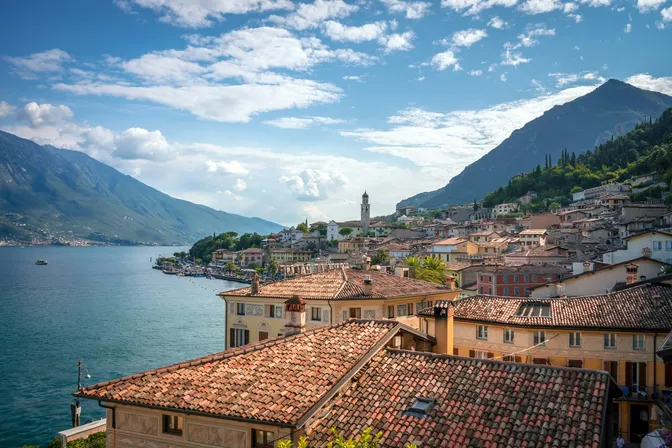
1 hr 10 min from the previous stop
Back down, then the ferry across to the western shore. Budget a little over an hour door to door, once the descent, the walk down to the pier, the wait for a sailing and a crossing of twenty minutes or so are all in. It doesn't run all year either, so check the timetable for your dates rather than assuming. Limone is a narrow strip of a town pressed between the water and a wall of rock, and the thing to see is the Limonaia del Castèl: the stone-pillared terraced lemon houses that made the town's living for centuries at a latitude where growing citrus was a genuinely improbable idea. An afternoon here doesn't need structure. Take a late boat back and let the evening go where it goes.
Time here: 3 hr 30 min
Day 10: Sirmione, Then Verona
The fullest day on the route. The planned version is Sirmione in the morning, then Verona for the Arena and the evening — about two and a quarter hours of driving in all. Sirmione sits on a long thin peninsula at Garda's southern end: a moated castle, thermal water, and the ruins of a very large Roman house out on the tip. Then east to Verona, where the car goes back and the trip stops being a road trip. Get to Sirmione early: the causeway into the old town is a bottleneck by mid-morning in season.
Sirmione is in the plan, and it is also the first thing to cut if the day gets too long. Drop it if you'd rather have an unhurried Verona, if you left Malcesine late, or if the shore road is crawling — go straight to Verona and put the Arena and the evening walk first. Weekly closing days bite harder here than anywhere else: the Arena is normally closed on Mondays, Castelvecchio tomorrow likewise, and Sirmione's two ticketed sites each have a weekly closing day of their own. Performance days can also cut the Arena's daytime hours. Check all of them for your dates; if they collide, move the trip's start date rather than rearrange this day.
Tonight: Verona
- Morning
Rocca Scaligera, Sirmione
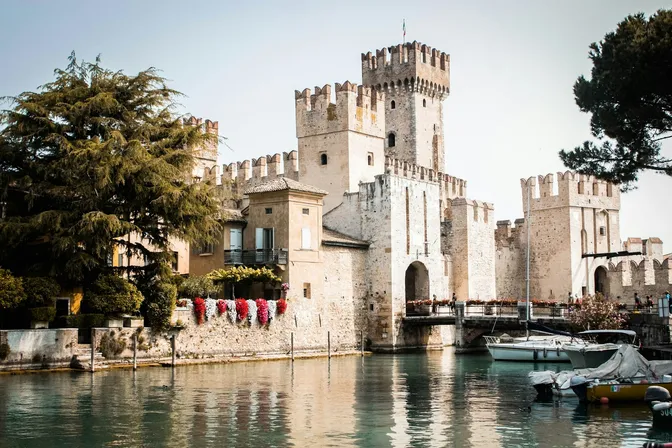
Roughly an hour and a half south from Malcesine down the eastern shore, longer on summer weekends. The old town is a limited-traffic zone: park in the large lots at the landward end of the peninsula and walk in over the drawbridge. The castle is a thirteenth-century Scaligeri fortress with its own enclosed harbour, moated on every side, and it's as good from the outside as from within. Allow forty-five minutes if you climb the tower, less if you don't.
Time here: 45 min
- Midday
Grotte di Catullo and the point
25 min from the previous stop
Twenty-five minutes on foot out along the peninsula through the old town, or a small road train if the day is hot. The Grotte aren't caves: they're the collapsed remains of a very large first-century Roman villa spread across the tip of the peninsula among old olive trees, with water on three sides. Bring water of your own — there's almost no shade — and note that the ticket office shuts well before the gates. The walk back is the town's best half hour: the lanes are touristy, but the view at the end of each one isn't.
Time here: 1 hr 45 min
- Afternoon
Verona: the Arena and Piazza Bra
45 min from the previous stop
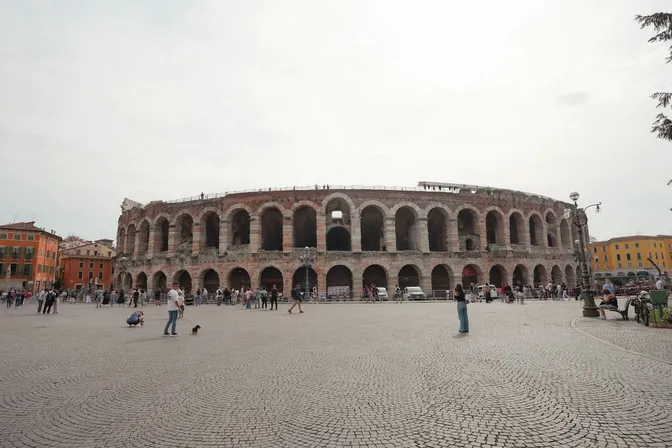
Forty-five minutes east on the motorway. Leave the car in one of the signposted garages outside the walls — Verona's centre is a limited-traffic zone — and if this is where you're dropping it off, do that now rather than tomorrow morning. The Arena is a first-century Roman amphitheatre still in use every summer, which is the unusual part: during the opera season the bowl holds modern stage sets, so what you see is a working theatre rather than a clean ruin. Piazza Bra outside it is where Verona does its evening, and the pink stone underfoot is the local limestone.
Time here: 2 hr
- Evening · Optional
Piazza delle Erbe and the evening
10 min from the previous stop
Ten minutes on foot up Via Mazzini. Piazza delle Erbe is the old Roman forum, now a long market square hemmed in by frescoed houses and the Torre dei Lamberti, and it works best after dark once the crowd around Juliet's balcony a street away has thinned. Walk on through the arch into Piazza dei Signori next door, which is quieter and better. Dinner happens somewhere around here; in my experience, a street or two off Via Mazzini is where prices ease and the menus stop being printed in five languages.
Time here: 2 hr
Day 11: Verona, and Home
A half day rather than a full one, built around what can be reached on foot within twenty minutes of the centre and finished with the view that puts the whole city in one frame. Then half an hour to Verona's airport — which is why this trip is built to fly home from Verona, not Milan.
Stuck with a flight out of Milan? Don't shave this morning to make it work: move the last night to Milan instead and give the city the day Day 1 didn't. If you must fly from Milan on Day 11, the drive and train options are in the last block below — and pick a late flight.
- Morning
Castelvecchio and the Ponte Scaligero
Fifteen minutes' walk west from Piazza Bra, and worth the walk even on a departure morning. Castelvecchio is a fourteenth-century Scaligeri castle rebuilt as a museum by Carlo Scarpa in the 1960s, and the building is as much the reason to go as the paintings inside it — Scarpa's interventions in concrete and steel against the old brick are studied by architects for good reason. It is normally closed on Mondays. Walk out over the Ponte Scaligero, the fortified bridge attached to it, and look back: the bridge was blown up in 1945 and rebuilt from its own stones, fished back out of the Adige.
Time here: 1 hr 45 min
- Midday · Optional
The funicular up to Castel San Pietro
25 min from the previous stop
Across the river and twenty-five minutes on foot through the centre, or a short taxi. The funicular climbs the hill in a little over a minute, costs a couple of euros return and runs late into the evening through the summer half of the year. The terrace at the top looks straight down on the Roman theatre, the bend of the river and the whole of the old city — the last view of the trip, and the one worth having. Half an hour.
Time here: 1 hr
- Afternoon
The drive out
30 min from the previous stop
Verona Villafranca is about half an hour from the centre and the obvious end to this trip: drop the car there and be done. If you have to fly from Milan, that is a different plan: either drive — a little over two hours to Malpensa, somewhat less to Linate, returning the car at that airport if your rental allows it — or return the car in Verona and take the train from Porta Nuova to Milano Centrale, about an hour and a quarter, then transfer on: the Malpensa Express adds around fifty minutes, the metro to Linate less. After eleven days of driving, the train is the gentler ending, but it needs a later flight.
Don't do this
- Don't collect the car on arrival day. A car parked overnight in central Milan costs a garage fee and a weekday congestion charge and does nothing for you — Day 1 is better on the metro, and a Day 2 morning pickup at Centrale puts you on the road north without crossing the charged zone. If you do end up driving into the centre on a weekday, remember that cameras read every plate entering Area C.
- Don't drive around Lake Como to reach Bellagio and the western villas. The shore roads are narrow, slow, short of parking and walled on both sides; the ferry from Varenna is quicker, costs less than a day's parking, and lands you at the gates.
- Don't bolt Tre Cime di Lavaredo or Lago di Braies onto the Val Gardena base as a spare afternoon. Tre Cime is roughly two hours each way from Ortisei plus a toll road at the end, which turns a relaxed day into a driving day. If the eastern Dolomites matter to you, they need their own base and their own trip.
- Don't treat the Sella Ronda as a half day. Fifty-five kilometres reads like a morning and drives like a full day, and squeezing it means passing the best viewpoints without stopping — which is the only real way to waste this route.
- Don't book a tight flight out of Milan on Day 11. Verona to Malpensa is a little over two hours by road with no traffic, Linate somewhat less, and neither leaves any slack at the end of a trip. Fly from Verona instead, or move the last night to Milan and give the city the day Day 1 didn't.
Useful travel information
Budget estimate
An estimate, and of admissions only — the rental, the one-way drop fee, fuel, tolls, parking, hotels, meals and boat tickets all come on top. If you do every ticketed stop on the route, admissions pass €250 per adult on current published fares. The lifts are most of it: Seceda €74 return, Alpe di Siusi €41, Sass Pordoi €32 and Monte Baldo about €30, roughly €175 together. The three Lake Como villas add about €45 (€13 to €17.50 each), and the Duomo roof, Sirmione's castle and Roman villa, the Arena and Castelvecchio make up the rest; skip Balbianello or Sass Pordoi and the total falls accordingly. Motorway tolls run to roughly €35 to €50 across the route. On lift passes, the Gardena Card doesn't pay for this route as written. Only two of the four lifts above are on it — Seceda (€74) and the Ortisei–Alpe di Siusi cable car (€41), €115 in single tickets against €124 for a three-day card. Sass Pordoi (in Val di Fassa) and Monte Baldo (on Garda) aren't covered, so you pay for those either way. The card starts to pay if you add another lift it covers — Col Raiser, the Sassolungo gondola, or a second Seceda ride for the weather — and only within its season, 6 June to 11 October in 2026. Prices checked September 2026; recheck them with the operators before you book.
Tips
- Read this page in two layers. The route, the bases, the drive times and the logic of where the car helps are stable — they are why the trip is shaped this way. The opening dates, lift fares, ferry timetables, parking reservations and traffic-zone rules are not: several of them moved during 2026 alone. Everything perishable is gathered in the facts below with the date it was checked, so re-read that list a week before you travel and again the night before any day built around a lift or a boat.
- Fill up in the valley towns — Ortisei, Corvara, Canazei — rather than at the passes, and check pass conditions the night before the Sella Ronda day. Those roads are listed as open year-round, but temporary closures for snow and avalanche risk can happen at short notice.
- Don't let the satnav drive you into a historic centre. Bergamo's upper town, Malcesine, Sirmione's old town and Verona's core are all limited-traffic zones with camera enforcement, and navigation apps happily route straight through the gates. Park in the signposted lots outside them. A rental company passes a ZTL fine on to you months later with an administration fee on top, so there is no sorting it out afterward. Where the hotel itself is inside a zone — most likely in Verona or Sirmione — email it the rental's plate and your arrival date before you travel: guest access has to be arranged by the hotel in advance.
- Book the Dolomite lifts and the Lake Como villas before you leave home rather than the night before. Villa del Balbianello needs a booking even for the gardens; Seceda's operator strongly recommends buying online, and Gardena Card holders have to book there. Good-weather days in summer sell out first.
- Reordering Days 5–7 works like this: check the mountain forecast each evening and again in the morning, give the clearest day to Seceda, the next best to the Sella Ronda, and keep Alpe di Siusi or Val di Funes for the day with the lowest cloud. The lakes can have completely different weather on the same day, so don't read one forecast for both.
- Confirm parking before you book the room, not when you arrive. Varenna, Malcesine and Verona all have centres laid out before cars, public lots fill early in high season, and this plan leaves the car standing for two days in Varenna and parked at the edge of a traffic zone twice more. A hotel garage or a reserved space in a named lot is worth paying for on this trip, and worth more than a better view; Ortisei is the easy one, where valley hotels park you and the village centre is pedestrianised anyway.
Good to know (21)
- The road up to Alpe di Siusi is closed to private cars from 09:00 to 17:00; driving down from Compatsch is unrestricted at any hour, and outside those hours you may drive up only with an online parking reservation. From 29 June 2026, the two plateau car parks require an online reservation, bookable up to six days ahead — P1 Spitzbühl at €15 per car per day, P2 Compatsch at €30. Neither lot allows parking between 23:00 and 05:00.Checked September 20, 2026
- The Ortisei–Mont Sëuc cable car up to Alpe di Siusi runs 1 May to 5 June 08:30–17:00, 6 June to 16 October 08:30–18:00, and 17 October to 2 November 08:30–17:00. An adult ticket is €29 one way and €41 return.Checked September 20, 2026
- A three-day Gardena Card costs €124 for an adult and €160 for six days, and covers a set list of Val Gardena lifts — both Seceda cable cars, the Ortisei–Alpe di Siusi cabin, Col Raiser and the Sassolungo gondola among them, though not every lift in the valley. It is valid 6 June to 11 October 2026, and card holders still have to book the Seceda lifts on seceda.it.Checked September 24, 2026
- The wider Dolomiti Supersummer card — €145 for three days out of four, valid 14 May to 8 November 2026 across around 130 lifts — is explicitly not accepted on the Ortisei–Furnes cable car, the Furnes–Seceda cable car or the Fermeda chairlift, which are the only lifts up Seceda. On that card the €74 Seceda ticket is still payable on top.Checked September 20, 2026
- The Sella, Pordoi, Gardena, Campolongo and Costalunga passes are all listed as open throughout the year, subject to temporary closures for snow and avalanche risk. Passo Fedaia, below the Marmolada, is open May to October only.Checked September 20, 2026
- On Sellaronda Bike Day — 5 June and 11 September 2027 — the Gardena, Campolongo, Pordoi and Sella passes are closed to motor traffic and given over to cyclists. The published closure window for the 2026 editions ran 09:00 to 16:00; confirm the hours for your date.Checked September 22, 2026
- Passo Gardena’s planned restriction on day visitors’ cars did not take effect as a physical closure. The trial that began on 1 September 2026 runs as digital monitoring only — traffic is counted, with no roadblocks and no fines — and South Tyrol intends to use the data as the basis for later traffic-calming measures. The final rules had not been announced as of September 2026, so check before you drive it.Checked September 22, 2026
- In Val di Funes, a barrier now restricts the road up to the Santa Maddalena church and its panorama viewpoint to residents and hotel guests from May to November; day visitors park in the valley and walk up. There is no booking system for the valley car park — once it fills, cars are directed to spaces further down the valley — and the daily parking fee is being raised.Checked September 20, 2026
- Villa Monastero in Varenna opens daily 09:30–19:30 in April, May and September, 09:30–20:00 from June to August, and 10:00–18:00 in October. In April, May, September and October the House Museum closes on Tuesdays but the botanical garden stays open; there is no Tuesday closure from June to August, and in the winter months both close on Tuesdays. The garden alone is €13; garden plus house museum is €15.Checked September 24, 2026
- Villa del Balbianello opens on set days that change through the season rather than on a fixed weekly pattern, so check its calendar for your date. Park admission is €15 for adults and booking is obligatory even for the gardens; the interior can only be seen on a guided tour, €25 for adults, about 50 minutes, maximum 16 people.Checked September 20, 2026
- Milan's Area C congestion charge costs €7.50 per day and applies Monday to Friday, 07:30 to 19:30 — except Thursdays, when it ends at 18:00; it is suspended at weekends and on public holidays. The wider municipality is also a low-emission zone banning older diesel and petrol vehicles.Checked September 19, 2026
- Bergamo's Città Alta is a limited-traffic zone. Park in the lower town instead: a ticket valid for two rides on the city funicular or bus line 1 costs €3.10.Checked September 18, 2026
- Tourists may drive into Verona's limited-traffic zone only if their hotel stands inside it, and it is the hotel that notifies the Polizia Locale of the car's plate in advance, using credentials issued to it by the city's traffic office. Electronic gates read every plate entering and record the unauthorised ones as violations.Checked September 18, 2026
- The Arena di Verona opera festival runs from 12 June to 11 September 2027. During the festival the amphitheatre's daytime opening is cut short on performance days so the stage can be set and struck.Checked September 19, 2026
- The Arena is open for daytime visits Tuesday to Sunday, 09:00 to 19:00. It is normally closed on Mondays, with occasional one-off Monday openings, and on performance days the daytime visit can be shortened or reduced. The city publishes changes as they come, so check the date you plan to go.Checked September 24, 2026
- The Seceda cable cars from Ortisei run 22 May to 2 November 2026, 08:30 to 17:30. A return ticket covering both stages is €74 for adults. Tickets are also sold at the stations, but the operator recommends buying online in advance because parking in Ortisei is limited, and Gardena Card holders must book on seceda.it.Checked September 25, 2026
- The Sass Pordoi cableway from Passo Pordoi runs 14 May to 1 November 2026, 09:00 to 17:00, closing at 16:30 from 19 October. A return ticket is €32 for adults.Checked September 20, 2026
- Villa Carlotta opens 20 March to 18 October 2026, 10:00 to 19:00 with the last ticket at 18:00, then 10:00 to 18:00 until 8 November. Adult admission is €17.50.Checked September 19, 2026
- The Malcesine–Monte Baldo cable car runs 4 April to 1 November 2026, first ascent 08:15 and departures at least every 30 minutes from 08:30; the last ascent is 18:00, or 16:00 from 5 October. A return ticket is €30 at the window and €28 online. The lift closes for maintenance in March, and again from November into mid-December.Checked September 20, 2026
- Verona's Castel San Pietro funicular runs daily 10:00 to 21:00 from April to October and 10:00 to 17:00 from November to March, with the ticket office closing 15 minutes earlier. A return ticket is €3.Checked September 19, 2026
- The Duomo di Milano's rooftop terraces close earlier than the cathedral below them: the cathedral admits visitors until 18:10, but the terraces stop selling and admitting well before that, so the last usable slot is earlier in the day than the cathedral's closing time suggests. On Fridays to Sundays between early June and mid-September the terraces stay open until 20:00, with the last ticket at 18:50 and last admission at 19:00.Checked September 19, 2026
Frequently asked questions
- Is 11 days enough for Northern Italy's lakes and the Dolomites?
- Comfortably, because this route is deliberately narrow: two lakes and one mountain valley, with no cities beyond the start and finish. That is what buys four nights in a single Dolomite base and two by each lake, and it is why the trip feels like a holiday rather than a relay. What 11 days will not stretch to is the eastern Dolomites — Tre Cime, Cortina, Lago di Braies — without either a second mountain base or losing a lake.
- How many days does this route need?
- It works anywhere from nine to thirteen. To shorten it, drop the Milan night and drive to Varenna on arrival day, and cut Day 6's Val di Funes afternoon — the two least structural pieces. To stretch it, add a third Garda night for the western shore and the Tremosine cliff road, or a second day in Verona.
- Lake Como or Lake Maggiore?
- Como, on this particular route, and the reason is geography rather than beauty. Maggiore sits west of Milan, so reaching it and then heading for the Dolomites means driving back past the city — well over an hour of pure backtracking. Como is north of Milan and roughly on the line toward Bergamo and the Brennero motorway. If Maggiore and the Borromean Islands are the priority, they belong in a different trip that starts and ends in Milan.
- Where is the best base in the Dolomites for four nights?
- Val Gardena — Ortisei, Santa Cristina or Selva. Two of this itinerary's three mountain days start with a cable car from the village itself, the four Sella Ronda passes form a loop out of the front door, and Val di Funes is forty-five minutes away. Cortina d'Ampezzo is the other obvious candidate, but it sits an hour and a half further east, which suits a Tre Cime and Braies trip rather than this one.
- When is the best time to drive this route?
- June to September is the safe window, when the Dolomite cable cars, the passes, the lake boats and the Lake Como villas are all running at once. Within it, it is a trade rather than a single answer. June has nearly everything open before the summer peak. July and August have the fullest timetables and the heaviest crowds on both lakes. September thins the crowds and keeps the lifts going, but mountain weather is less settled and some lift and ferry timetables drop to reduced frequencies towards the end of the month. Late May and early October can work, with some lifts not yet open or already closing, and the Gardena Card only runs from early June to mid-October. By late October this is increasingly not the trip described here. The month matters less than your exact dates, so check them against the operators.