
Last updated August 16, 2026

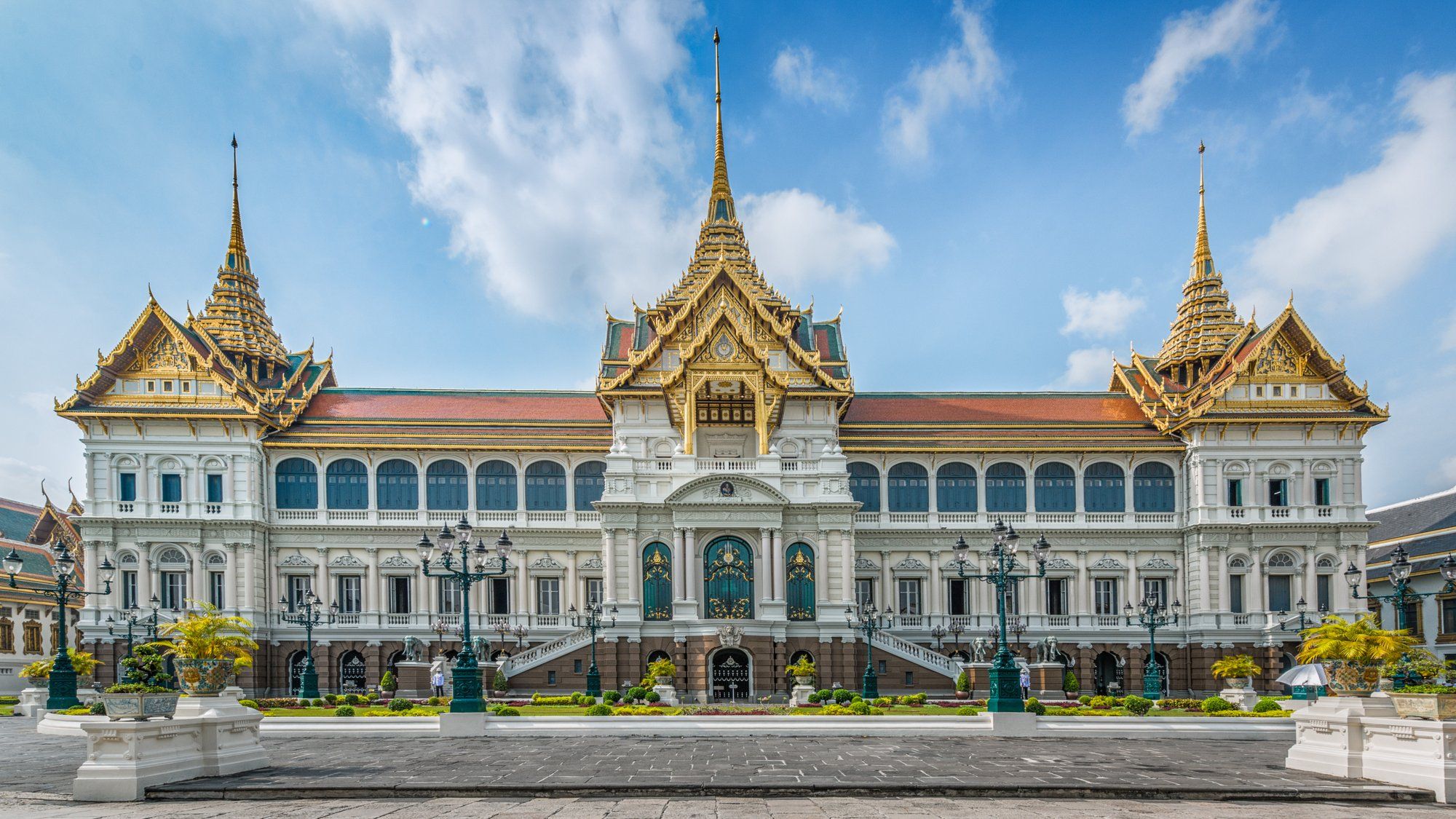
The Grand Palace's golden spires and colorful mosaic-tiled buildings in Bangkok

Andy Marchand / Wikimedia Commons, CC BY-SA 3.0

Thailand

Where to Stay in Bangkok

Bangkok is Thailand's capital and its biggest first stop for almost every visitor to the country — a sprawling, humid, endlessly energetic city where gilded temples sit a few minutes' walk from rooftop bars and air-conditioned malls. The Chao Phraya River splits it in two, an elevated BTS Skytrain and underground MRT stitch most of it together, and a canal (klong) network still threads through the older parts of town. There's no single neighborhood that defines Bangkok: the Old City around the Grand Palace is where its royal and religious history is concentrated, Sukhumvit is its modern commercial spine, Silom is the business district that turns into a night market after dark, and the riverside stretch near Charoenkrung Road holds most of the city's flagship luxury hotels. A few areas work best, whether it's a visitor's first trip or fifth.

Quick facts

Best time to visit
The cool season (November–February) is the most comfortable time to visit, with lower humidity and little rain — it's also the busiest and most expensive stretch. March–May is hot and can feel oppressive, since Bangkok sits inland with little sea breeze. The rainy season (roughly June–October) brings short, heavy afternoon downpours rather than all-day rain, and is a genuinely good-value time to visit if you don't mind occasional wet afternoons.
Renting a car
Skip renting a car. Bangkok's traffic is some of the worst in Southeast Asia, parking is scarce, and the BTS, MRT, and Chao Phraya Express Boat network already reach every central neighborhood faster than driving would.

Where to stay

Compare neighborhoods

AreaBest forAdvantageTrade-off
Old CityFirst-time visitorsUnmatched proximity to Bangkok's most important sights, in a historic, low-rise setting the rest of the city doesn't have.Far fewer rail connections than other areas, so reaching Sukhumvit or the malls takes longer.
SukhumvitFirst-time visitorsThe best-connected base in the city, with a BTS station every few minutes' walk and food or shopping options at any hour.The main strip's traffic and neon-lit nightlife mean it rarely feels quiet, even late at night.
RiversideLuxury travelersBangkok's most scenic hotel setting, with river views and boat access to the Old City and Silom that skips much of the traffic.Few walkable dining or shopping options right outside your hotel — getting anywhere off the river usually means a boat or taxi first.
SilomFirst-time visitorsA central, well-connected business-district location with easy BTS and boat links to both the river and downtown.Feels more corporate than characterful during the day, and the Patpong strip means parts of the area stay loud after dark.

Our picks for Bangkok

A handful of editorial calls across every neighborhood above, not just the highest star rating — see each hotel's own card further down for the full case for and against it.

A couple of hotels in Old City

Old City is the top-recommended area to stay in Bangkok.

Sala Rattanakosin Bangkok

★★★★
  • 📍 Best location

Our take Right at Tha Tien pier, directly across the river from Wat Arun, with a rooftop bar built to make the most of the view.

Highlights

  • Sits right at Tha Tien pier, directly across the river from Wat Arun
  • A rooftop bar and restaurant built around the Wat Arun view
  • A 10-minute walk from both the Grand Palace and Wat Pho

What to know

  • A small hotel with compact rooms, so it books out quickly — especially direct Wat Arun view rooms
Check availability on Booking.com

Riva Surya Bangkok

★★★★
  • 🏆 Our overall pick
  • 🧭 Best for first-time visitors

Our take A riverside hotel within walking distance of the Old City's major sights, with a quiet pool on the Chao Phraya to come back to in the afternoon heat.

Highlights

  • Rooms face the Chao Phraya River rather than an inner courtyard or car park
  • A riverside pool, a genuine way to cool off after a day of temple-hopping
  • Walkable to the Grand Palace, Wat Pho, and Khao San, away from its noisiest block

What to know

  • No BTS or MRT station within walking distance — use boats, taxis, or tuk-tuks beyond the Old City
Check availability on Booking.com

Useful travel information

Thailand uses the baht (฿). The BTS Skytrain and MRT subway cover most of the central neighborhoods — a Rabbit card (for the BTS) makes fare payment easier, though single-journey tickets work fine too. Grab (the regional ride-hailing app) is the easiest way to get a metered taxi or tuk-tuk price without haggling. Dress modestly (shoulders and knees covered) when visiting temples and the Grand Palace, and remove your shoes before entering any temple building.

Tips

  • The BTS and MRT stop running around midnight — plan your last train, or use Grab for a metered ride home if you're out later in Sukhumvit or Silom.
  • Street food in Bangkok is a real highlight, not just a budget fallback — stalls with a fast-moving line of local customers are usually both fresher and better than an empty one nearby.

Frequently asked questions

Where should first-time visitors stay in Bangkok?
Sukhumvit is the easiest first base — it's on the BTS line with endless dining, shopping, and hotels at every price point. If you'd rather be steps from the Grand Palace and Wat Pho, the Old City is a strong alternative, though it has fewer rail connections to the rest of the city.
Is Bangkok walkable?
Each central neighborhood is walkable on its own, but Bangkok is too spread out, hot, and traffic-heavy to cross on foot — you'll use the BTS, MRT, or river boats to move between areas, all of which are fast and inexpensive.