Last updated August 13, 2026

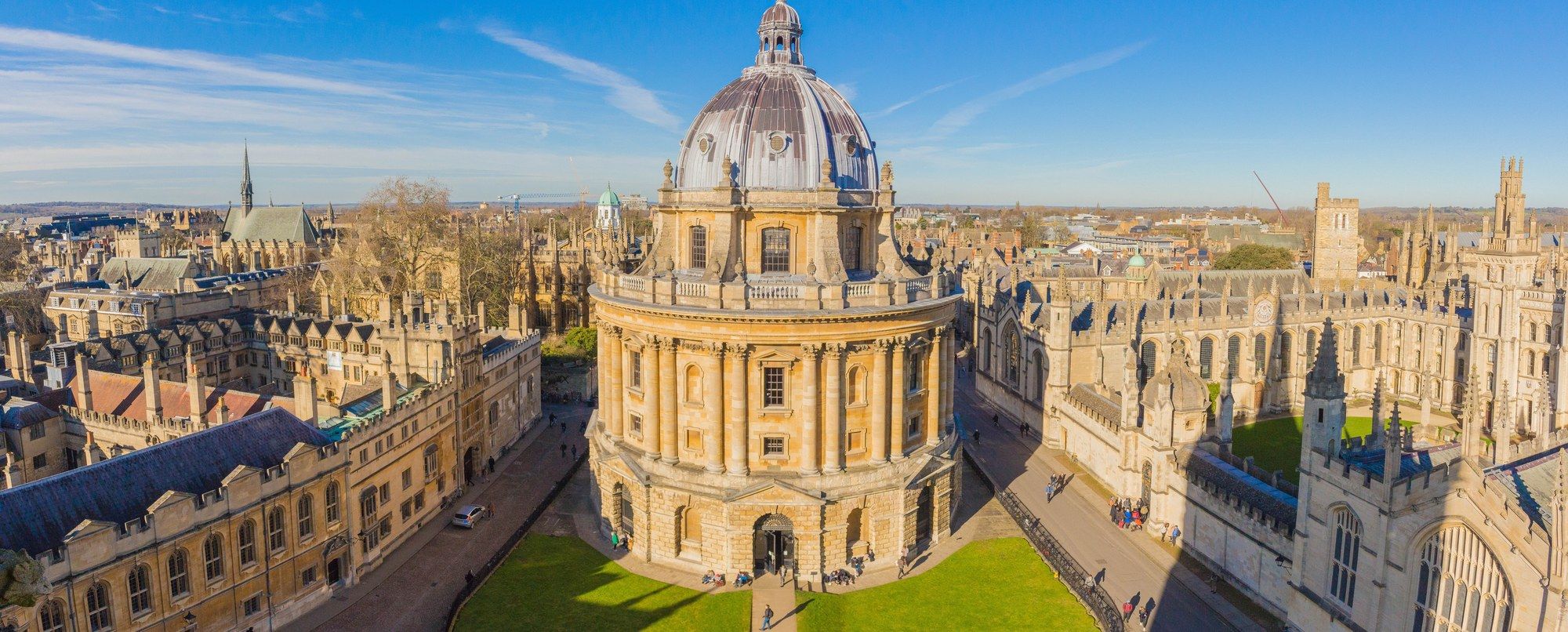
Aerial view of the Radcliffe Camera's stone dome rising above the colleges of central Oxford on a sunny day

Zhushenje / Wikimedia Commons, CC BY-SA 4.0

United Kingdom

Where to Stay in Oxford

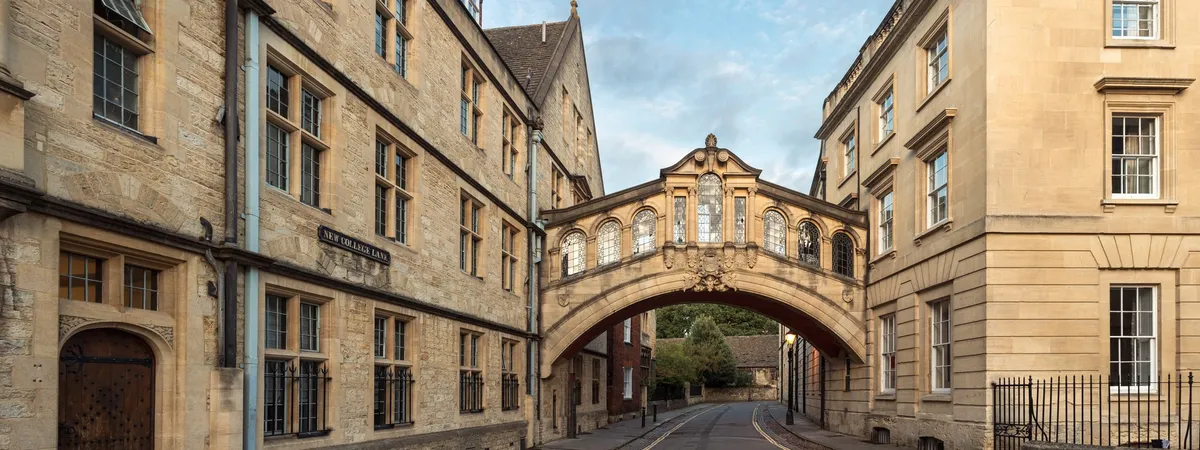
Oxford is a compact university city about an hour northwest of London, built around dozens of historic colleges rather than one campus, so its streets are genuinely medieval and Georgian rather than a modern campus grafted onto an old town. The 'city of dreaming spires' nickname comes from the skyline of college towers and chapels visible from the surrounding hills. Don't miss the Bodleian Library complex and its Radcliffe Camera reading room, Christ Church College with its cathedral and Tom Tower, and the Ashmolean Museum, the world's first university museum and Britain's oldest public museum. The Bridge of Sighs, a covered footbridge linking two halves of Hertford College over New College Lane, is one of the most photographed spots in the city.

Quick facts

Best time to visit
Visit in late spring (May) or early autumn (September) for good weather and fewer crowds than peak summer, and to improve your odds of colleges being open (many restrict visitor access during exams, roughly mid-April to late June). Term time gives the city its real, busy university atmosphere; the summer vacation is quieter on campus but the streets are busiest with tourists.
Renting a car
Skip the car if you're staying in the centre. Oxford's core has operated camera-controlled bus gates for around two decades that block private cars from key streets including the High Street, and a zero emission zone covering nine central streets charges non-electric vehicles that drive through. Parking in the centre is scarce and expensive. Park-and-ride sites on the ring road are the standard way to bring a car into Oxford, and the train from London is faster than driving in regardless.

Where to stay

Best for first-time visitors who want the Bodleian, Christ Church, and the Ashmolean within easy walking distance, and for architecture and history fans who want to be steps from continuous college quads, chapels, and libraries spanning medieval to Georgian. It also suits families, since several of the best museums here — the Ashmolean, the Museum of Natural History, and Pitt Rivers — are free to enter.

Our picks for Oxford

A handful of editorial calls across every neighborhood above, not just the highest star rating — see each hotel's own card further down for the full case for and against it.

A couple of hotels in Oxford City Centre

Oxford City Centre is the top-recommended area to stay in Oxford.

The Randolph Hotel

★★★★★
  • 🧭 Best for first-time visitors

Our take Oxford's grand Victorian hotel, open since 1866 and opposite the Ashmolean, with the rest of the centre an easy walk away.

Highlights

  • Victorian Gothic building opposite the Ashmolean, near the Playhouse and the rest of the centre
  • The Morse Bar, named for Inspector Morse, whose books and TV series feature the hotel
  • A short, flat walk to Cornmarket, the Bodleian, and Christ Church

What to know

  • As one of Oxford's best-known hotels, its public rooms and afternoon tea can get busy with non-residents
  • A large, formal property rather than an intimate boutique stay
Check availability on Booking.com

Malmaison Oxford Castle

★★★★
  • 🏆 Our overall pick
  • 🏛️ Best for architecture & design

Our take A former Victorian prison turned boutique hotel with rooms built from actual cells — one of the country's most distinctive conversions, and priced below the High Street's 5-star hotels despite being just as central.

Highlights

  • Rooms converted from the former prison's cells, with some original features kept in the design
  • About 10 minutes to Carfax and the High Street, much the same to the station
  • Guided tours of the preserved historic prison cells are available on site

What to know

  • Some rooms are compact, reflecting their origin as individual cells
  • A congestion charge applies to vehicles entering central Oxford, including for guests arriving by car
Check availability on Booking.com

Useful travel information

The UK uses the pound sterling (GBP). Oxford railway station sits a short walk west of the city centre, with direct trains to London Paddington in around an hour; the Oxford Tube and X90 coach services run to London Victoria roughly every 10-20 minutes, including overnight. Most of what matters to visitors — the colleges, the Bodleian, the Ashmolean, and the High Street shops — sits inside a compact, largely flat core that's easy to cross on foot in 20-25 minutes end to end. Individual colleges set their own visiting hours and sometimes close to the public during exams or events, so check before planning a specific college visit.

Tips

  • Book ahead for the Bodleian's Divinity School and Radcliffe Camera tours if you want to see inside — many college and library rooms only admit visitors on timed tickets, especially in summer.
  • Check individual college websites before visiting — Christ Church, Magdalen, and others charge admission and set their own opening hours, and some close entirely during exam periods (roughly mid-April to late June).

Frequently asked questions

Where should first-time visitors stay in Oxford?
Stay in the compact historic core around Carfax, the High Street, and the Bodleian — nearly everything worth seeing, from Christ Church to the Ashmolean, sits inside a walkable 20-25 minute core.
Is Oxford walkable?
Yes. The historic centre is largely flat and compact enough to cross on foot in 20-25 minutes, and most colleges, museums, and shops sit inside that core.
Is Oxford worth visiting as a day trip from London, or is it better to stay overnight?
A day trip works well and is common — trains from London Paddington take about an hour. Staying overnight lets you see the colleges and streets in the early morning or evening once the day-trip crowds thin out, and gives more time for punting or a college evensong.