Last updated July 18, 2026

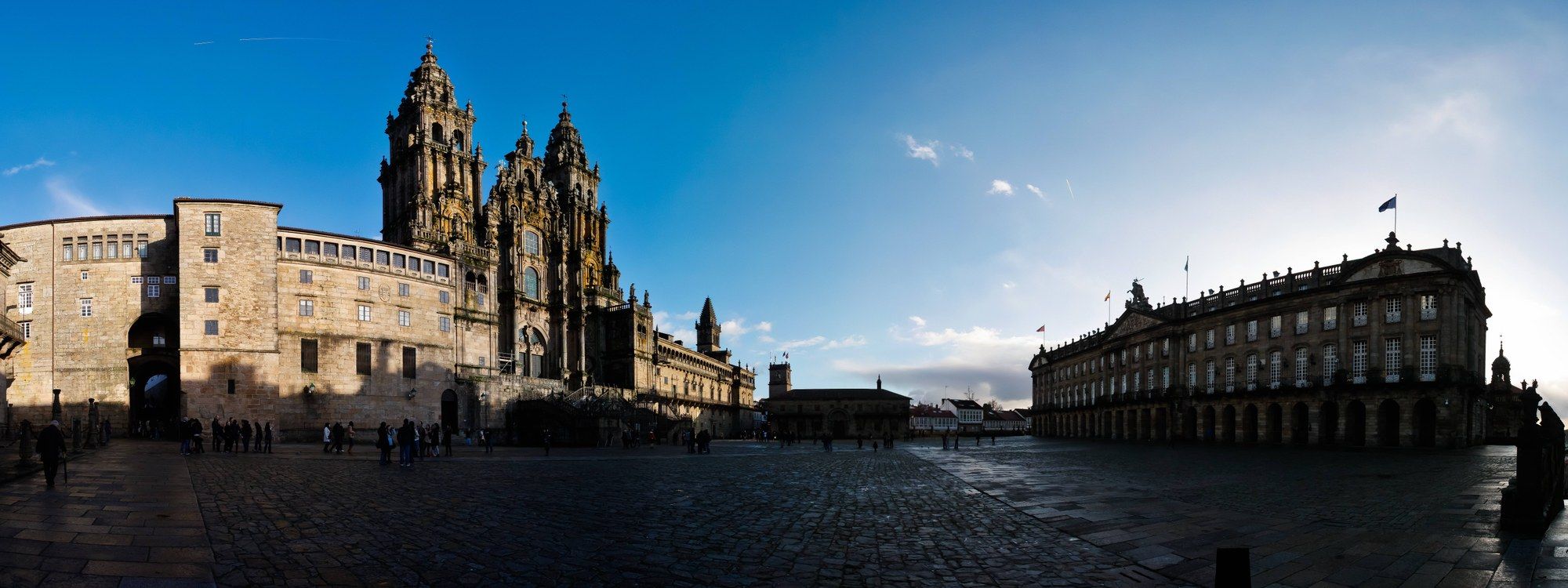
The Baroque towers of Santiago de Compostela Cathedral seen across Praza do Obradoiro at dusk, with the Pazo de Raxoi to the right

D.Rovchak / Wikimedia Commons, CC BY-SA 4.0

Spain

Where to Stay in Santiago de Compostela

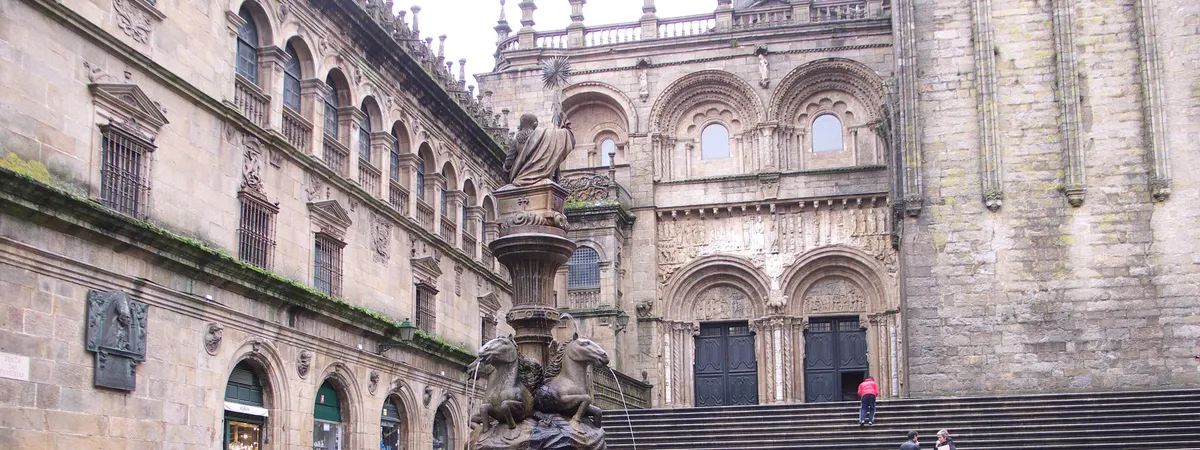
Santiago de Compostela is the endpoint of the Camino de Santiago, the network of pilgrimage routes that has drawn walkers to the tomb of the apostle Saint James for over a thousand years. Its granite old town, a UNESCO World Heritage Site since 1985, is compact enough to cross on foot in under half an hour, built around a cathedral whose Baroque towers rise over a mix of Romanesque, Gothic, and Renaissance buildings. Don't miss the cathedral itself, where the Pórtico da Gloria's Romanesque stone carvings, completed in 1211 by Master Mateo, greet arriving pilgrims, and where the Botafumeiro — a giant silver incense burner — is swung the length of the nave on special occasions. Praza do Obradoiro, the cathedral's main square, and the arcaded streets around Rúa do Vilar and Rúa Nova are the heart of daily life here, whether you've walked 800km to reach them or arrived by train that morning.

Quick facts

Best time to visit
Visit June through August or the first half of September for the driest, sunniest weather — July averages only about 9 rainy days. Autumn, especially September, is often considered the best overall stretch: mild temperatures and thinner crowds than summer. Late July brings the Festas do Apóstolo, centered on July 25 (Saint James's Day and Galicia's national day), with a major fireworks display over the cathedral on the night of the 24th — spectacular, but hotel prices rise and the old town fills up for it.
Renting a car
Skip the rental car if you're staying in the historic center. Its granite streets are narrow, largely pedestrian, and steep in places, parking is scarce, and everything worth seeing is within easy walking distance. A car is only useful for day trips into the wider Galician countryside or coast.

Where to stay

Best for first-time visitors and couples who want to be inside the old town itself, within a few minutes' walk of the cathedral and every major sight, and for anyone arriving on the Camino de Santiago who wants to finish their walk exactly where the city's history is thickest.

Our picks for Santiago de Compostela

A handful of editorial calls across every neighborhood above, not just the highest star rating — see each hotel's own card further down for the full case for and against it.

A couple of hotels in Cidade Histórica

Cidade Histórica is the top-recommended area to stay in Santiago de Compostela.

Hotel Praza Quintana

★★★

Our take About as close to the cathedral as you can get without paying Parador prices — a straightforward boutique hotel that leans on its location rather than a big design statement.

Highlights

  • A one-minute walk from the cathedral, Praza da Quintana, and Praza das Praterías
  • Attic rooms on the top floor with partial cathedral views
  • Genuinely central without the premium of the hotels on Praza do Obradoiro

What to know

  • Standard rooms are compact, in keeping with a hotel inside a historic old-town building
Check availability on Booking.com

Carris Casa de la Troya

★★★
  • 💰 Best value

Our take A dependable base right on the Camino's final approach into the old town, about a three-minute walk from the cathedral.

Highlights

  • On Acibechería, the street the French Way follows into the old town
  • Set in a century-old building, with some rooms offering views toward the cathedral
  • Modern, straightforward rooms with air conditioning and a minibar

What to know

  • Basic rooms are compact — book a Carrís or Supreme room for more space
Check availability on Booking.com

Useful travel information

Spain uses the euro. Santiago-Rosalía de Castro Airport (SCQ) is about 15km from the historic center; bus 6A runs downtown in around 35 minutes, or a taxi takes about 20. The historic center itself is small and entirely walkable — most sights sit within an 800-meter radius of the cathedral — so there's little need for buses once you're there. Galicia has an oceanic climate with regular rain in any season, heaviest from late autumn through winter, so pack for it even in summer.

Tips

  • Check the Pilgrim's Mass schedule at the cathedral if you want to see the Botafumeiro swing — it isn't guaranteed at every mass, so it's worth confirming the day you plan to attend.
  • If you're around for the Festas do Apóstolo in late July, check the fireworks and events schedule before booking — it's a spectacular week, but hotel rates rise and the old town gets crowded around July 24–25.
  • Bring a light rain layer regardless of season — Galicia's oceanic climate means rain is possible even in the drier summer months.

Frequently asked questions

Where should first-time visitors stay in Santiago de Compostela?
Stay in the historic center (Cidade Histórica) — it's compact, walkable, and puts you within a few minutes of the cathedral, Praza do Obradoiro, and the old town's main streets.
Is Santiago de Compostela walkable?
Yes, very. The historic center is small enough to cross on foot in under half an hour, and nearly every major sight sits within an 800-meter radius of the cathedral.
How many days do you need in Santiago de Compostela?
One to two full days covers the cathedral, Praza do Obradoiro, and the old town's streets and markets at an easy pace. Many visitors are also arriving or departing on the Camino de Santiago, which shapes a shorter stay around the city itself.