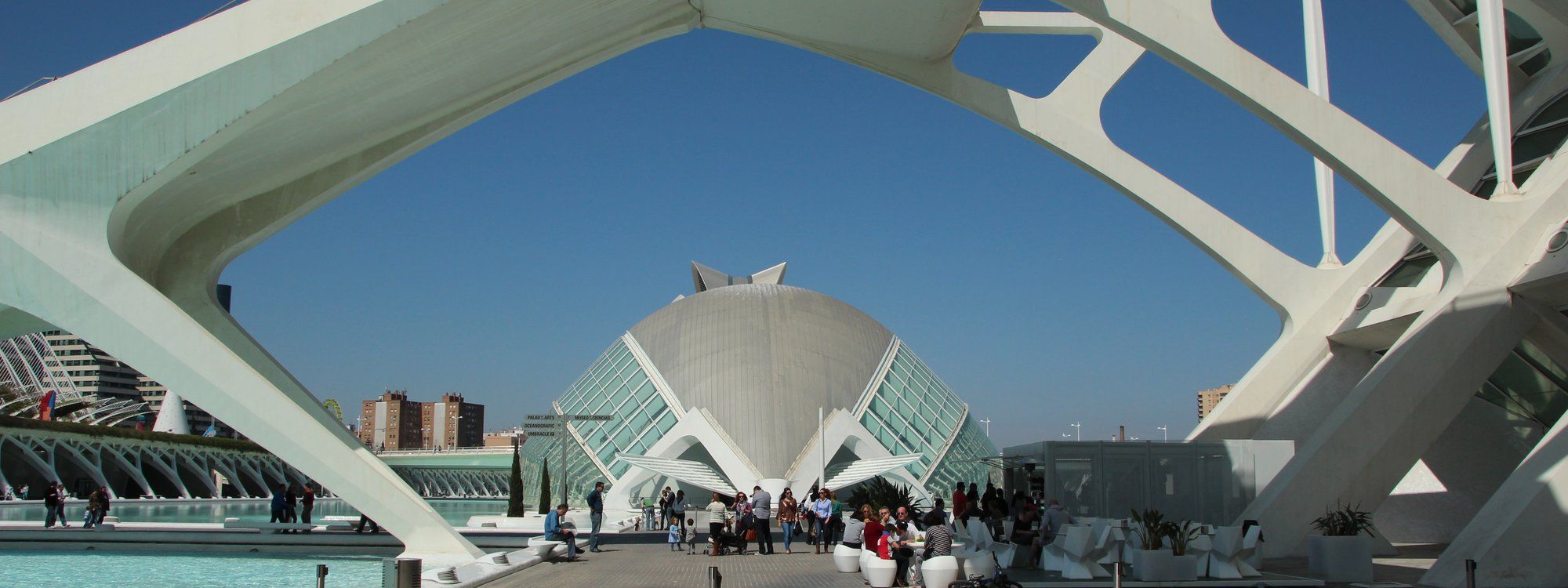
The Hemisfèric and the arched walkways of the City of Arts and Sciences in Valencia

Cateecatee / Wikimedia Commons, CC BY-SA 3.0

Spain

Where to Stay in Valencia

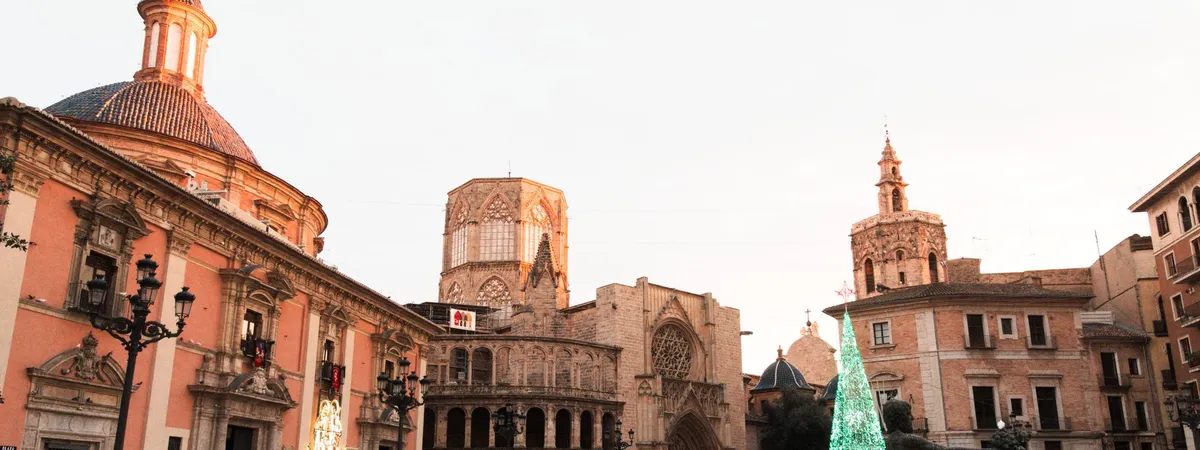
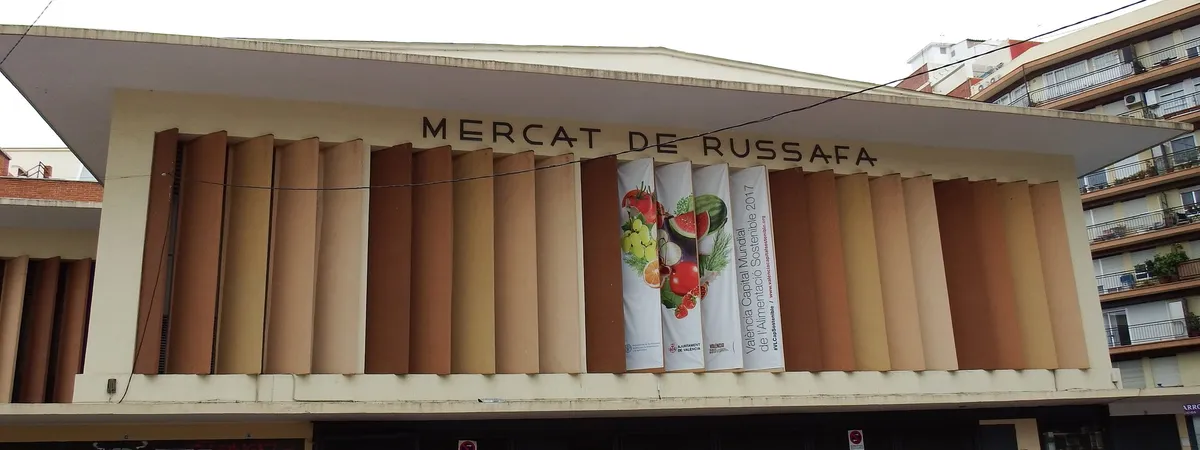
Valencia is Spain's third-largest city, built where the old bed of the Turia river meets the Mediterranean — a compact historic core, a beach that's a tram ride away, and a nine-kilometer park running through the middle where the river used to flow. The old town's Gothic cathedral and silk-trade landmarks sit a short walk from Russafa's converted-market streets, and both are connected to the coast by the green corridor left behind after the Turia was diverted following a catastrophic 1957 flood. Don't miss the City of Arts and Sciences, Santiago Calatrava's futuristic complex of museums, an aquarium, and an opera house built along that former riverbed — and the Central Market, a 1928 Art Nouveau ironwork-and-glass hall that's still a working produce market today, not a tourist food court dressed up to look like one.

Quick facts

Best time to visit
Visit in April–June or September–October. Summer (July–August) is hot and humid, often above 33°C, and the coast gets crowded with domestic tourists. Mid-March brings Las Fallas, Valencia's biggest festival — spectacular if you want fireworks and street parties, but hotel prices spike and much of the old town is packed with stages and crowds for the two-week run-up.
Renting a car
Skip a car if you're staying in the city. Ciutat Vella's streets are narrow and largely pedestrianized, parking is scarce and expensive everywhere central, and the metro/tram network already covers the old town, Russafa, and the beach directly. Rent one only for day trips outside the city — the Albufera lagoon or inland towns — where public transport gets thin.

Where to stay

Compare neighborhoods

AreaBest forAdvantageTrade-off
Ciutat VellaFirst-time visitorsThe highest concentration of real sights, historic architecture, and boutique hotels in the city, almost all within a short walk of each other.No beach nearby, and the streets around the cathedral and Central Market get crowded with day-trippers and tour groups by mid-morning.
RussafaNightlifeValencia's best concentration of independent restaurants, cafés, and bars, in a neighborhood that still feels lived-in rather than built for visitors.No historic sights of its own and no beach nearby — you're a 15–20 minute walk or short ride from both.
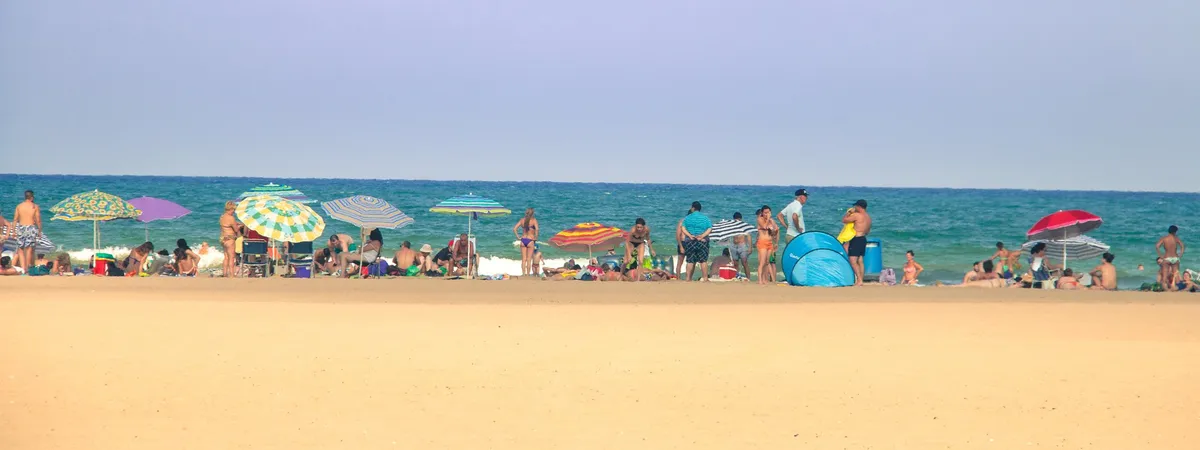
MalvarrosaBeach timeA genuine city beach with a long promenade, reachable from the old town by tram in 20 minutes rather than requiring a day trip.Away from most of Valencia's historic sights and restaurants — every old-town outing means a tram or bus ride each way.

Our picks for Valencia

A handful of editorial calls across every neighborhood above, not just the highest star rating — see each hotel's own card further down for the full case for and against it.

A couple of hotels in Ciutat Vella

Ciutat Vella is the top-recommended area to stay in Valencia.

Caro Hotel

★★★★★
  • 🏛️ Best for architecture & design

Our take The most distinctive place to stay in Valencia's old town — a working excavation site turned 5-star hotel, where the historic remains are the centerpiece rather than a curiosity in the basement.

Good for

  • Luxury travelers
  • Architecture lovers
  • Couples

Couples and architecture-minded travelers who want a genuinely unusual stay — sleeping a floor above a Roman mosaic or beside a stretch of 12th-century Arab city wall, in a building that layers 2,000 years of the city's history.

Why we like it

  • Preserved Roman, Visigothic, and Arab-era remains built into the structure, including a 2nd-century mosaic and a stretch of 12th-century city wall
  • Each of the 26 rooms is individually designed around the building's historic layout, so no two are alike
  • A small plunge pool and rooftop terrace for cocktails, unusual for a boutique hotel this size in the old town
  • Alma del Temple, the on-site restaurant, is built around the same Arab-era wall that runs through the hotel

What to know

  • There's a small plunge pool on the terrace, but no full spa or gym, unlike some of the city's larger luxury hotels
  • The historic, multi-level building means room layouts and sizes vary more than in a purpose-built hotel
Check availability on Booking.com

MYR Puerta Serranos

★★★★
  • 🏆 Our overall pick
  • 📍 Best location

Our take Our overall pick for Valencia — a boutique hotel with a genuinely exceptional location facing the Serranos Towers, rooms that consistently please guests, and rates well below the city's true luxury properties.

Good for

  • First-time visitors
  • Couples
  • Architecture lovers

First-time visitors and couples who want a boutique hotel right at the edge of the old town, close enough to walk everywhere in Ciutat Vella but on a calmer street than the bar-heavy lanes further into El Carmen.

Why we like it

  • Faces the Torres de Serranos directly, one of the most recognizable landmarks in the old town, on a street quieter than El Carmen's nightlife core
  • Rooftop terrace and bar with views over the towers and the Turia Gardens below
  • Rooms blend natural wood finishes with a clean, modern design that guests consistently rate highly for comfort and cleanliness
  • An easy 5–10 minute walk to the cathedral, the Central Market, and the rest of Ciutat Vella's main sights

What to know

  • Breakfast is served à la carte rather than as a buffet
Check availability on Booking.com

Useful travel information

Spain uses the euro. Valencia Airport (VLC) is about 8km west of the center; metro lines 3 and 5 run directly downtown in around 25 minutes, or a taxi takes about 15–20. The city's metro, tram, and bus network (Metrovalencia and EMT) covers the old town, Russafa, and the beach well, and the old town itself is small enough to cross on foot in under half an hour. Petty theft happens around the Central Market, the cathedral area, and on crowded trams to the beach in summer — keep bags zipped and in front of you.

Tips

  • Book tickets for the Oceanogràfic and other City of Arts and Sciences museums online ahead of time — they're timed-entry and the ticket windows can have long queues in high season.
  • Go to the Central Market in the morning, when the stalls are freshest and before tour groups arrive — it's still a working produce market, not primarily a tourist attraction.
  • If you're around in mid-March, check the Las Fallas schedule before booking — it's an unforgettable festival, but expect noise, crowds, and higher hotel rates across the whole city.

Frequently asked questions

Where should first-time visitors stay in Valencia?
Stay in Ciutat Vella (the old town), within walking distance of the cathedral, the Central Market, and most major sights. If you want a livelier food and bar scene with a more local feel, Russafa is a strong, still-central alternative.
Is Valencia walkable?
The old town and Russafa are both very walkable and close to each other — about a 15-minute walk apart. The beach neighborhoods are further out, but Metrovalencia's tram line reaches Malvarrosa from the center in around 20 minutes.
Do I need a car in Valencia?
No — the metro, tram, and bus network covers the old town, Russafa, and the beach well, and the historic center is walkable. A car is only useful for day trips outside the city, such as to the Albufera lagoon.