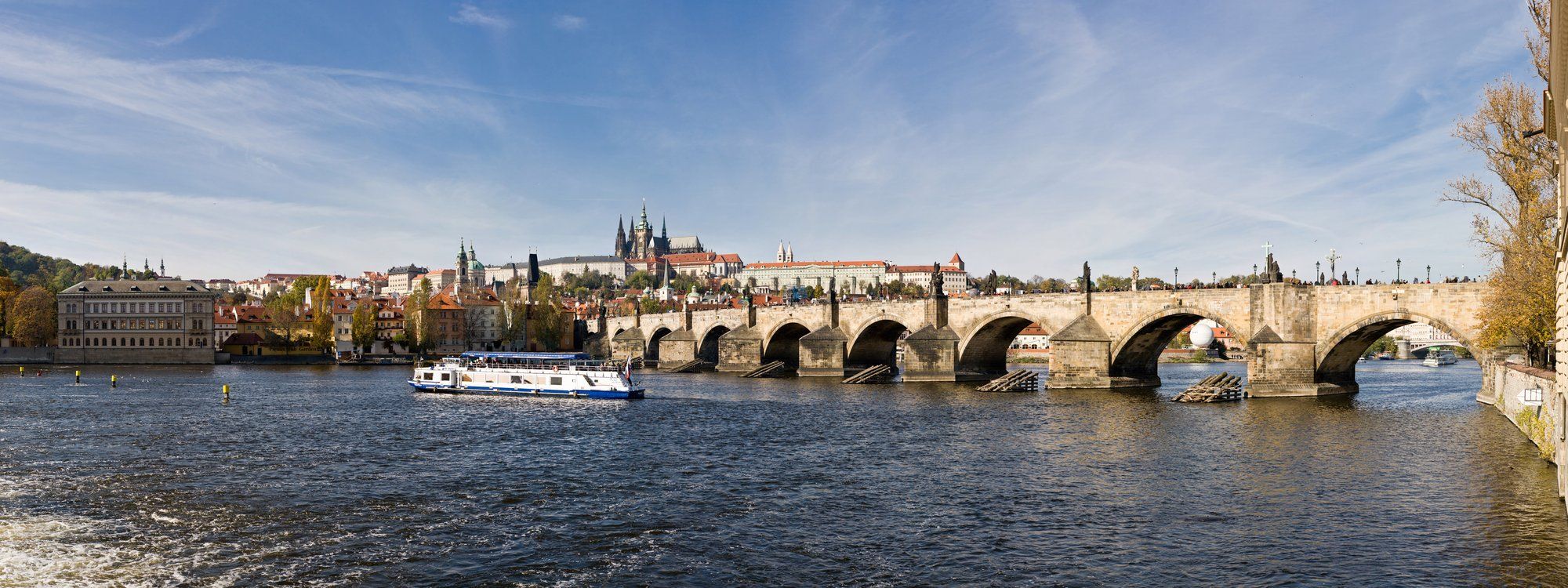
A panoramic view across the Vltava river to Prague Castle and Charles Bridge

Diliff / Wikimedia Commons, CC BY-SA 3.0

Czechia

Where to Stay in Prague

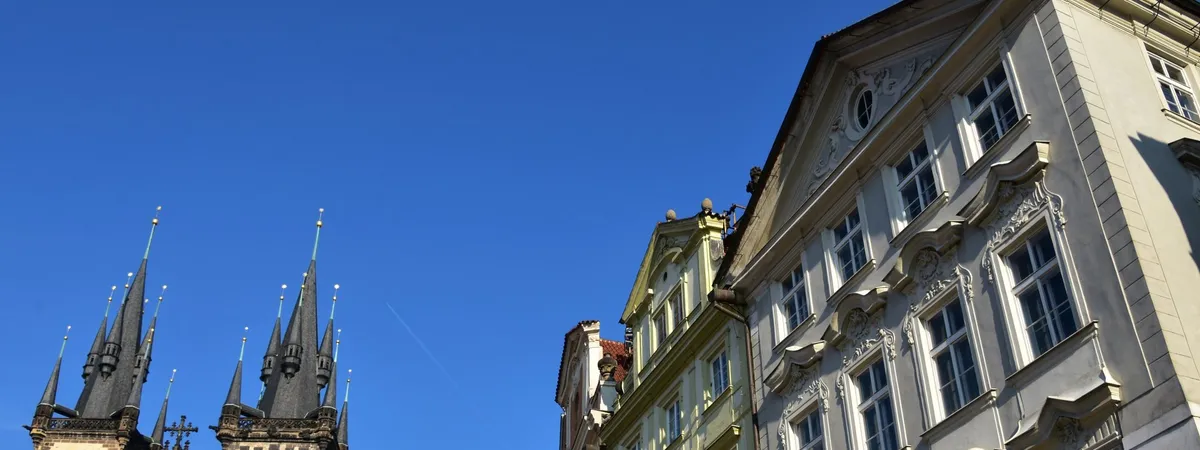
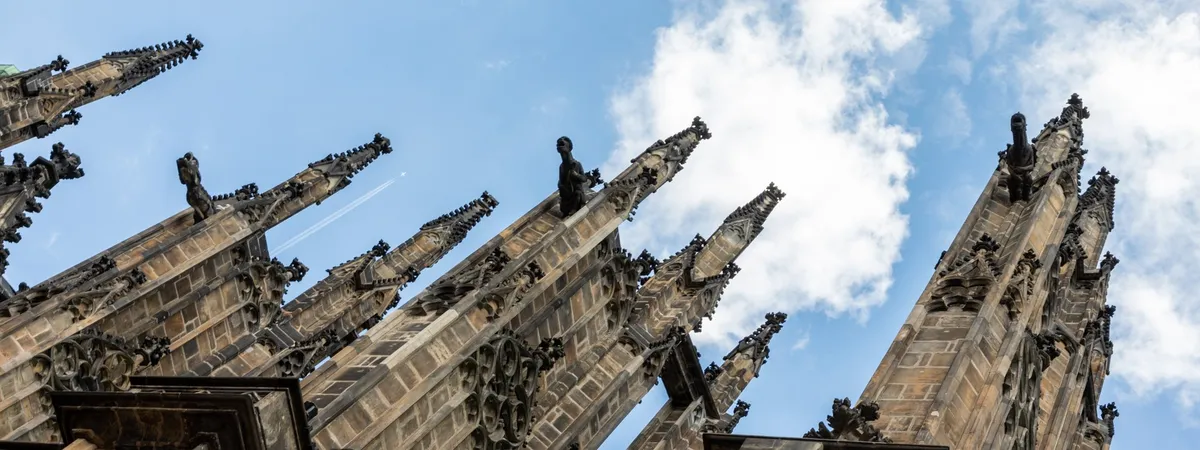
Prague sits on the Vltava river in the heart of Bohemia, and its historic core survived World War II almost untouched — centuries of Gothic, Baroque, and Art Nouveau buildings packed into a compact, walkable center. Don't miss the Charles Bridge, lined with baroque statues and busiest at sunrise before the crowds arrive, and the Old Town Square, anchored by the 15th-century Astronomical Clock and the twin Gothic spires of the Týn Church. Above it all, Prague Castle — by some measures the largest ancient castle complex in the world — looks out over the red rooftops from the far bank of the river.

Quick facts

Best time to visit
Visit in spring (April–May) or fall (September–October), when the weather's mild and crowds are thinner than in summer. Summer (June–August) is the busiest and priciest season, with the Old Town and Charles Bridge feeling packed by mid-morning. Winter is cold but quiet, and the Christmas markets on Old Town Square (late November–early January) draw their own crowds.
Renting a car
Skip a rental car for your stay. Prague's historic core has narrow, largely pedestrianized streets, limited and expensive parking, and a dense tram network, and every neighborhood in this guide is walkable or a short tram ride from the next. Only consider a car if you're using Prague as a base for day trips into the countryside.

Where to stay

Compare neighborhoods

AreaBest forAdvantageTrade-off
Staré MěstoFirst-time visitorsThe most central base in Prague — Astronomical Clock, Charles Bridge, and Old Town Square are all within a short walk.Prague's busiest, most touristy, and most expensive neighborhood, especially right around the square.
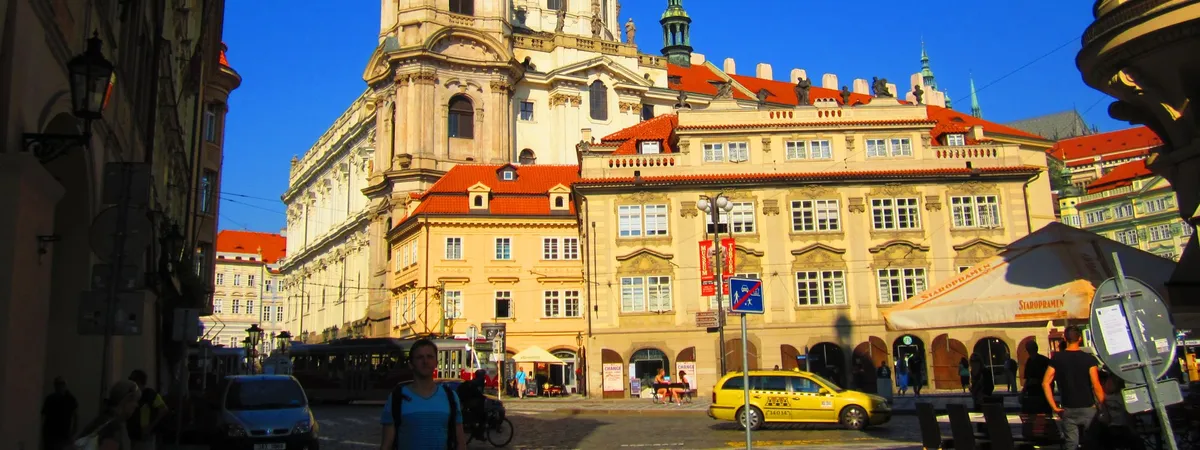
Malá StranaCouplesA quieter, more romantic base than Staré Město, with Charles Bridge and the castle both within easy walking distance.Fewer restaurants and late bars than Staré Město or Nové Město, and hotel prices run on the higher side.
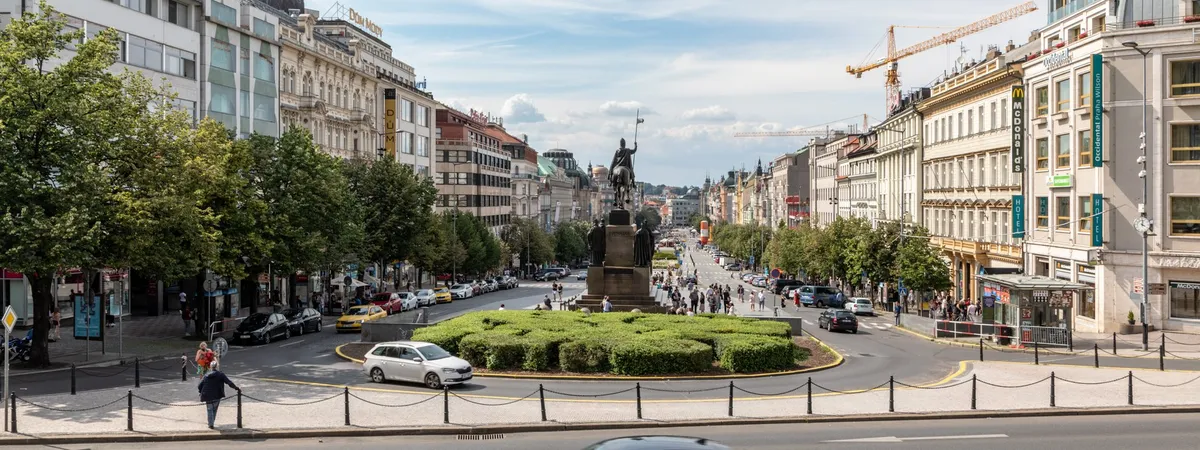
Nové MěstoFirst-time visitorsPrague's best public transit connections, with lower hotel prices than Staré Město for a similarly short walk to the main sights.Wenceslas Square and its side streets can get loud and rowdy at night, especially on weekends.
HradčanyArchitecture loversThe quietest central neighborhood in Prague, with Prague Castle and St. Vitus Cathedral right outside the door.Very few restaurants or bars of its own, and it empties out once the castle closes for the evening.
VinohradyFamiliesA quieter, more local base with genuinely good cafes and restaurants, still about 10 minutes by metro from Old Town.Not walking distance to Prague's main historic sights — you'll rely on the metro or tram to get there.

Our picks for Prague

A handful of editorial calls across every neighborhood above, not just the highest star rating — see each hotel's own card further down for the full case for and against it.

A couple of hotels in Staré Město

Staré Město is the top-recommended area to stay in Prague.

MOODs Charles Bridge

★★★★
  • 📍 Best location
  • ❤️ Best for couples

Our take A modern, design-led stay tucked into one of the calmer corners of the Old Town, close enough to Charles Bridge to walk over for sunrise.

Good for

  • Couples
  • Architecture lovers

Couples who want a design hotel within easy walking distance of Charles Bridge and the riverside.

Why we like it

  • Four-minute walk to Charles Bridge along quiet, mostly pedestrian streets
  • Rooms built around high-end furniture rather than a generic hotel fit-out
  • Sits in a calmer pocket of Stare Mesto, away from the Old Town Square crowds

What to know

  • A short uphill walk to Old Town Square itself rather than steps from it
Check availability on Booking.com

Metropolitan Old Town Hotel

★★★★
  • 💰 Best value

Our take One of the more consistent value picks in the Old Town — a wide range of room categories and a genuinely central spot, just a short walk further from the square than the priciest options.

Good for

  • First-time visitors
  • Couples

First-time visitors who want an easy walk to the main sights without paying Old Town Square prices.

Why we like it

  • 600 meters from Old Town Square, still an easy walk to everything
  • On-site restaurants include a couple of traditional Czech pubs
  • A tram stop is 200 meters away for trips outside the historic core

What to know

  • A slightly quieter, more residential pocket of Stare Mesto than streets right off the square
Check availability on Booking.com

Useful travel information

Czechia uses the koruna (CZK), not the euro, though some businesses near the main sights quote prices in euros — paying in koruna is usually cheaper. Prague's integrated transit system covers metro, tram, and bus on one ticket; buy tickets from machines at metro stations or the PID Lítačka app. The historic core is compact enough to cover mostly on foot, with trams filling in the rest. Pickpocketing is the main risk around Old Town Square, Charles Bridge, and on the crowded tram 22 route, especially in peak season.

Tips

  • Visit Charles Bridge and Old Town Square before 9am to see them without the crowds that build up by mid-morning.
  • Buy a 24-hour or 72-hour transit pass if you're moving between neighborhoods a lot — it covers metro, tram, and bus on one ticket and works out cheaper than single rides.
  • Pay in Czech koruna, not euros, even where a shop or restaurant near the main sights offers to take euros directly — the exchange rate they apply is rarely in your favor.

Frequently asked questions

Where should first-time visitors stay in Prague?
Stay in Staré Město (Old Town) to be steps from the Astronomical Clock, Charles Bridge, and most major sights, or in Malá Strana, just across the river, for a quieter, similarly central base.
Is Prague walkable?
Yes. Staré Město, Malá Strana, and Hradčany are all compact and easy to cover on foot, linked by the Charles Bridge and a short climb up to the castle. Trams and the metro fill in longer trips, like reaching Vinohrady or the train station.
Does Prague use the euro?
No — Czechia uses its own currency, the koruna (CZK). Some tourist-facing businesses near the main sights accept euros, but the exchange rate is usually worse than paying in koruna or by card.