Last updated June 10, 2026
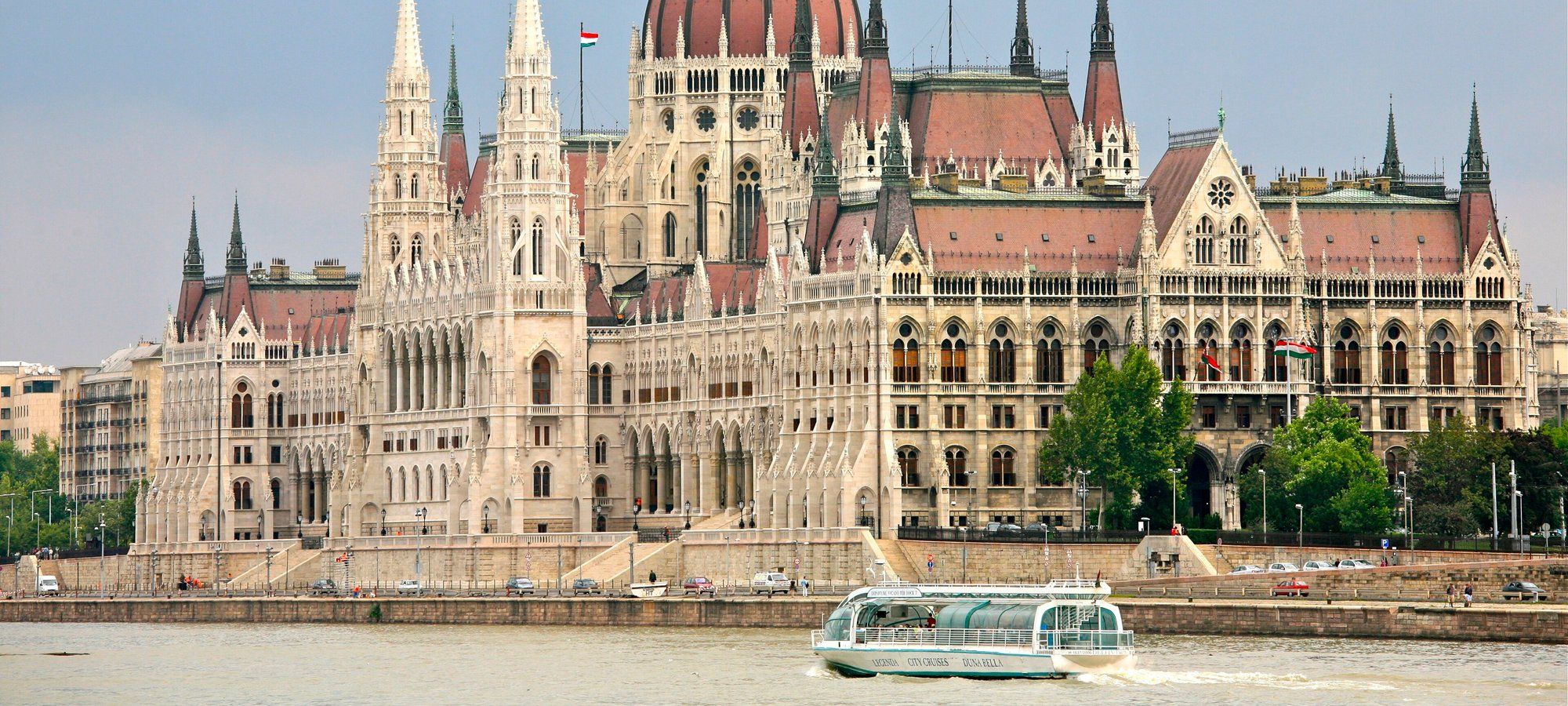

Alex Proimos / Wikimedia Commons, CC BY 2.0
Europe
Hungary Travel Guide
Hungary is often reduced to Budapest in people's minds, and Budapest alone is worth the trip — a capital split by the Danube into hilly Buda and flat Pest, threaded with grand thermal bathhouses that trace back to Ottoman rule. But the rest of the country holds its own smaller, distinct destinations: a hilltop wine town in the north known for its castle and cellars, an artists' riverside town on the Danube Bend, a sun-warmed southern city with a Mediterranean feel and Ottoman-era mosque, and a walled medieval town close enough to Austria that it briefly considered staying part of it.
Quick facts
- Flag
- Hungary
- Capital
- Budapest
- Language
- Hungarian
- Currency
- HUF (Ft)
- Timezone
- Central European Time (UTC+1, UTC+2 in summer)
- Calling code
- +36
- Driving side
- Right-hand side
This guide starts with five of Hungary's most-visited destinations — Budapest, Eger, Szentendre, Pécs, and Sopron — each with a different pace, from Budapest's grand boulevards and bathhouses to Sopron's compact, car-free old town.
Planning your trip
- Best time to visit
- April through June and September into October bring the best mix of mild weather and manageable crowds. July and August get hot and busy in Budapest, though the thermal baths stay a good option year-round, and outdoor pool sections like Széchenyi's get genuinely crowded in summer. Winter is quiet and cold, with Budapest's Christmas markets around Vörösmarty Square and St. Stephen's Basilica as the main draw from late November through December.
- Good to know
- Hungary uses the forint (Ft), not the euro, despite being an EU member — cards are accepted almost everywhere in the cities in this guide, but it's worth carrying some cash for small vendors, market stalls, and bathhouse lockers. English is spoken fairly well in Budapest's hotels, restaurants, and central shops, and less consistently in smaller towns like Eger and Sopron, where German can be nearly as useful given their proximity to Austria. Trains connect the main cities reasonably well — Budapest to Eger takes around two hours, Budapest to Pécs and to Sopron each around two and a half, and Budapest to Szentendre is a short suburban rail (HÉV) ride of well under an hour. Tipping isn't legally required but is customary — rounding up or adding roughly 10% at restaurants is standard, and it's often added to the bill as a service charge already, so check before tipping twice.
Cities
Where to stay in each of Hungary's cities — pick one below to see its best neighborhoods and hotels.
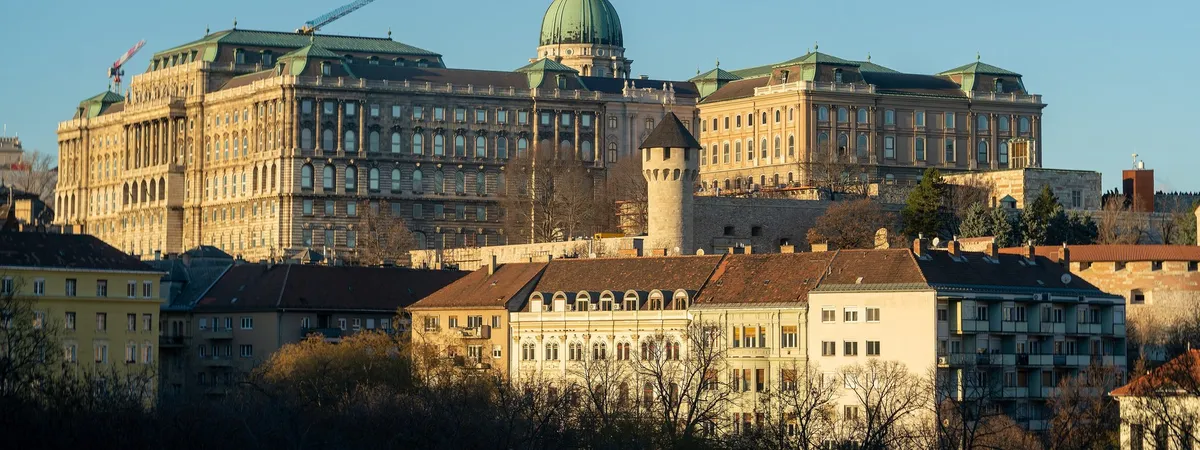
Paul Colin Hennig / Wikimedia Commons, CC BY-SA 4.0
Budapest
Best for: First-time visitors, Couples, Architecture lovers, Nightlife
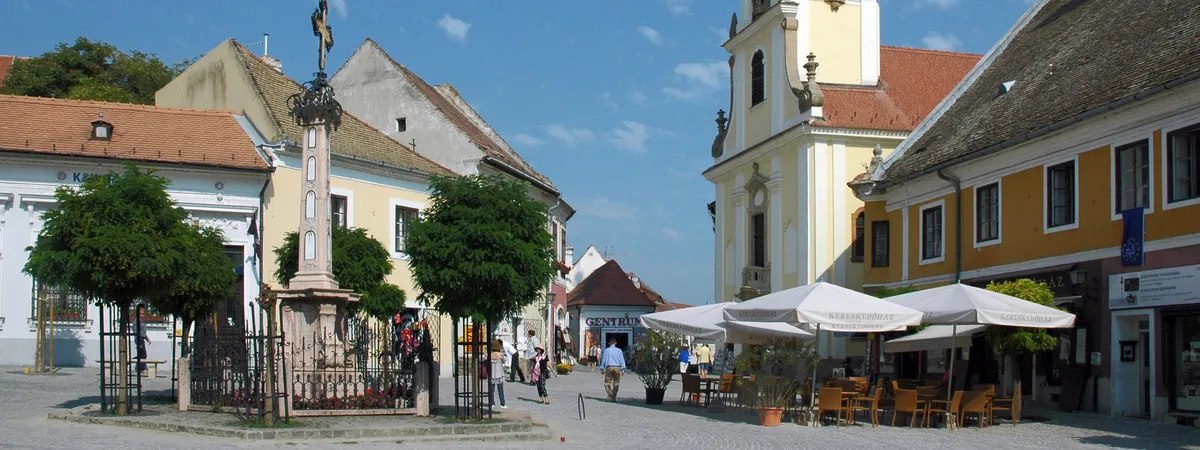
DimiTalen / Wikimedia Commons, CC0
Szentendre
Best for: First-time visitors, Couples, Architecture lovers, Budget travelers
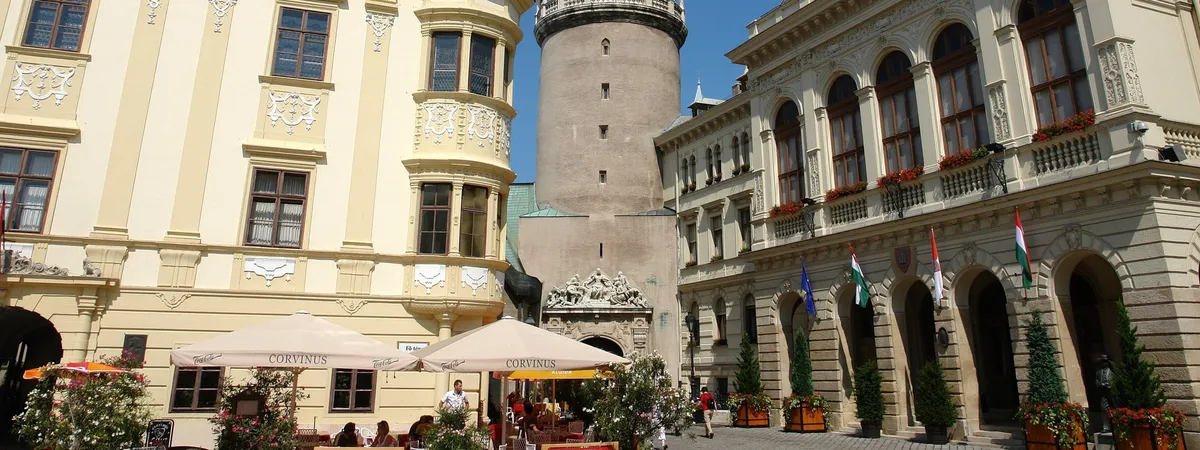
Thaler / Wikimedia Commons, CC BY-SA 3.0
Sopron
Best for: First-time visitors, Couples, Architecture lovers, Budget travelers
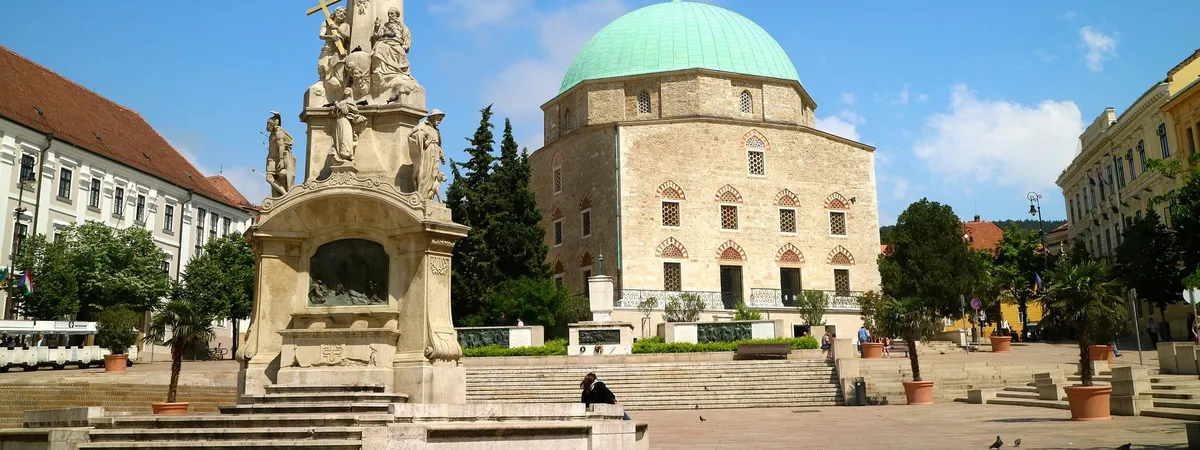
Erik Cleves Kristensen / Wikimedia Commons, CC BY 2.0
Pécs
Best for: First-time visitors, Couples, Architecture lovers, Budget travelers
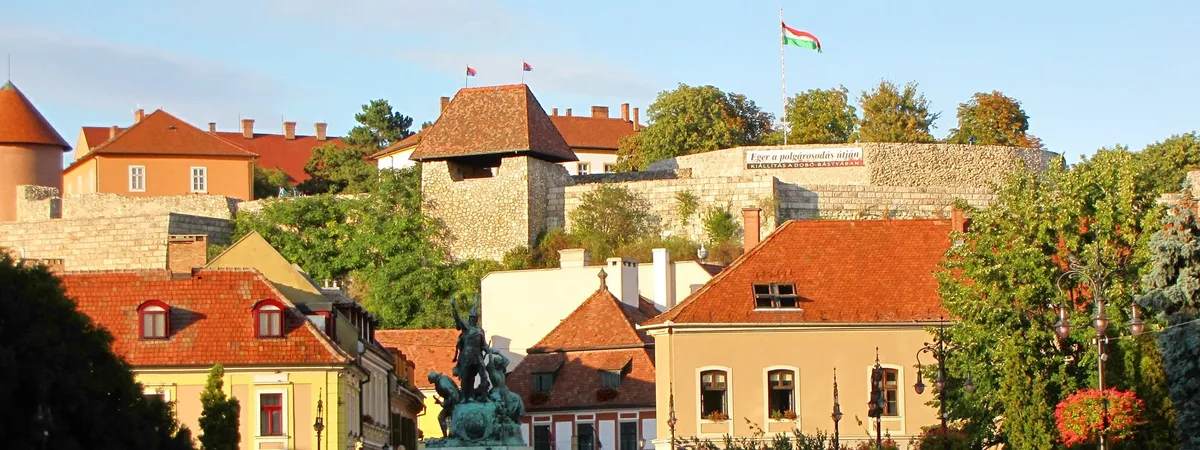
Natalia Semenova / Wikimedia Commons, CC BY 3.0
Eger
Best for: First-time visitors, Couples, Architecture lovers, Budget travelers
Tips
- Visit Budapest's thermal baths early morning or evening rather than midday — Széchenyi and Gellért both get crowded with tour groups by late morning, and lines for lockers and towels back up fast.
- In Eger's Szépasszony-völgy wine valley, stick to small tasting pours across a few cellars rather than full glasses everywhere — it adds up fast, and no one is driving out of there.
- Visit Szentendre on a weekday morning if possible — it's a common day-trip stop for Danube river cruises and tour buses, and the main square and riverside lanes fill up by midday on weekends.
Good to know
- Budapest's Banks of the Danube, the Buda Castle Quarter, and Andrássy Avenue (including the Millennium Underground Railway, continental Europe's oldest metro line) form a single UNESCO World Heritage Site.
- Budapest's bathhouse culture dates to Ottoman rule in the 16th and 17th centuries — the domed Rudas and Király baths were both built during that period and are still in use today.
- Hungary's commercial accommodation establishments registered around 8.7 million international guest arrivals in 2024, according to the Hungarian Central Statistical Office (KSH).
Frequently asked questions
- How many days do I need in Hungary?
- A week works well for a first trip: 3-4 days in Budapest, then a couple of days for one side trip — Eger for wine and a castle, or Szentendre as an easy half-day add-on. Pécs and Sopron each work better as a longer weekend on their own than as a rushed add-on to Budapest.
- Do I need to speak Hungarian to visit?
- No. English is spoken reasonably well in Budapest's hotels, restaurants, and central shops — less consistently in smaller towns, where a few German phrases can also help given how close places like Sopron and Eger sit to the Austrian border.
- Is Hungary expensive to visit?
- No — Hungary is generally cheaper than Austria and Western Europe, and comparable to or a little less than Poland. Budapest's prices have climbed in the most touristed central areas, but hotels, food, and transport still cost noticeably less than in Vienna, just across the border.