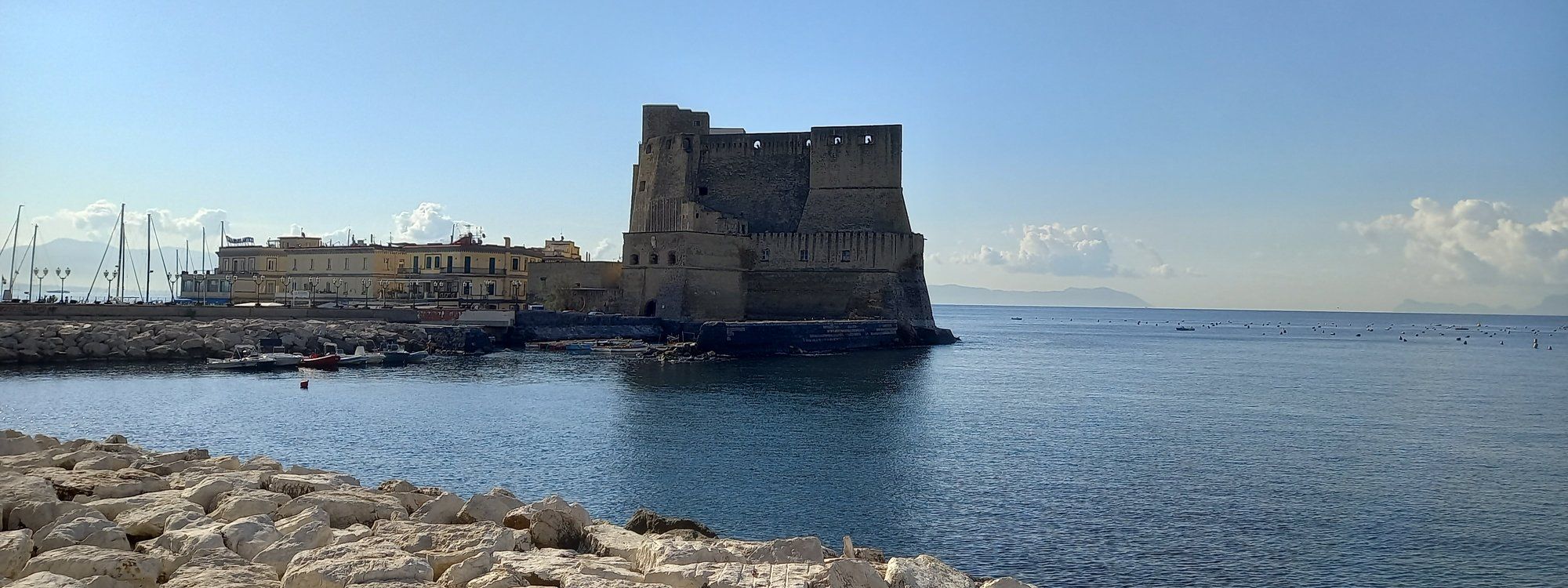
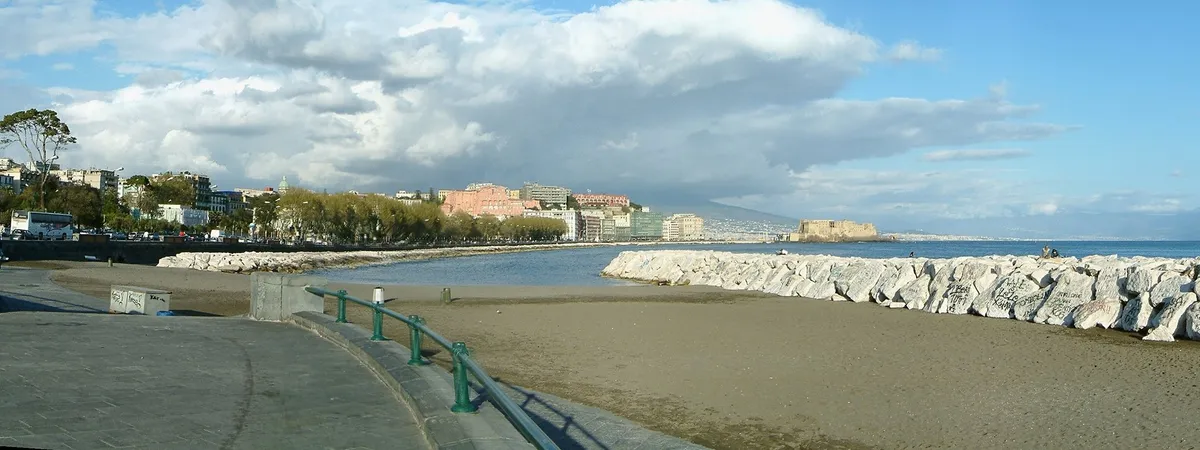
Castel dell'Ovo, a medieval waterfront fortress in Naples, seen across the harbor with the marina and hilltop city behind it

Marco Vito MV001 / Wikimedia Commons, CC BY-SA 4.0

Italy

Where to Stay in Naples

Naples is the capital of Campania, on Italy's southern coast, with Mount Vesuvius rising across its bay. Its historic center, a dense grid of narrow streets first laid out in Greek and Roman times, is one of the largest and oldest in Europe and has been a UNESCO World Heritage Site since 1995. Compared with Rome, Florence, or Milan, Naples is louder, denser, and less polished — traffic is heavier, streets are narrower, and the city can feel chaotic to first-time visitors. It's also where Neapolitan pizza originates, has a real, lived-in street life rather than a curated tourist center, and sits closest of any major Italian city to Pompeii, Herculaneum, and the Amalfi Coast, making it the standard base for day trips to all three.

Quick facts

Best time to visit
April–June and September–October bring milder weather than the hot, humid summer, when temperatures regularly climb into the low 30s°C (high 80s°F) and the city and its coastal day trips get crowded. Winters are mild but wetter. Easter and the Christmas period, when Via San Gregorio Armeno's nativity-scene workshops draw large crowds, are also busy.
Renting a car
The historic center's streets are narrow, often one-way, and shared with heavy scooter traffic, and several central areas — including the Centro Storico and parts of Chiaia — fall inside camera-enforced ZTL (limited traffic zone) restrictions. Driving here is genuinely difficult even for confident drivers, and unregistered ZTL entry can mean a fine arriving weeks later. The metro, buses, and walking cover the historic center well; a car is more useful only if you're heading out to the coast independently.

Where to stay

Compare neighborhoods

AreaBest forAdvantageTrade-off
ChiaiaCouplesA calmer, more polished base with a seafront promenade and park, still a manageable walk or short metro ride from the historic center.Farther from the cathedral and Spaccanapoli than staying in the Centro Storico itself, and generally more expensive.
Centro StoricoFirst-time visitorsRight in the middle of Naples' main sights, with the city's densest concentration of historic streets, pizzerias, and street life.Narrow, crowded, and loud at all hours, with more reported pickpocketing than in calmer neighborhoods like Chiaia.

Our picks for Naples

A handful of editorial calls across every neighborhood above, not just the highest star rating — see each hotel's own card further down for the full case for and against it.

A couple of hotels in Chiaia

Chiaia is the top-recommended area to stay in Naples.

Palazzo Alabardieri

★★★★
  • 📍 Best location

Our take A dependable, well-placed choice right in the middle of Chiaia's shopping streets.

Good for

  • Couples
  • First-time visitors

Couples and first-time visitors who want a central Chiaia address close to shopping and the seafront.

Why we like it

  • A two-minute walk from Via Chiaia's shops and close to Piazza dei Martiri
  • Multilingual staff and a consistently attentive front desk
  • Rooms come with air conditioning and satellite TV as standard, which isn't a given at every hotel in this price range in Naples
Check availability on Booking.com

Grand Hotel Parker's

★★★★★
  • ✨ Best luxury

Our take One of Naples' oldest luxury hotels, with genuine bay views most competitors in the city can't match.

Good for

  • Luxury travelers
  • Couples

Couples and travelers wanting a historic, full-service luxury base with views over the Bay of Naples.

Why we like it

  • Perched on the hillside above Chiaia, with bay and Vesuvius views from many rooms and the rooftop restaurant
  • Open continuously since 1870, with the kind of established service that comes from a long institutional history
  • Two in-house restaurants, including a well-regarded rooftop dining room

What to know

  • Sits above Chiaia's flat seafront streets, so getting to and from the hotel involves a short uphill walk or a funicular/taxi
Check availability on Booking.com

Useful travel information

Italy uses the euro. Naples International Airport (Capodichino) sits about 4 km northeast of the center and is reached by bus or taxi; a metro connection (Line 1) is planned but not yet complete. Napoli Centrale, the main train station at Piazza Garibaldi, connects to Rome, Florence, and Milan by high-speed rail and links directly to Naples' metro system. Line 1 of the metro covers the historic center and several other areas useful to visitors, and some stations double as small modern-art galleries. Naples has a real, if often exaggerated, reputation for petty theft and pickpocketing, particularly on crowded buses, at the station, and on the Circumvesuviana suburban train to Pompeii and Sorrento — keep bags zipped and in front of you and you'll likely be fine, as with any dense, tourist-heavy city center. Naples is also the standard base for day trips to Pompeii, Herculaneum, Mount Vesuvius, the Amalfi Coast, and Capri, all reachable within a day.

Tips

  • Keep bags zipped and worn in front on crowded buses, at Napoli Centrale, and on the Circumvesuviana train to Pompeii — it's the single area where pickpocketing complaints come up most.
  • Book Pompeii and Herculaneum tickets online in advance where possible, especially in summer, to skip the longest ticket-office lines.
  • If you're staying in or near the historic center, don't plan on renting a car for getting around the city itself — narrow streets, heavy scooter traffic, and ZTL cameras make it more hassle than it's worth.
  • Try a Neapolitan pizza while you're here — the wood-fired, thin-based style associated with the city has its own defined technique, recognized by UNESCO as intangible cultural heritage in 2017.

Frequently asked questions

Where should first-time visitors stay in Naples?
The historic center (Centro Storico) puts you within walking distance of Spaccanapoli, the cathedral, and the main sights, with the most street life but also the most noise and narrowest streets. Chiaia, the seafront district to the west, is calmer and more polished if you'd rather have a quieter base a short walk or metro ride from the center.
Is Naples safe for tourists?
Violent crime against tourists is rare, but petty theft and pickpocketing are a real, if often exaggerated, concern, especially on crowded buses, at the train station, and on the Circumvesuviana line to Pompeii. Ordinary precautions — a bag worn in front, phone not in a back pocket — cover most of the risk, and areas like the historic center, Chiaia, and the seafront are well-populated and generally fine to walk during the day and evening.
Is Naples a good base for visiting Pompeii, the Amalfi Coast, or Capri?
Yes — it's the closest major city to all three. Pompeii and Herculaneum are around 25 km away and reachable by train in under an hour, the Amalfi Coast is roughly an hour by car or bus, and Capri is a short ferry ride from the port. Many visitors use Naples as a home base and day-trip out rather than staying in each of those places separately.