Last updated June 16, 2026
Voytikof / Wikimedia Commons, CC BY-SA 2.5
Europe
Netherlands Travel Guide
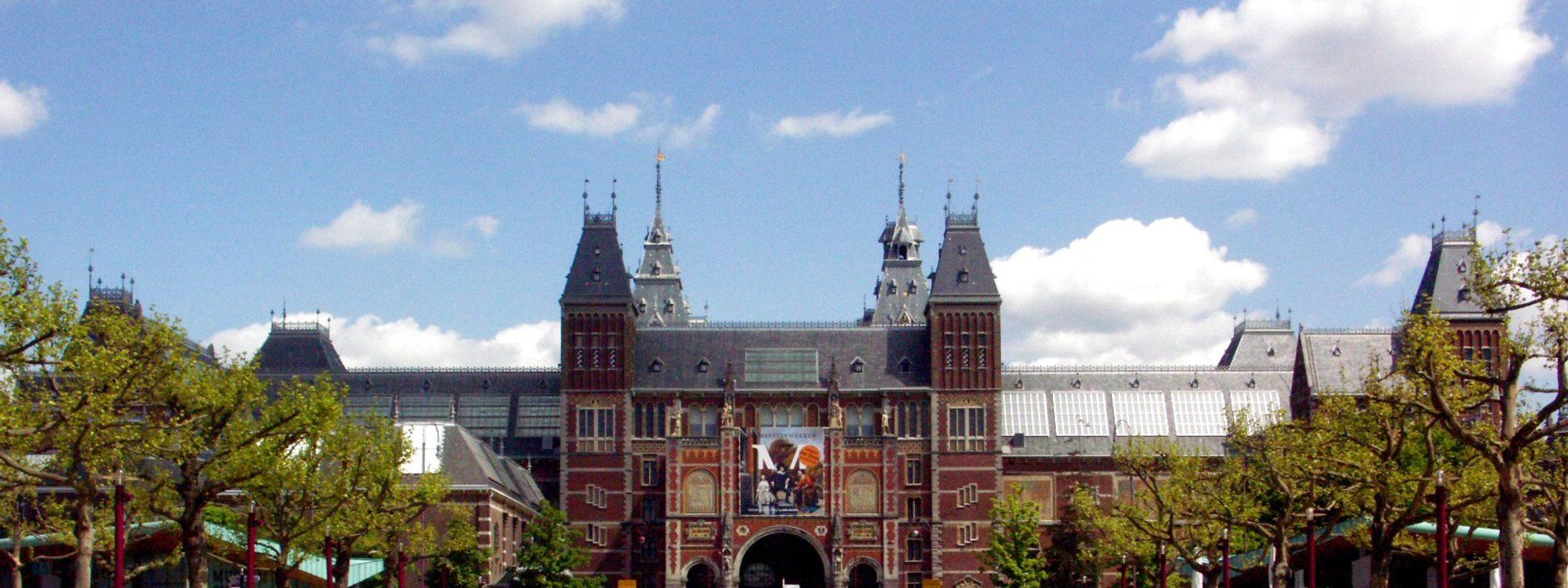
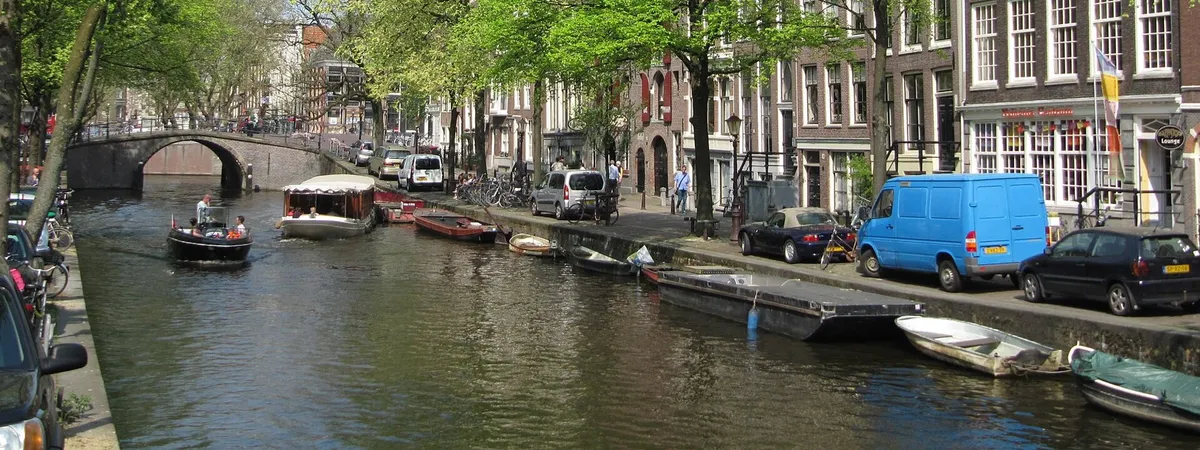
The Netherlands is a small, flat country on the North Sea, known for canals, cyclists, and some of the best-preserved historic city centers in Europe. Amsterdam's 17th-century canal ring is the country's best-known image — narrow, gabled townhouses leaning over the water, houseboats moored along the banks, and bicycles everywhere you look. The country runs well beyond its capital, though: Rotterdam's rebuilt, modern skyline, The Hague's stately government quarter and North Sea beach, and Maastricht's Burgundian old town near the Belgian and German borders each show a different side of the country.
Quick facts
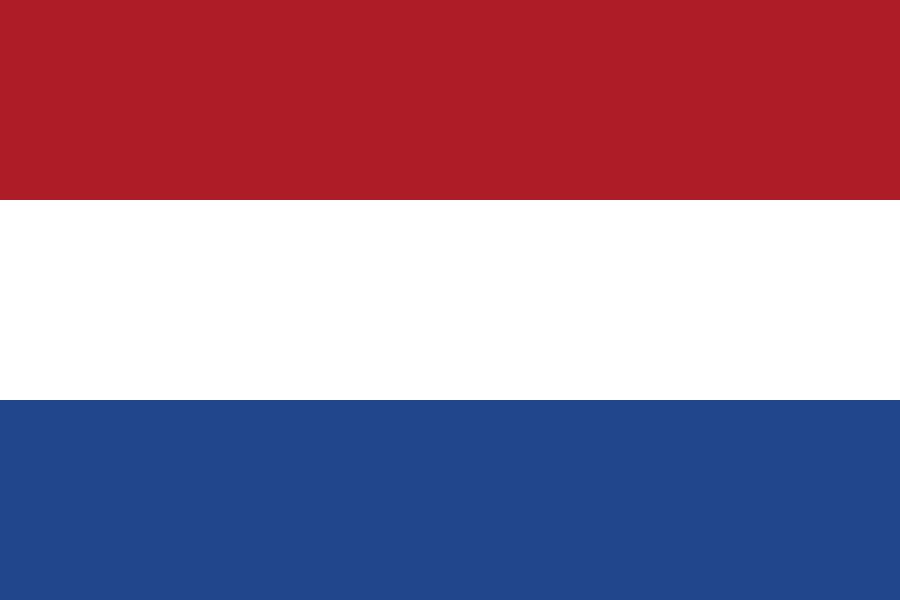
- Flag
- Netherlands
- Capital
- Amsterdam
- Language
- Dutch
- Currency
- EUR (€)
- Timezone
- Central European Time (UTC+1, UTC+2 in summer)
- Calling code
- +31
- Driving side
- Right-hand side
Distances between Dutch cities are short — most are under an hour apart by train — and flat, well-signed cycling infrastructure makes a bike as normal a way to get around as a car is elsewhere. Most first trips start in Amsterdam, the country's capital and the city most first-time visitors fly into.
Planning your trip
- Best time to visit
- Aim for April through May, when tulip season is in full swing, or September, once peak summer crowds have thinned but the weather is still mild. Summer (June–August) is the busiest and priciest stretch, especially in Amsterdam; winter is quiet and often gray, though December brings canal-side Christmas markets and ice skating.
- Good to know
- The Netherlands uses the euro (€). English is spoken fluently almost everywhere, including by shopkeepers and hotel staff, so language is rarely a barrier. Trains (NS) connect every major city quickly and reliably — a rental car is unnecessary and often a liability in historic centers built for bikes, not cars. Renting a bike is worth it even for a short stay, since dedicated cycle paths run through virtually every city. Tipping isn't expected — rounding up or leaving 5–10% for good service is appreciated but not required.
Cities
Where to stay in each of Netherlands's cities — pick one below to see its best neighborhoods and hotels.
Michiel1972 / Wikimedia Commons, CC BY-SA 3.0
Amsterdam
Best for: First-time visitors, Couples, Architecture lovers, Nightlife
Txllxt TxllxT / Wikimedia Commons, CC BY-SA 4.0
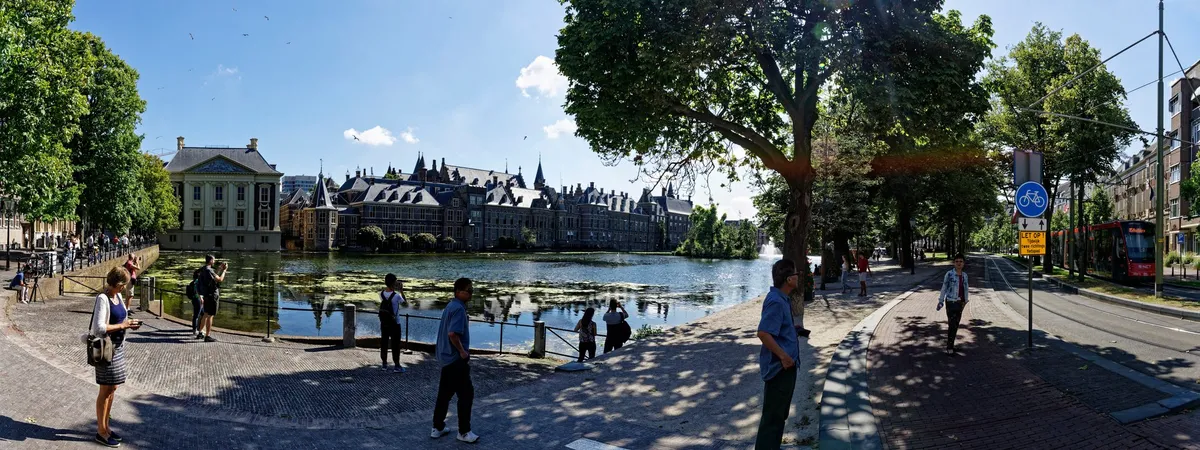
The Hague
Best for: Families, Beach time, First-time visitors
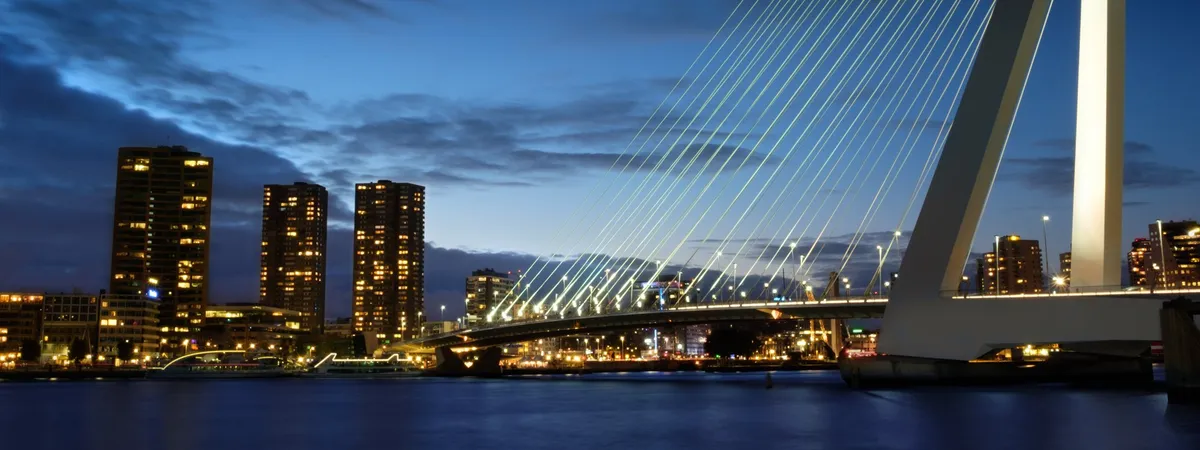
Kristoffer Trolle / Wikimedia Commons, CC BY 2.0
Rotterdam
Best for: Architecture lovers, Families, Budget travelers
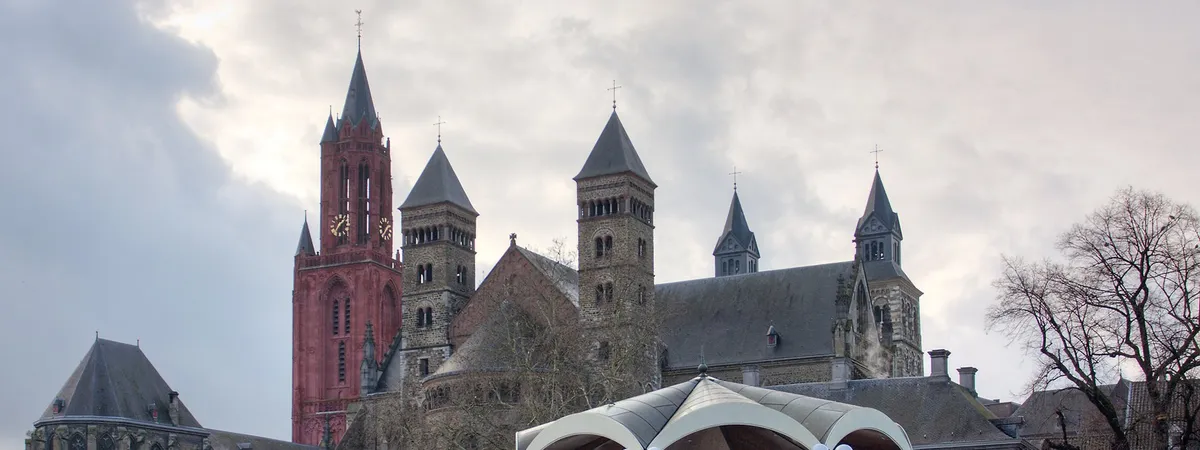
Sergey Ashmarin / Wikimedia Commons, CC BY-SA 3.0
Maastricht
Best for: Couples, Architecture lovers, First-time visitors
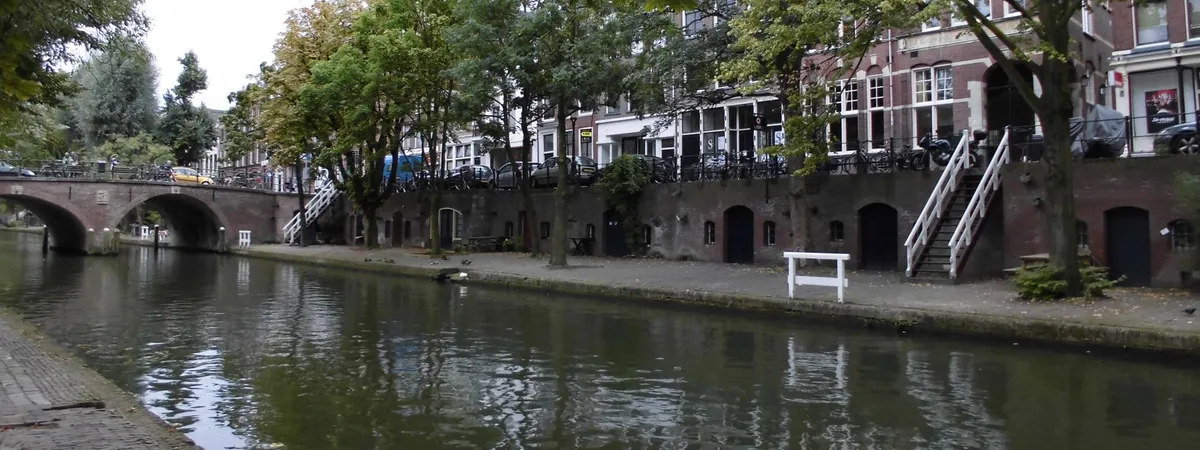
HenkvD / Wikimedia Commons, CC BY-SA 3.0
Utrecht
Best for: First-time visitors, Couples, Architecture lovers
Tips
- Rent a bike for at least a day. The Netherlands' flat terrain and dedicated cycle paths make it one of the easiest countries in the world to get around on two wheels, even for visitors who don't cycle much at home.
- Book popular museums — the Rijksmuseum, the Van Gogh Museum, the Anne Frank House — online well ahead. The best-known ones sell out days or weeks in advance, especially in summer.
- Watch for bikes everywhere, including on streets you might expect to be pedestrian-only. Look both ways before stepping into a cycle lane, usually marked by reddish asphalt.
Good to know
- About a quarter of the Netherlands lies below sea level, kept dry by a centuries-old system of dikes, pumps, and drainage canals.
- The country has more bicycles than it has people — roughly 23 million bikes for a population of about 18 million.
- Amsterdam's 17th-century Canal Ring (the Grachtengordel) is a UNESCO World Heritage Site, recognized as one of the world's largest and best-preserved historic urban landscapes.
Frequently asked questions
- What's the best way to get around the Netherlands?
- Trains connect all the major cities quickly, and within any city, cycling is often the fastest and most normal way to get around — even for visitors.
- Do I need to speak Dutch to visit?
- No. English is spoken fluently almost everywhere, from hotels and restaurants to shops and train stations.
- Is the Netherlands expensive to visit?
- It's a mid-to-high-cost destination by European standards, similar to Germany or Belgium. Amsterdam is the most expensive city; other Dutch cities run somewhat more affordable.