Last updated August 10, 2026

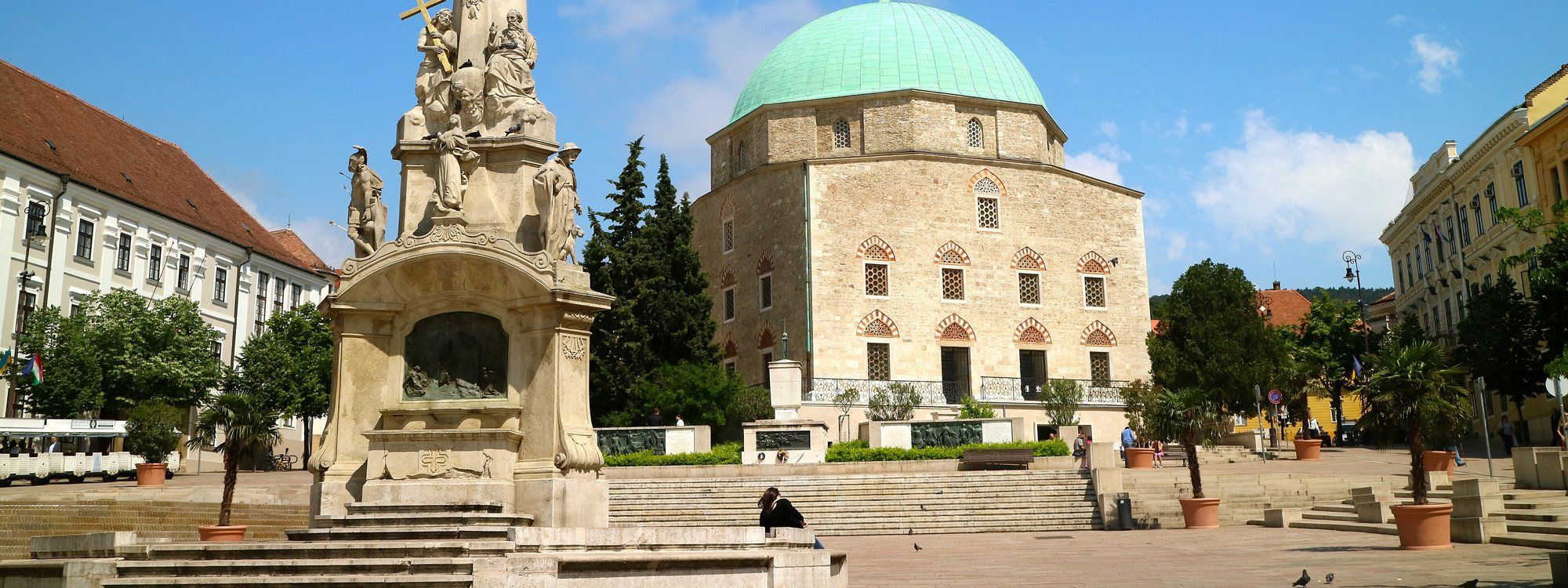
The green-domed Mosque of Pasha Qasim and the Holy Trinity column on Széchenyi tér in Pécs under a clear blue sky

Erik Cleves Kristensen / Wikimedia Commons, CC BY 2.0

Hungary

Where to Stay in Pécs

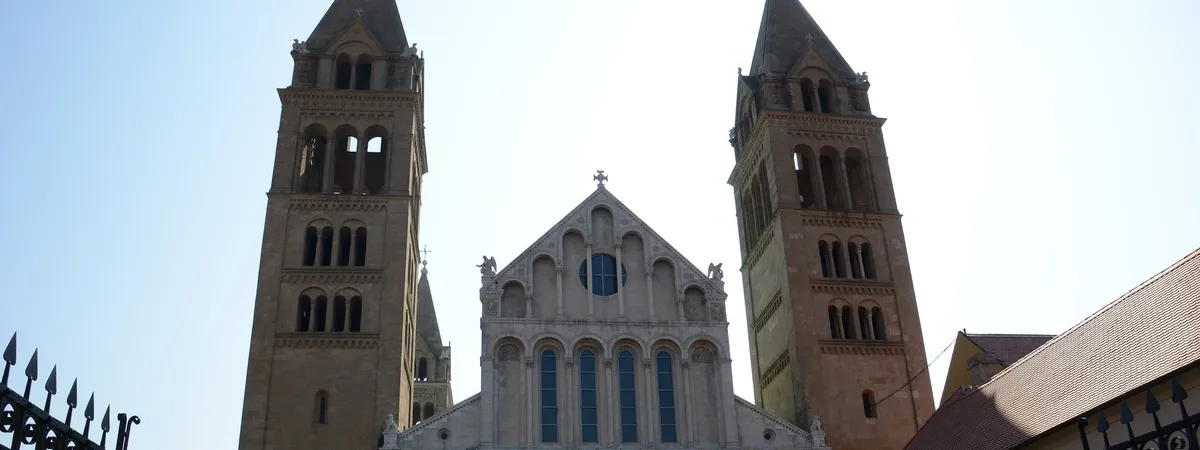
Pécs is a mid-size university town in southern Hungary, built up a gentle slope of the Mecsek hills with a compact, walkable historic center at its base. It's spent time under Roman, Ottoman, and Habsburg rule, and each left something behind: a 4th-century Christian burial ground now protected as a UNESCO World Heritage site, a 16th-century mosque that still anchors the main square, and a wave of Baroque and Neoclassical townhouses from the Habsburg era that now house cafes and shops. The historic center, Belváros, folds all of this into a small area you can cross on foot in under half an hour. Széchenyi tér is the natural starting point, framed by the domed former Mosque of Pasha Qasim and a Baroque plague column, with the four-towered Cathedral and the Early Christian Necropolis's painted burial chambers a short walk away. A 2010 stint as European Capital of Culture left the center with restored museums and public squares, and the Zsolnay family's 19th-century porcelain works, reborn as the Zsolnay Cultural Quarter of galleries and workshops on the edge of downtown, is still very much part of the city's identity — its eosin-glazed ceramics show up on rooftops, fountains, and street signs across town.

Quick facts

Best time to visit
Late spring (May-June) and September bring mild, comfortable weather for walking the old town and its hillside streets. Summer is warm and the liveliest, with outdoor terraces and festivals running through the university's summer break, while winter is quiet and cold, with some museum hours trimmed back.
Renting a car
You don't need a car for the historic center, which is small and walkable, or to reach the Zsolnay Cultural Quarter, which is served by local buses and taxis from downtown. A car becomes more useful if you're planning day trips into the Villány wine region or the wider Mecsek hills, since those areas have thinner public transport.

Where to stay

Belváros suits first-time visitors who want the Cathedral, Mosque and Necropolis sights within walking distance of their hotel, and couples looking for an evening of quiet squares and cafe terraces after the day-trip crowds thin out. It's also a reasonable base for solo travelers, given how compact and well-lit the center is at night.

Our picks for Pécs

A handful of editorial calls across every neighborhood above, not just the highest star rating — see each hotel's own card further down for the full case for and against it.

A couple of hotels in Belváros

Belváros is the top-recommended area to stay in Pécs.

Corso Hotel Pécs

★★★★
  • 👨‍👩‍👧 Best for families
  • 🧭 Best for first-time visitors

Our take Corso Hotel Pécs's larger scale and on-site restaurant suit families and groups who want more space and flexibility than a boutique property offers.

Highlights

  • An on-site restaurant serves Hungarian dishes with Pécs and Villány wines.
  • Free parking, a real convenience where old-town street parking is tight.
  • Rooms across several categories give families and groups room options.

What to know

  • It sits further from Széchenyi tér than the hotels right on the square.
  • As a larger property, it can feel less intimate than the area's boutique hotels, especially when tour groups are staying.
Check availability on Booking.com

Palatinus Boutique Hotel

★★★★
  • 🏆 Our overall pick
  • 📍 Best location
  • 🏛️ Best for architecture & design

Our take Palatinus pairs a genuinely central spot on the old town's main pedestrian street with a small, carefully finished interior distinct from the area's larger, generic hotels.

Highlights

  • On Király utca, walkable to Széchenyi tér, the mosque, and the Cathedral.
  • Executive, deluxe, and superior rooms, with a more personal feel than the city's larger hotels.
  • Stone-clad, design-led bathrooms rather than a generic modern refresh, for a cohesive look.

What to know

  • Because it's small, popular room categories can book out ahead of festival dates and peak summer weekends.
  • As a boutique property, some rooms may have smaller bathrooms or less soundproofing than a purpose-built modern hotel.
Check availability on Booking.com

Useful travel information

Hungary uses the forint (Ft); cards are accepted at hotels, restaurants, and most shops in the center, though small cafes may prefer cash. English is spoken at hotels and in the main tourist sights, less so once you're off the central squares, where a few Hungarian words help. Direct trains from Budapest-Kelenföld take around two and a half hours, and the historic center is a short walk or local bus ride from Pécs's train station.

Tips

  • Start at Széchenyi tér in the morning before tour groups arrive — you'll get a quieter look at the Mosque of Pasha Qasim and the square's Zsolnay ceramic fountain.
  • The Zsolnay Cultural Quarter is roughly a 15-20 minute walk from the historic center, or a short bus ride — worth treating as a half-day trip rather than a quick add-on, since it covers several museums and a wide open campus.
  • Look down as much as up in Belváros — many building facades, street signs, and rooftops use Zsolnay's distinctive eosin-glazed tiles, a detail easy to miss if you're focused on the bigger monuments.

Frequently asked questions

How many days do I need in Pécs?
One full day covers Széchenyi tér, the Mosque of Pasha Qasim, the Cathedral, and the Early Christian Necropolis at a comfortable pace. A second day gives you room for the Zsolnay Cultural Quarter and a slower wander through the old town's side streets without rushing.
Is Pécs worth visiting as a day trip from Budapest?
It's possible — the direct train takes around two and a half hours each way — but that mostly leaves time for the main square and one or two sights. Staying a night lets you see the Zsolnay Cultural Quarter properly and enjoy the old town in the evening, once day-tripper groups have left.
Is Pécs walkable?
The historic center is compact and easy to cross on foot in well under half an hour. The Zsolnay Cultural Quarter is further out, roughly a 15-20 minute walk or a short bus ride, so it's worth planning as a separate outing rather than an on-the-way stop.