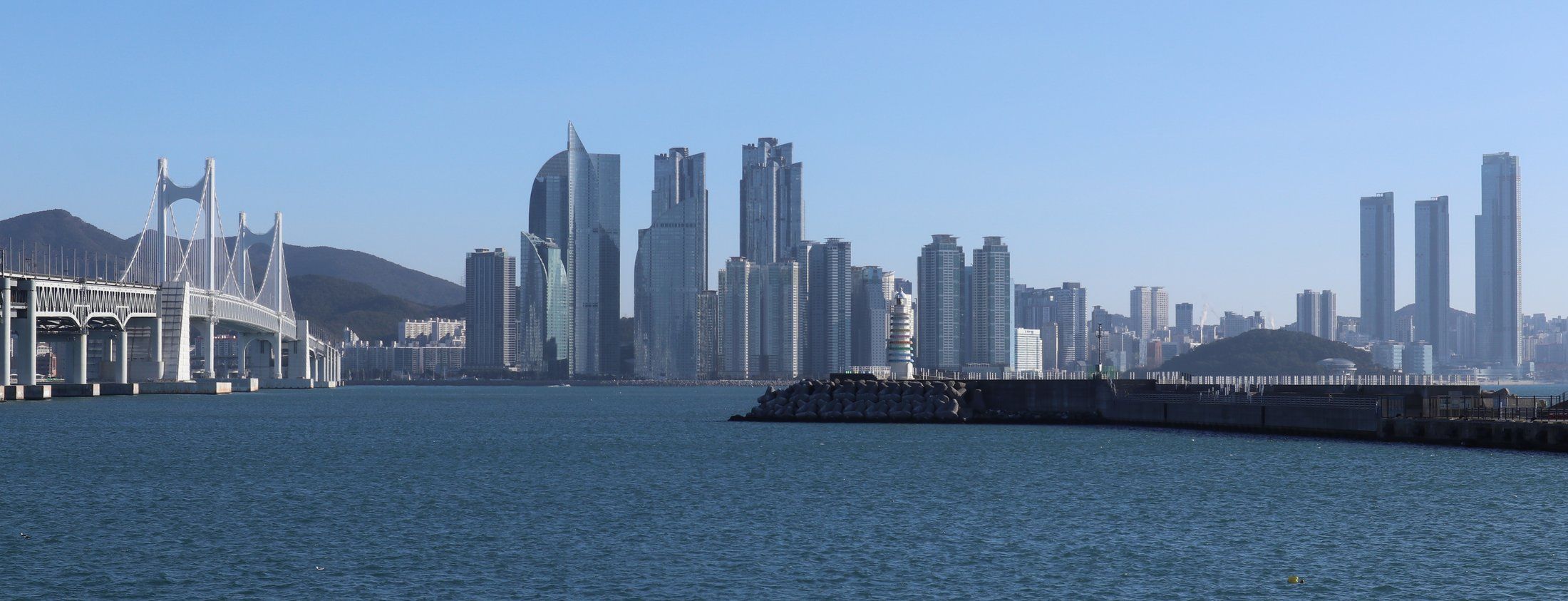
Busan's coastal skyline seen across the harbor, with the white suspension towers of Gwangan Bridge on the left and high-rise towers of Haeundae in the distance

S h y numis / Wikimedia Commons, CC BY 4.0

South Korea

Where to Stay in Busan

Busan is South Korea's second city and its main port, built around a string of sandy bays instead of a single center. Where Seoul is dense and inland, Busan spreads along the coast and up into the hills around it, with high-rise beach neighborhoods, a working fish market, and mountains that back right up against the shoreline. It's the kind of city where you can walk from a beach to a seafood market to a mountain temple in the same day, and where the skyline itself — a wall of towers along Haeundae and Gwangalli, backed by hills — is part of the draw. Most visitors split their time between two kinds of neighborhoods: the newer, high-rise beach districts on the east side of the city, built up for tourism and resort living, and the older, denser port neighborhoods around Nampo-dong, where Busan's identity as a fishing and trading city is still visible in its markets and narrow streets. The subway connects both halves directly, so it's easy to base yourself in one area and still reach the other without much hassle.

Quick facts

Best time to visit
Late spring (May) and early autumn (September-October) bring mild weather without the summer crowds. Summer (July-August) is peak beach season and by far the busiest and most humid time to visit, especially in Haeundae. Winter is cold but mild by Korean standards and much quieter, with the beaches largely empty.
Renting a car
Busan's subway network reaches Haeundae, Gwangalli, and Nampo-dong directly, and the city's coastal geography means a lot of driving involves tunnels and hills rather than direct routes. Parking near the beaches is limited and expensive in peak season. A car adds cost and stress without saving much time between the areas covered in this guide.

Where to stay

Compare neighborhoods

AreaBest forAdvantageTrade-off
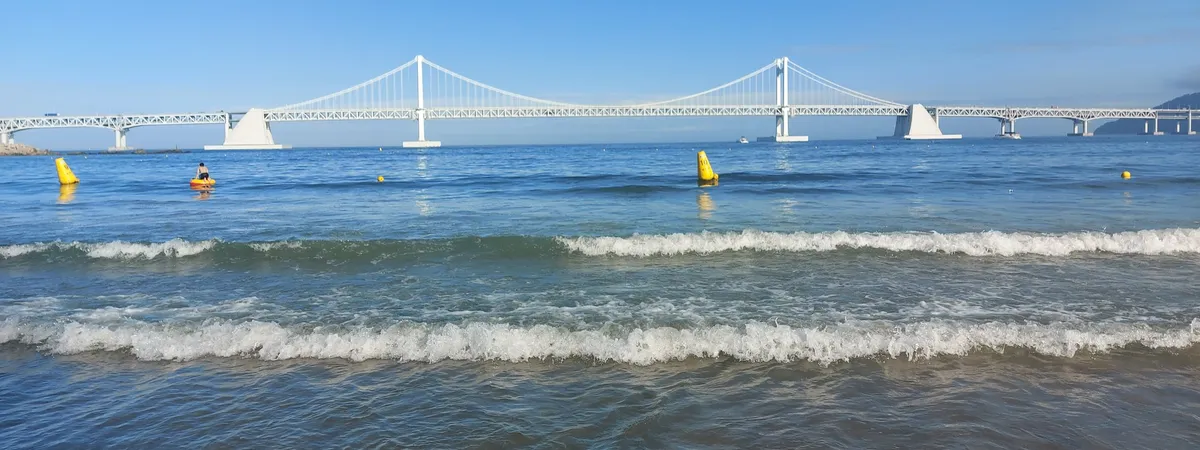
GwangalliBeach timeA quieter beach base than Haeundae with a genuinely striking night view of the Gwangan Bridge.A smaller beach and hotel strip, with fewer large international hotel options than Haeundae.
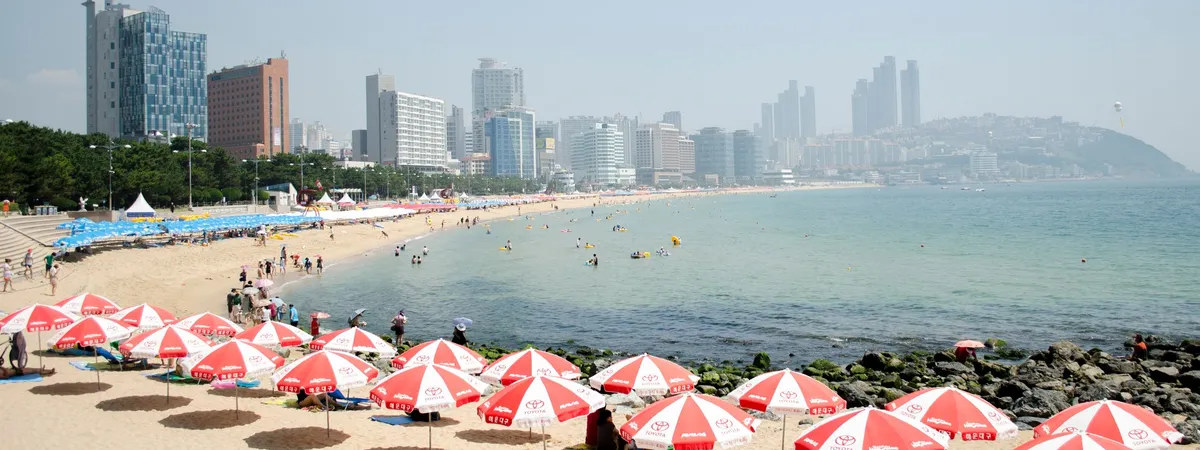
HaeundaeBeach timeThe widest, most developed stretch of beach in the city, with hotels right on the sand.The most crowded and expensive part of Busan to book a room during peak summer season.
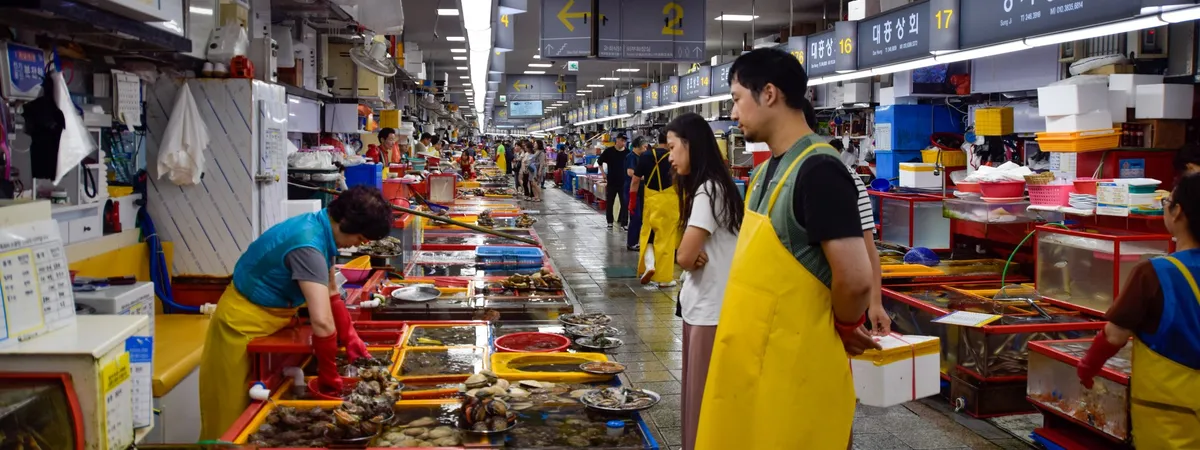
Nampo-dongFirst-time visitorsJagalchi Market, Gukje Market, and BIFF Square are all within easy walking distance of each other.No beach of its own — reaching Haeundae or Gwangalli means a subway ride, not a walk.

Our picks for Busan

A handful of editorial calls across every neighborhood above, not just the highest star rating — see each hotel's own card further down for the full case for and against it.

A couple of hotels in Gwangalli

Gwangalli is the top-recommended area to stay in Busan.

Kent Hotel Gwangalli by Kensington

★★★★
  • 📍 Best location

Our take Kent Hotel Gwangalli's shoreline position gives it a direct view of Gwangan Bridge from many rooms, making it one of the more reliable picks for travelers who want Gwangalli's calmer beach setting without giving up a genuine waterfront address.

Good for

  • Couples
  • First-time visitors

Couples and first-time visitors who want a Gwangalli stay directly on the sand, with bridge views built in.

Why we like it

  • Sits directly on the shore of Gwangalli Beach, a short walk from the bridge viewpoint.
  • Many rooms and the on-site bar face the water, with views toward Gwangan Bridge.
  • A larger property by Gwangalli standards, with more room variety than the area's smaller hotels.

What to know

  • Beach-facing rooms cost more than those facing inland — worth checking before booking if the view matters.
Check availability on Booking.com

Hotel Central Bay

★★★
  • 💰 Best value

Our take Hotel Central Bay's value comes from staying just off the beachfront rather than on it — a short walk gets you to the sand, at a noticeably lower rate than the hotels directly on the shore.

Good for

  • Budget travelers
  • Couples

Budget-conscious travelers who want to be close to Gwangalli Beach without paying beachfront rates.

Why we like it

  • A short walk from Gwangalli Beach and the Gwangan Bridge viewpoint.
  • Straightforward, comfortable rooms at a lower rate than Gwangalli's beachfront hotels.
  • A 24-hour front desk and on-site restaurant.

What to know

  • Being a block back from the beach, it doesn't have the direct sea views some nearby hotels offer.
Check availability on Booking.com

Useful travel information

South Korea uses the won (₩). A T-money transit card, sold at convenience stores and subway stations, covers the subway and buses across the city. English signage is common on the subway and at major sights but less consistent in local restaurants and markets. Tipping isn't expected anywhere.

Tips

  • Get a T-money card on arrival — it works on the subway and buses and saves the hassle of buying individual tickets.
  • If you're visiting in summer, book a Haeundae or Gwangalli hotel well ahead — both fill up fast in July and August, and prices rise sharply.
  • Jagalchi Market is busiest and most photogenic early in the morning, when the day's catch is being unloaded and sorted.

Frequently asked questions

How many days do I need in Busan?
Three to four days covers the main draws comfortably — a day or two around Haeundae and Gwangalli's beaches, and a day exploring Nampo-dong's markets and old town streets. It also works well as a shorter add-on to a longer Seoul-based trip.
Is Busan walkable?
Individual neighborhoods are walkable, especially the beach areas and Nampo-dong's market streets. The city as a whole is spread out along the coast, though, so moving between areas usually means a subway ride rather than a walk.
Is Busan cheaper than Seoul?
Generally yes, especially for hotels — comparable quality and location tend to cost less in Busan than in central Seoul, though prices in Haeundae rise close to Seoul levels during the summer beach season.