Last updated July 23, 2026

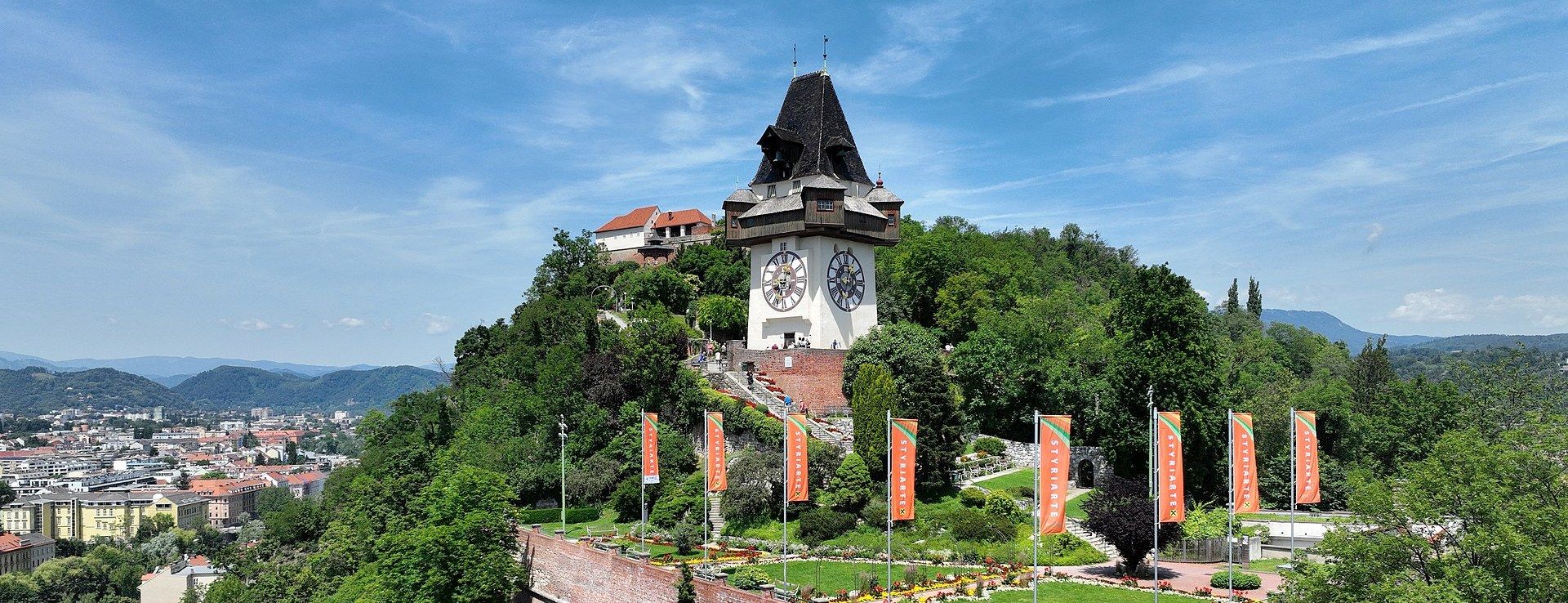
The Uhrturm clock tower atop Graz's Schlossberg hill, overlooking the old town's red rooftops

C.Stadler/Bwag / Wikimedia Commons, CC BY-SA 4.0

Austria

Where to Stay in Graz

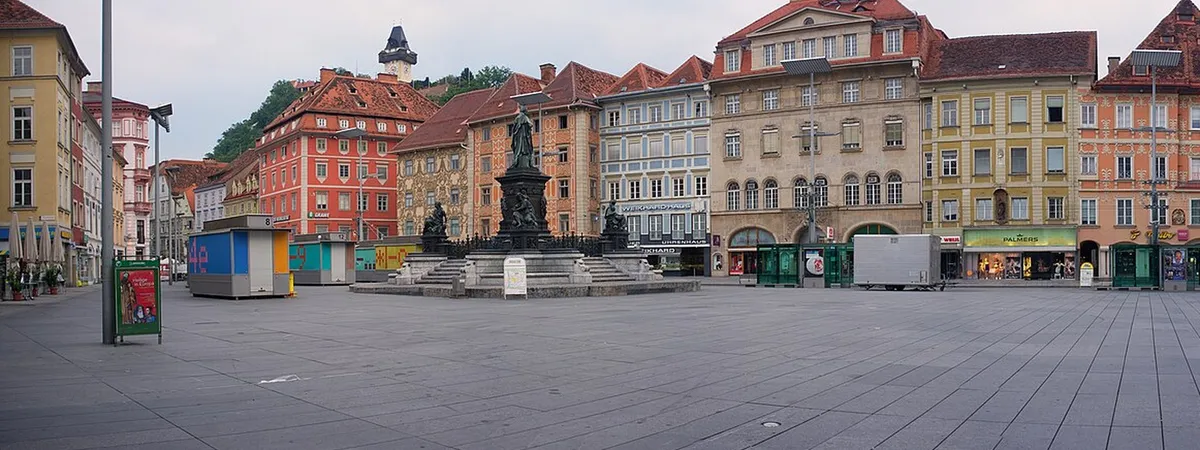
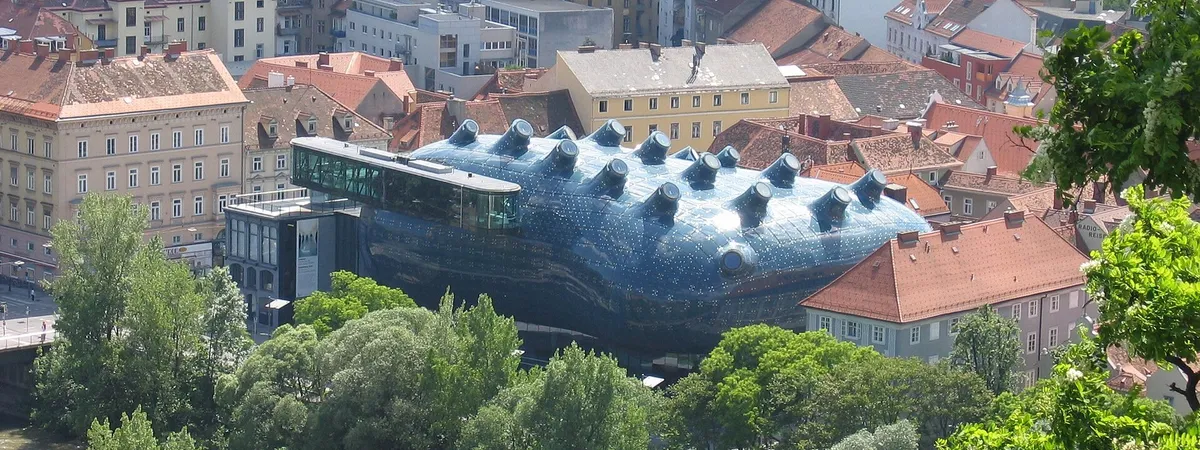
Graz is Austria's second-largest city, set in the southeast around a bend of the Mur River in Styria. Its old town, a dense grid of Gothic, Renaissance, and Baroque buildings below the Schlossberg hill, has been a UNESCO World Heritage Site since 1999. A large student population across several universities gives Graz a livelier, younger feel than its size might suggest, and a wave of contemporary architecture — most visibly the Kunsthaus Graz — sits directly against the historic core.

Quick facts

Best time to visit
Late spring through early autumn (May-September) brings the best weather for the Schlossberg's gardens and the city's many outdoor cafés, with long daylight hours for walking the old town. December draws visitors for the Christmas markets on Hauptplatz and around the Schlossberg. Winters are cold and grey but far less crowded, and hotel rates tend to be lower outside the summer and Advent peaks.
Renting a car
You don't need a car to see Graz's old town — it's compact, largely pedestrianized, and well served by trams that connect the center to the train station and outlying sights like Eggenberg Palace. Parking in the historic core is limited and restricted, so a car is more of a liability than a help unless you're using Graz as a base for day trips into the surrounding Styrian countryside or wine region.

Where to stay

Compare neighborhoods

AreaBest forAdvantageTrade-off
AltstadtFirst-time visitorsThe cathedral, Landhaus, Hauptplatz, and Schlossberg are all within an easy walk of each other.Rooms directly on Hauptplatz or the busiest lanes can pick up evening bar and restaurant noise.
LendCouplesA short walk or tram ride from the old town, with generally better value than comparable old-town hotels.Puts most of the old town's headline sights a 10-15 minute walk away rather than right outside the door.
GriesBudget travelersA short walk from the old town across the Hauptbrücke, generally cheaper than comparable old-town or Lend hotels.Feels more like an everyday working district than a tourist quarter, and some streets away from the riverside can feel rougher after dark.

Our picks for Graz

A handful of editorial calls across every neighborhood above, not just the highest star rating — see each hotel's own card further down for the full case for and against it.

A couple of hotels in Altstadt

Altstadt is the top-recommended area to stay in Graz.

Schlossberghotel

★★★★
  • ✨ Best luxury
  • 🏛️ Best for architecture & design

Our take A historic building filled with an unusual art collection, at the foot of the Schlossberg, with a rooftop pool looking over the old town's roofs.

Highlights

  • At the foot of the Schlossberg, near the funicular and paths up to the Uhrturm.
  • Contemporary art and antiques throughout public spaces and many rooms.
  • A rooftop pool and terrace over the old town's rooftops, unusual this central.

What to know

  • As a historic building, room layouts and sizes vary more than in a purpose-built modern hotel.
  • Being close to the riverside and old town, some rooms can pick up street or foot-traffic noise below.
Check availability on Booking.com

Aiola Living Boutique Hotel Graz

★★★★
  • 🏆 Our overall pick
  • 🏛️ Best for architecture & design

Our take A genuinely central Altstadt base with individually designed rooms rather than one repeated layout, and quality that holds up without old-town's steepest prices.

Highlights

  • A few minutes' walk from Hauptplatz, the cathedral, and the Landhaus.
  • Each room is individually designed rather than following a single template.
  • Central without sitting on the busiest party lanes, so generally calmer.

What to know

  • Room sizes and layouts vary given the individual design — check details if size matters.
  • Some room categories book up quickly in summer given the central location.
Check availability on Booking.com

Useful travel information

The currency is the euro and German is the local language, though English is widely understood in hotels and restaurants. Graz Airport sits about 10km south of the center, roughly a 20-25 minute bus or taxi ride, with fewer direct international connections than Vienna — many visitors arrive by train instead, into Graz Hauptbahnhof. Trams and buses cover the city cheaply, and the old town itself is best explored on foot.

Tips

  • The Schlossberg can be reached on foot up several stairways, by the funicular (Schlossbergbahn), or by a glass lift built into the hillside — worth timing for a clear day given the views over the old town's rooftops.
  • Hauptplatz and the surrounding lanes get genuinely busy with tour groups by mid-morning in summer; an early walk before breakfast is a quieter way to see the main sights.
  • The Kunsthaus Graz and the old town sit on opposite banks of the Mur, connected by the Hauptbrücke and the Murinsel, an artificial floating island with a café — a good link if you're splitting time between the two areas.

Frequently asked questions

How many days do you need in Graz?
One to two full days covers the old town, the Schlossberg, and the Kunsthaus comfortably. Add a day if you want to visit Eggenberg Palace or take a day trip into the Styrian wine country nearby.
Is Graz worth visiting?
Yes — it's a compact, walkable UNESCO World Heritage old town with a livelier, younger feel than Austria's more heavily touristed cities, plus a striking contrast between historic and contemporary architecture.
Do you need a car in Graz?
No. The old town is pedestrian-friendly and trams cover the rest of the city. A car mainly helps for day trips into the surrounding Styrian countryside.