



The west front of the United States Capitol building and its dome, seen across the lawn on a clear day

Photo by Architect of the Capitol (Wikimedia Commons), Public domain

United States

Where to Stay in Washington, D.C.

Washington, D.C. is a monumental city built around free museums, marble memorials, and the business of running the country — and it's more walkable than its wide avenues suggest. This guide covers the neighborhoods that work best as a base: the museum-and-monument convenience of Penn Quarter, the historic waterfront charm of Georgetown, the leafy, restaurant-lined streets of Dupont Circle, and the townhouse-lined blocks of Capitol Hill. Don't miss the Smithsonian museums along the National Mall (all free), the view from the Lincoln Memorial steps, and the cherry blossoms around the Tidal Basin in late March and early April.

Quick facts

Best time to visit
Visit in spring (late March through April) for the National Cherry Blossom Festival, or September through November for mild weather and thinner crowds. Summers are hot and humid with frequent afternoon thunderstorms, and hotel rates peak during cherry blossom season and around major events, so book ahead if you're coming then.
Renting a car
Skip the rental car. Parking downtown is expensive and limited, traffic can be heavy, and the Metro, bus network, and walking cover every area in this guide well — Georgetown, the one area without a Metro stop, is still an easy bus ride or a 20-minute walk from Dupont Circle.

Where to stay

Compare neighborhoods

AreaBest forAdvantageTrade-off
Penn QuarterFirst-time visitorsThe shortest walk to the National Mall's museums and monuments of any area in this guide.Streets around Capital One Arena get loud and congested on event nights.
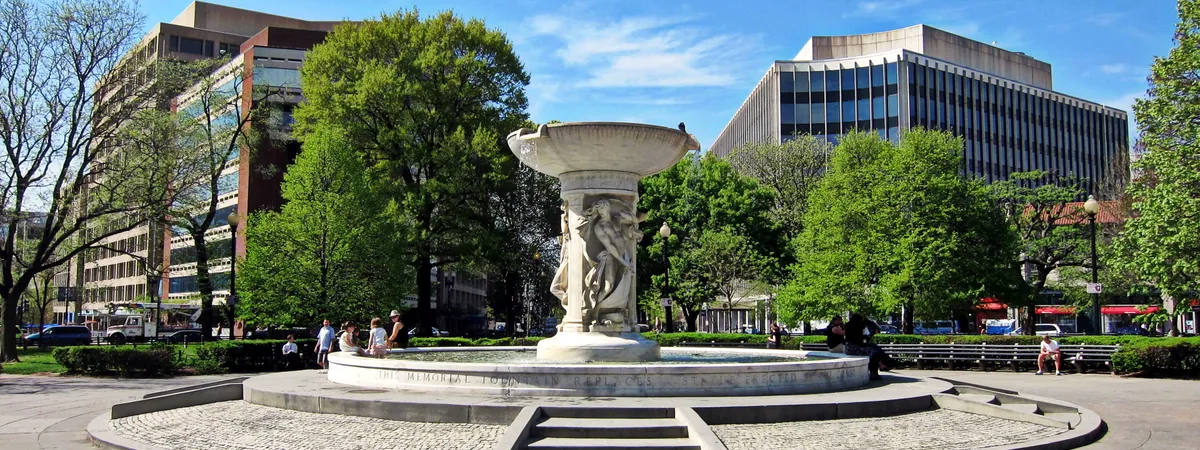
Dupont CircleFirst-time visitorsA genuinely lived-in, walkable neighborhood with one of the city's best restaurant clusters right outside your door.It's a 25-30 minute walk from the National Mall, so you'll want the Metro to get there.
GeorgetownCouplesA quieter, historic, waterfront setting with none of downtown's government-building backdrop.The only area in this guide with no Metro station of its own.
Capitol HillFamiliesA quieter, residential feel within walking distance of the Capitol, Library of Congress, and Eastern Market.It's a longer walk to the Mall's west-end museums (like the Smithsonian Castle or Lincoln Memorial) than from Penn Quarter.

Our picks for Washington, D.C.

A handful of editorial calls across every neighborhood above, not just the highest star rating — see each hotel's own card further down for the full case for and against it.

A couple of hotels in Penn Quarter

Penn Quarter is the top-recommended area to stay in Washington, D.C..

Waldorf Astoria Washington DC

★★★★★
  • ✨ Best luxury

Our take The top pick in this guide for anyone shopping at the luxury end — a grand, full-service hotel right on Pennsylvania Avenue with an easy walk to the White House, National Mall, and downtown's main sights.

Good for

  • Luxury travelers
  • Couples

Couples and travelers who want the highest tier of downtown luxury, with a genuinely central, walkable location.

Why we like it

  • Sits directly on Pennsylvania Avenue, putting the White House, National Mall, and CityCenterDC's shops and restaurants within an easy walk
  • A full-service spa and fitness center, uncommon among the boutique hotels elsewhere in this guide
  • Peacock Alley, the on-site restaurant, gives you a solid option for breakfast or dinner without leaving the building

What to know

  • This is a full-price luxury property — rates run well above the other hotels in this guide
  • Its grand scale means a more traditional hotel feel than the boutique properties nearby, which suits some travelers better than others
Check availability on Booking.com

Riggs Washington DC

★★★★★
  • 🏛️ Best for architecture & design

Our take A bold, design-forward reuse of a historic bank building that stands out from the standard convention-hotel look elsewhere in Penn Quarter, without losing the comfort you'd expect at this price point.

Good for

  • Luxury travelers
  • Architecture lovers
  • Couples

Couples and travelers who want a striking, design-led luxury stay in a genuinely historic downtown building.

Why we like it

  • Occupies the ornate former Riggs National Bank building, with soaring ceilings and architectural details a new-build hotel couldn't replicate
  • Silver Lyan, the cocktail bar in the old bank vault, is a distinctive touch that also works well for an evening out
  • Central Penn Quarter location, an easy walk to the National Portrait Gallery, Capital One Arena, and the National Mall

What to know

  • This is a design-focused luxury property rather than a sprawling resort — expect a boutique-scale hotel, not extensive amenities like a large spa or pool
  • Weekday rates run noticeably higher than weekends, reflecting the downtown business-travel crowd
Check availability on Booking.com

Useful travel information

The US dollar is the currency. The Metro (WMATA) connects Penn Quarter, Dupont Circle, and Capitol Hill directly, and buses or a short walk cover Georgetown, which has no Metro station of its own. Many national museums close on December 25 and are otherwise free and open daily; check hours for the specific Smithsonian buildings you want to visit, since a few close one day a week for maintenance.

Tips

  • Book free timed-entry passes for popular sites — like the Washington Monument and the National Museum of African American History and Culture — online in advance; walk-up passes can run out early in the day.
  • The Metro closes earlier than many visitors expect (midnight on weeknights, 1am on Friday and Saturday) — plan your last ride back accordingly or budget for a rideshare.

Frequently asked questions

Where should first-time visitors stay in Washington, D.C.?
Stay in Penn Quarter if you want to be closest to the National Mall's museums and monuments, or Dupont Circle for a more residential, restaurant-heavy base that's still an easy Metro ride from everything.
Is Washington, D.C. walkable?
Each neighborhood in this guide is easy to walk around on its own, and the National Mall connects several of the biggest sights on foot — but the city overall is spread across a grid too wide to walk end to end, so plan on the Metro or bus to cover longer distances.
Do I need a car in Washington, D.C.?
No — skip it. The Metro and bus network reach nearly everywhere visitors go, parking is expensive and limited, and a car adds hassle without adding convenience.