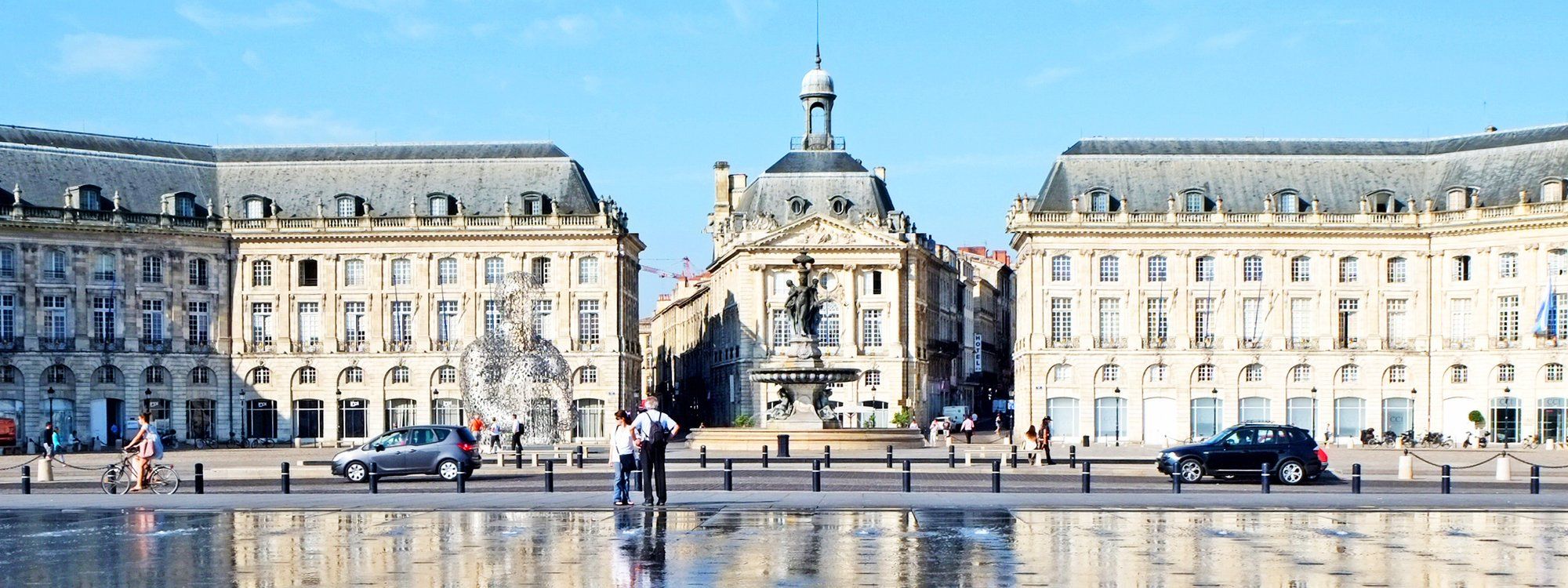
Place de la Bourse in Bordeaux reflected in the Miroir d'eau, with the Three Graces fountain and the city's 18th-century stone facades behind

Patrick Despoix / Wikimedia Commons, CC BY-SA 4.0

France

Where to Stay in Bordeaux

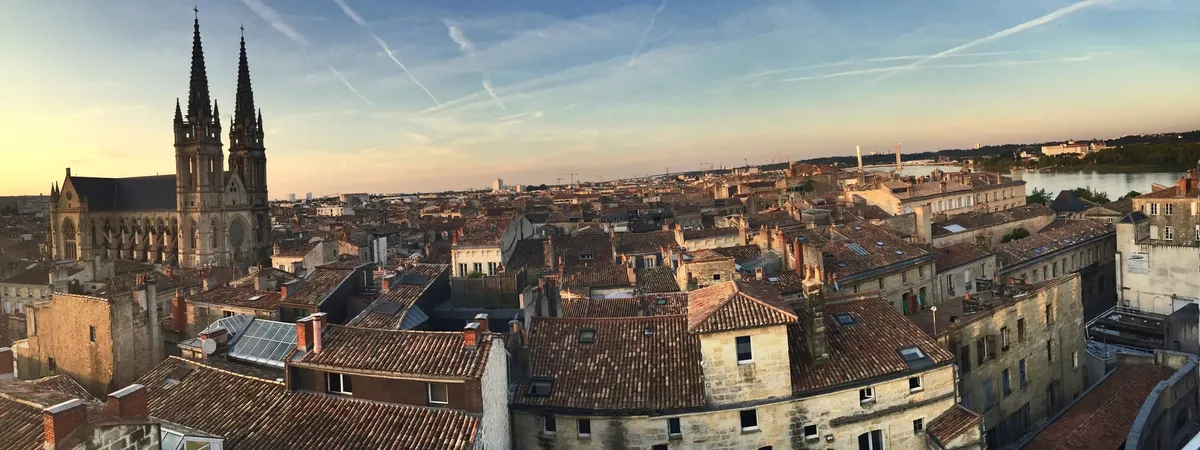
Bordeaux sits on a bend of the Garonne River in southwest France, its 18th-century center laid out in cream limestone that earned the whole thing UNESCO World Heritage status in 2007. It's a smaller, calmer city than Paris — a couple of main squares, a long riverside promenade, and streets you can walk end to end without much effort. The classic view is Place de la Bourse facing the Miroir d'eau, a shallow reflecting pool that turns the square's facade into a mirror image on calm days. Beyond the old town, Bordeaux is really the gateway to its own wine region: Saint-Émilion, the Médoc, and dozens of other appellations are all within an hour's drive or train ride, and the Cité du Vin museum on the riverfront makes a good introduction even if you never leave the city.

Quick facts

Best time to visit
May, June, and September are the best months — mild to warm weather without high summer's heat, and September also overlaps with the grape harvest in the surrounding vineyards. July and August are warmest and busiest, though rarely as crowded as Paris or Nice. Winter is cool and often wet, with December and January the coldest months, but hotel rates drop and the old town is quiet.
Renting a car
Skip a rental car if you're staying in the center and sticking to the city itself — trams and walking cover it easily, and parking in the old town is limited. A car (or a guided tour) makes more sense if you want to visit several wine estates in the Médoc or Saint-Émilion in one day, since many smaller châteaux are hard to reach by public transport.

Where to stay

Compare neighborhoods

AreaBest forAdvantageTrade-off
Saint-PierreFirst-time visitorsAs central as it gets in Bordeaux — Place de la Bourse, the river, and most of the old town's restaurants are all a short walk away.The busiest squares stay noisy into the evening on weekends, and rooms in the older buildings tend to be small.
ChartronsCouplesA quieter, more residential base than Saint-Pierre, still an easy walk or short tram ride from the main sights.Fewer restaurants and less to do in the evening than Saint-Pierre, and it's a longer walk to some of the city's biggest landmarks.

Our picks for Bordeaux

A handful of editorial calls across every neighborhood above, not just the highest star rating — see each hotel's own card further down for the full case for and against it.

A couple of hotels in Saint-Pierre

Saint-Pierre is the top-recommended area to stay in Bordeaux.

Quality Hotel Bordeaux Centre

★★★
  • 💰 Best value

Our take A straightforward, well-run choice that puts you inside the Saint-Pierre grid at a lower price point than the district's boutique options.

Good for

  • Budget travelers
  • First-time visitors

Good for budget-conscious travelers and first-time visitors who want a central Saint-Pierre base without paying for a boutique property.

Why we like it

  • Sits inside the Saint-Pierre streets, a few minutes' walk from Place du Parlement and the river
  • Housed in a 19th-century building with more character than a typical chain hotel
  • Straightforward rates for how central the location is

What to know

  • Rooms are relatively compact, in keeping with the building's age
  • Street-facing rooms can pick up some evening noise from nearby restaurant streets
Check availability on Booking.com

Villa Reale

★★★★★
  • ✨ Best luxury
  • 📍 Best location

Our take A quietly impressive property that turns a historic Place du Parlement address into a genuinely design-led stay, with a level of polish that stands out in this part of Bordeaux.

Good for

  • Couples
  • Luxury travelers
  • Architecture lovers

Suits couples and travelers who want a design-forward stay right on Saint-Pierre's central square.

Why we like it

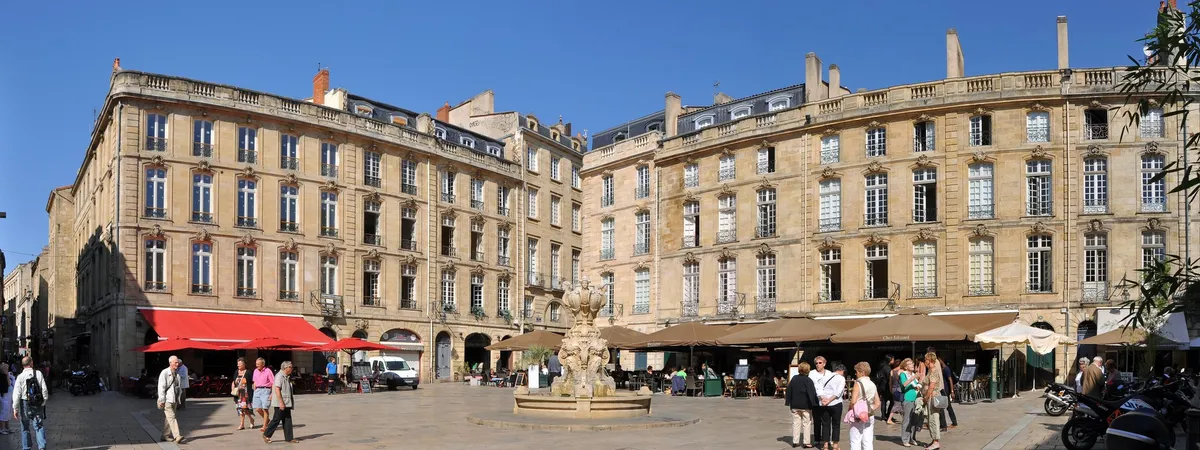
  • Occupies a listed 18th-century building right on Place du Parlement itself
  • Interiors lean into the building's history rather than a generic five-star look
  • A sauna and other amenities that are unusual for a boutique property this size
  • About as central as a Saint-Pierre stay gets, steps from the square's cafés and restaurants

What to know

  • Rooms facing the square can hear some café and restaurant noise on weekend evenings
Check availability on Booking.com

Useful travel information

France uses the euro. Bordeaux–Mérignac Airport sits about 12km west of the center; a tram line connects the airport to the city, or a shuttle bus reaches Bordeaux-Saint-Jean train station in around 30 minutes. Bordeaux has no metro, but four tram lines cover the center and outer districts well between roughly 5am and midnight, and the old town itself is flat and compact enough to cover mostly on foot. Bordeaux-Saint-Jean is also the hub for train travel — Paris is about two hours away by high-speed TGV, and Saint-Émilion and other wine towns are reachable by regional train. Central Bordeaux is generally safe for tourists; the main everyday risks are pickpocketing in crowded spots and around the train station.

Tips

  • Set aside at least a half-day for a trip into the wine region — a guided tour to Saint-Émilion or the Médoc, or at minimum a visit to the Cité du Vin museum on the riverfront, which covers wine history and culture from around the world, not just Bordeaux.
  • Watch the Miroir d'eau's cycle at Place de la Bourse: it alternates between a shallow reflecting pool, a light mist, and a dry stretch every twenty minutes or so, and is popular with kids wading in on warm days.
  • Rent a bike for getting around — central Bordeaux is flat, and the city has an extensive network of cycle lanes and a public bike-share system.
  • Book Saint-Émilion or Médoc day tours a few days ahead in high season (June to September) — popular small-group tours to well-known châteaux can sell out.

Frequently asked questions

Where should first-time visitors stay in Bordeaux?
Saint-Pierre, the historic core around Place de la Bourse and the river, puts you within walking distance of almost everything. Chartrons, a bit further along the riverfront, is a quieter, more residential option that's still an easy walk or tram ride from the center.
Is Bordeaux walkable?
Yes — the old town is flat and compact, and most central sights are within about a 20-minute walk of each other. Trams cover anything further out, and there's no need for a car unless you're heading into the wine region.
How many days do you need in Bordeaux?
Two to three days covers the old town, the riverfront, and the Cité du Vin at an easy pace. Add at least one more day if you want to visit the surrounding wine region, since even a single château or two can take most of a day.