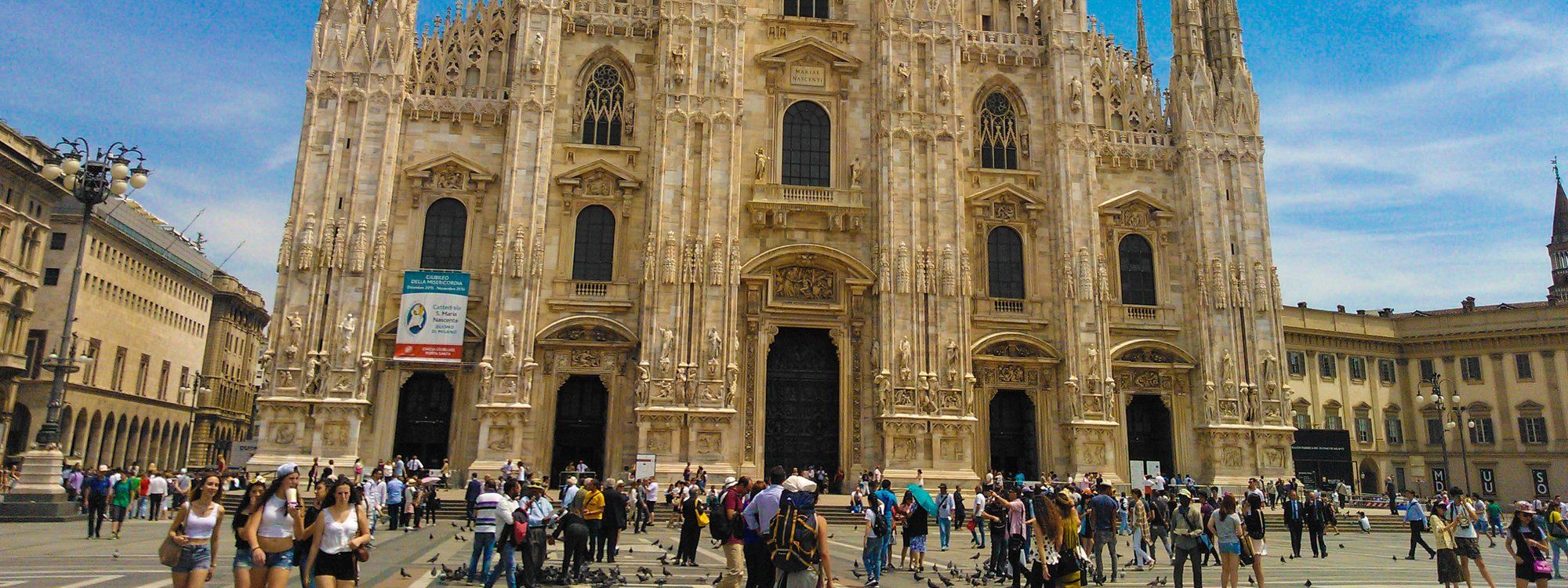
The white marble Gothic facade of Milan Cathedral (the Duomo), with its spires and statues, seen from Piazza del Duomo

NahidSultan / Wikimedia Commons, CC BY-SA 4.0

Italy

Where to Stay in Milan

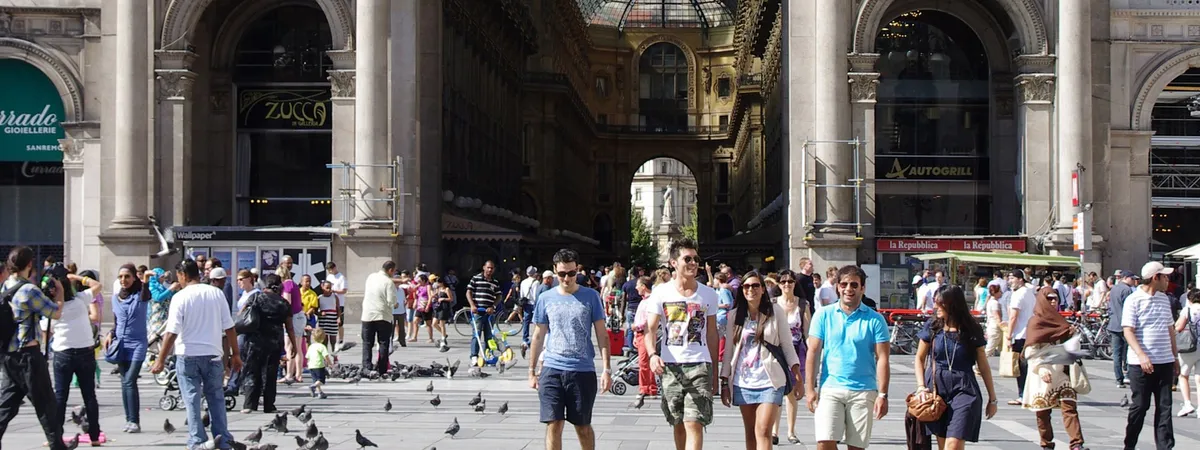
Milan is Italy's design, fashion, and business capital, set in the Lombardy plain in the country's north. Its historic core centers on the Duomo, a Gothic cathedral that took nearly six centuries to complete, and the glass-roofed Galleria Vittorio Emanuele II beside it. Compared with Rome, Venice, or Florence, Milan has fewer ancient ruins and ranks fewer must-see museums, but it has a dense concentration of fashion showrooms, design studios, and contemporary galleries, plus Leonardo da Vinci's Last Supper and the La Scala opera house. The center is compact and walkable, with a canal district and an art-gallery quarter both a short walk or metro ride from the cathedral.

Quick facts

Best time to visit
April–May or September–October bring mild weather without summer's heat and humidity. Hotel prices and demand spike sharply during Milan Fashion Week (held twice a year, in late February–early March and again in September) and during the Salone del Mobile design fair in April — booking well ahead matters most during these weeks, and prices can be considerably higher than the rest of the year.
Renting a car
Milan's city center is Area C, a paid congestion zone: any vehicle entering on a weekday between roughly 7:30am and 7:30pm must pay a daily charge, and cameras at the zone's gates read license plates automatically. Unregistered entry can mean a fine arriving weeks later. Between the metro, trams, and a walkable core, most visitors don't need a car at all.

Where to stay

Compare neighborhoods

AreaBest forAdvantageTrade-off
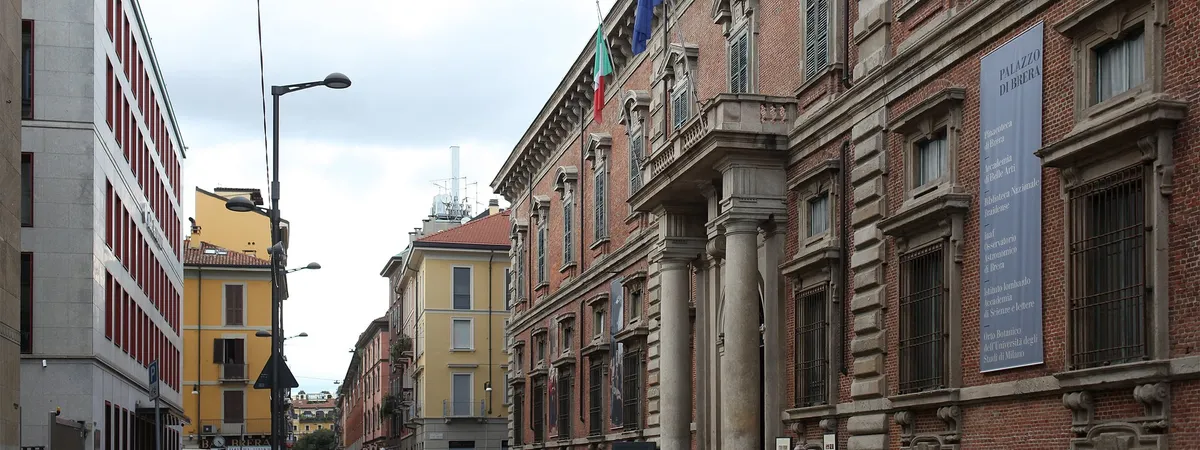
BreraCouplesA quieter, more residential, art-focused alternative to staying directly on the Duomo, while still an easy walk from it.Fewer major sights within the neighborhood itself compared with the area immediately around the Duomo — most of what draws visitors here is the atmosphere and the art gallery rather than a checklist of monuments.
DuomoFirst-time visitorsThe most central possible base, within walking distance of the Duomo, the Galleria, La Scala, and the main shopping streets.The square and the streets closest to it draw the heaviest crowds in the city, especially by mid-morning.
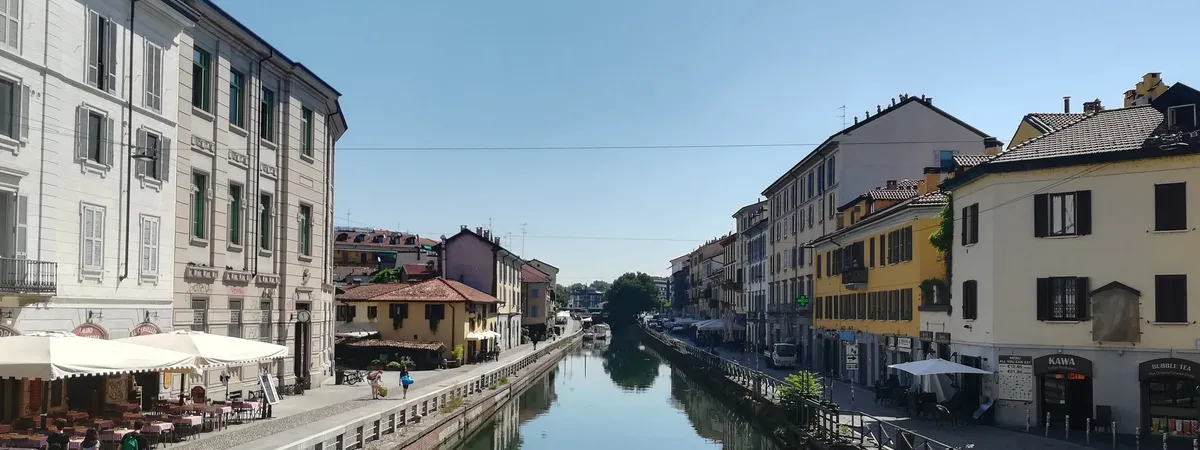
NavigliNightlifeA scenic, canal-side setting with Milan's strongest concentration of evening bars and restaurants.Farther from the Duomo and the main historic sights than Brera or the Duomo area, and evenings can be loud, especially on weekends.

Our picks for Milan

A handful of editorial calls across every neighborhood above, not just the highest star rating — see each hotel's own card further down for the full case for and against it.

A couple of hotels in Brera

Brera is the top-recommended area to stay in Milan.

Hotel Milano Scala

★★★★
  • 🏛️ Best for architecture & design

Our take One of the few Milan hotels to make its environmental engineering part of the actual guest experience, and the spot just off Via Brera makes it an easy base for gallery-hopping.

Good for

  • Couples
  • Architecture lovers

Design-conscious travelers and couples who want a modern, low-impact hotel close to La Scala and Brera's galleries.

Why we like it

  • Runs on a geothermal system rather than standard heating and cooling, unusual for a hotel of this size when it opened
  • Doubles as a private art gallery, with rotating exhibitions through the public spaces
  • About 350 metres from La Scala and an easy walk into Brera's gallery streets
Check availability on Booking.com

The Unique Brera

★★★★
  • 💰 Best value

Our take A solid, well-placed boutique option — it doesn't compete with Brera's grand luxury names, but sitting inside the district's quiet lanes is hard to beat for the price.

Good for

  • Couples
  • First-time visitors

Couples and first-time visitors who want to be based right inside Brera's gallery streets without a luxury price tag.

Why we like it

  • Sits directly on Via delle Erbe, one of Brera's characteristic narrow streets, rather than on a busier perimeter road
  • Close enough to La Scala and the Castello Sforzesco to reach either on foot in about ten minutes
  • A smaller, independently run property rather than a chain, which tends to mean more personal service

What to know

  • Being tucked into a quiet residential lane, some rooms are on the smaller side compared to larger hotels nearby.
Check availability on Booking.com

Useful travel information

Italy uses the euro. Most international flights land at Malpensa Airport, about 50 km northwest of the city, connected to Milano Centrale and Milano Cadorna stations by the Malpensa Express train (roughly 40–50 minutes). Linate Airport is much closer, about 8 km east of the center, and has been connected to the city's M4 metro line since its full opening in October 2024. A third airport, Orio al Serio near Bergamo, mainly serves low-cost carriers and is reached by shuttle bus. Within the city, the Milan Metro has five lines (M1–M5) covering most areas visitors need. A large part of the center falls inside Area C, a camera-enforced congestion charge zone.

Tips

  • Book tickets to see Leonardo da Vinci's Last Supper well in advance — viewing slots are timed, capacity is small, and popular dates can sell out weeks ahead.
  • If you're visiting during Fashion Week or the Salone del Mobile design fair, book accommodation as early as possible; both events push hotel prices up considerably and can fill the city.
  • The rooftop terraces of the Duomo are a separate, additional ticket from the cathedral entrance — decide in advance whether you want to walk up or take the elevator, since the walk-up ticket is cheaper.
  • If you're driving into Milan, check whether your hotel is inside Area C and how to pay the congestion charge — the cameras don't make exceptions for visitors who didn't know about the zone.

Frequently asked questions

Where should first-time visitors stay in Milan?
The area around the Duomo puts you within walking distance of the cathedral, the Galleria, and La Scala, and close to the metro system for reaching everything else. Brera, just north of the Duomo, is a quieter, more residential alternative that's still an easy walk from the center.
Is Milan walkable?
The historic center is compact and walkable, and the metro covers longer distances well. It's a flatter, more spread-out city than Florence or Venice, so you'll likely combine walking with some metro or tram rides, especially between neighborhoods like Brera and the Navigli.
How many days do you need in Milan?
Two to three days covers the Duomo, the Galleria, the Last Supper, and one or two neighborhoods like Brera or the Navigli at an unhurried pace. Add a day if you want to spend more time on design and shopping, or if you're visiting during Fashion Week or the design fair, when the city is busier.