Last updated September 1, 2026

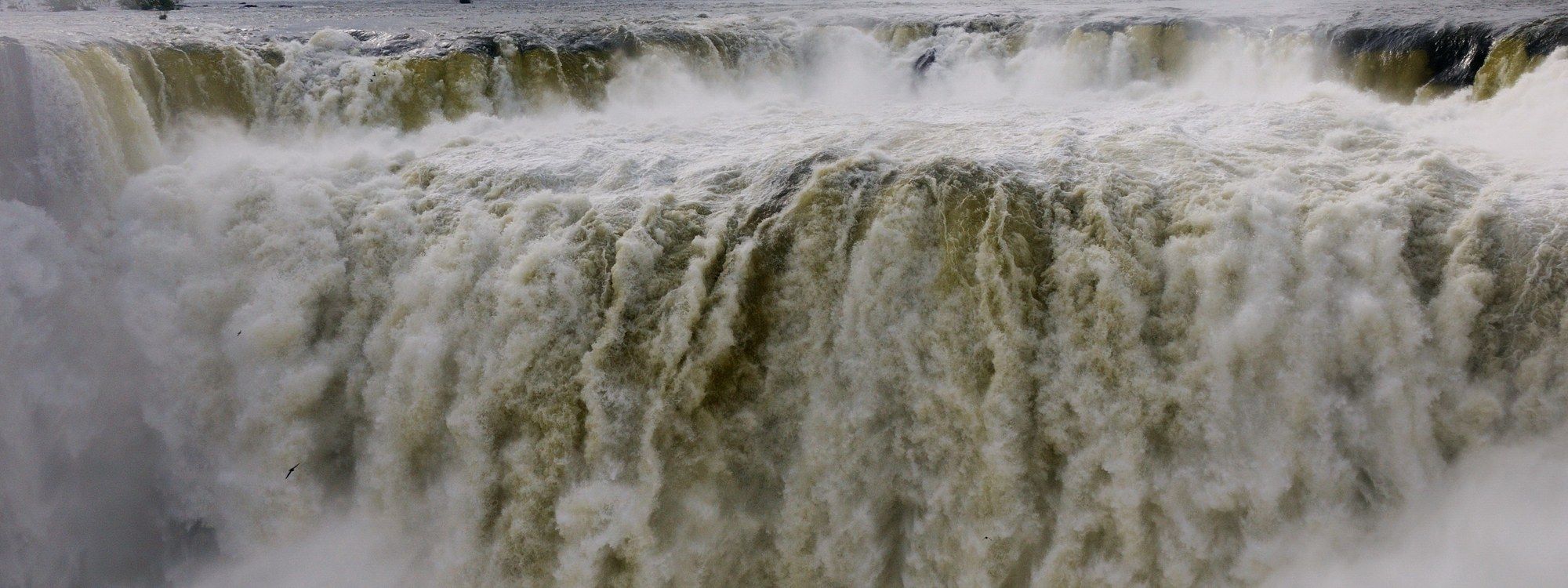
The Devil's Throat (Garganta del Diablo) at Iguazú Falls, seen from the Argentine viewpoint as the Iguazú River plunges over the cliff edge into rising spray

Josep M. Gracia / Wikimedia Commons, CC BY-SA 4.0

Argentina

Where to Stay in Puerto Iguazú

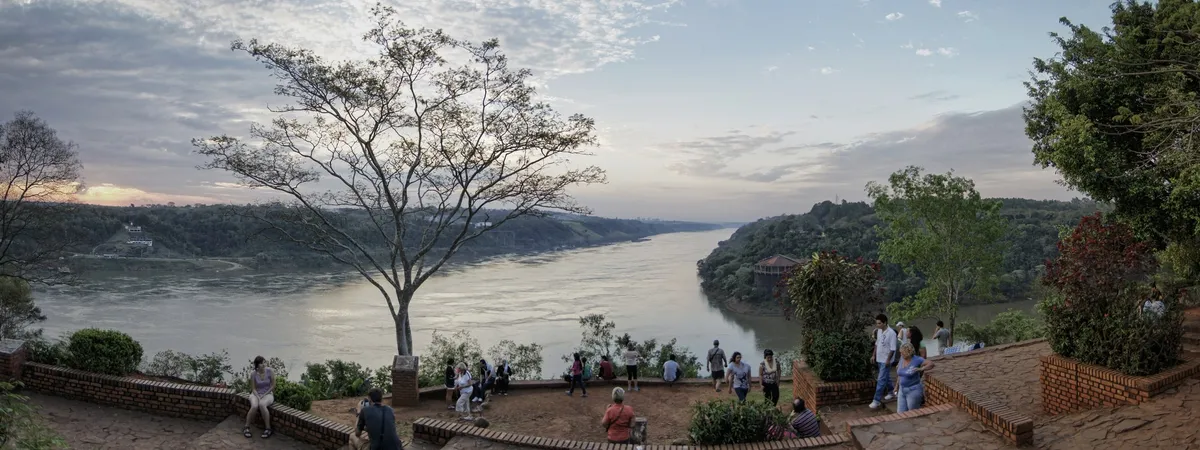
Puerto Iguazú is a small town in Argentina's northeastern Misiones province, at the point where the Iguazú and Paraná rivers meet and the borders of Argentina, Brazil, and Paraguay converge. The town exists almost entirely to serve visitors heading to Iguazú Falls, a system of roughly 275 individual falls and cascades spread across nearly 3 km of the Iguazú River, protected within Iguazú National Park a short drive away. Most of the town's hotels, restaurants, and bus connections sit in a compact downtown grid — Centro — while a second cluster of nature-lodges lines the road toward the park, inside the Selva Iryapú forest reserve.

Quick facts

Best time to visit
Puerto Iguazú has a subtropical climate with no clearly dry season, so rain is possible year-round. The shoulder months of April–May and September–October tend to bring a comfortable balance of warm days, manageable humidity, and strong water flow at the falls. December–February is hot and humid, with highs regularly above 32°C, while June–August is milder and drier but can occasionally bring cooler snaps. Water flow varies a lot with rainfall upstream, so the falls can look noticeably different depending on when you visit, regardless of season.
Renting a car
A rental car isn't necessary for a visit built around Iguazú Falls and the town itself. Río Uruguay operates a frequent shuttle bus between the Puerto Iguazú bus terminal (with a stop near Hito Tres Fronteras) and the national park entrance, running roughly every 20–30 minutes through the day, and taxis and remises cover the rest. A car becomes more useful only if you're planning to explore further afield independently — the Wanda gem mines or the Jesuit ruins at San Ignacio Miní, for example — since those aren't well served by public transport from town.

Where to stay

Compare neighborhoods

AreaBest forAdvantageTrade-off
CentroFirst-time visitorsThe most walkable, practical base in Puerto Iguazú, with restaurants, shops, and the park shuttle bus all close at hand.A functional small-town center rather than a scenic one — you won't get the jungle-immersion feel of the Selva Iryapú lodges.
Selva IryapúLuxury travelersThe quietest, most nature-immersed stay in Puerto Iguazú, with resort-style pools and spas set directly in the rainforest.A drive rather than a walk from downtown's restaurants and shops, so plan on eating at your hotel most nights or arranging transport into town.

Our picks for Puerto Iguazú

A handful of editorial calls across every neighborhood above, not just the highest star rating — see each hotel's own card further down for the full case for and against it.

A couple of hotels in Centro

Centro is the top-recommended area to stay in Puerto Iguazú.

Hotel Jardín de Iguazú

★★★
  • 💰 Best value

Our take A straightforward, dependable budget option in a genuinely central location — it won't wow you with facilities, but it covers the basics well for the price.

Highlights

  • A quiet garden courtyard with a pool, a nice touch at this price point
  • Central location within walking distance of downtown restaurants and the bus terminal
  • Breakfast included in most rates

What to know

  • This is a simple, budget-tier property — don't expect the spa or resort facilities of the pricier downtown hotels
Check availability on Booking.com

Panoramic Grand - Iguazú

★★★★
  • 📍 Best location

Our take The view is the draw: few hotels in town sit directly on the bluff over the tri-border confluence, and the spa and pool add a resort feel uncommon this close to downtown.

Highlights

  • On a hilltop overlooking the Iguazú–Paraná confluence and the Argentina–Brazil–Paraguay tri-border point
  • Spa, health club, sauna, and outdoor pool — more resort amenities than most downtown hotels
  • Still reachable on foot from downtown Puerto Iguazú's restaurants despite the more scenic, elevated setting

What to know

  • The hilltop means an uphill walk back from the town center, so many guests take a short taxi
Check availability on Booking.com

Useful travel information

Argentina uses the Argentine peso; as elsewhere in the country, the exchange rate has been volatile, so paying in cash (including US dollars) sometimes gets a better rate than a card at the official bank rate — check current advice before you travel. A ticket to Iguazú National Park is a separate cost from your hotel and typically allows a discounted return entry the following day if it's stamped on your way out, useful if you want to split the main circuits over two days. Spanish is the local language; English is common in hotels and at the park's visitor facilities, but less so around town. Because Puerto Iguazú sits on the tri-border with Brazil and Paraguay, some visitors also cross to see the falls from the Brazilian side (a different, more panoramic view) or to shop in Ciudad del Este, Paraguay — bring your passport if you plan to cross.

Tips

  • Get your park ticket stamped for a discounted return the next day if you think you might want a second day at the falls — one day covers the highlights, but two lets you take it at a slower pace.
  • Bring a light rain layer even on a sunny day — the spray around the Garganta del Diablo walkway and the lower circuits can soak you regardless of the weather.
  • Book falls-facing rooms at the Selva Iryapú lodges well in advance if that matters to you, especially around July and January, Argentina's main domestic holiday periods.

Frequently asked questions

How many days do I need in Puerto Iguazú?
Two full days is a comfortable amount of time — one for the Argentine side's Upper and Lower circuits and the Garganta del Diablo walkway, and a second for either a repeat visit to the falls (discounted with a stamped ticket) or a half-day trip across to the Brazilian side for the panoramic view.
Should I stay in town or at a jungle lodge?
Centro, the compact downtown area, puts you within walking distance of restaurants and the bus terminal, and tends to be the more budget-friendly choice. The lodges in Selva Iryapú, a few kilometers out toward the park, trade that convenience for a quieter, more nature-immersed stay — a fair trade if you don't mind driving or taking a short cab ride back into town for dinner.
Do I need to see both the Argentine and Brazilian sides of the falls?
Not necessarily, but they show you different things: the Argentine side gets you up close via walkways directly over the water, including the Garganta del Diablo, while the Brazilian side gives a wider, more photogenic panorama from across the river. If you only have one day, the Argentine side is the more essential visit.