Last updated August 10, 2026

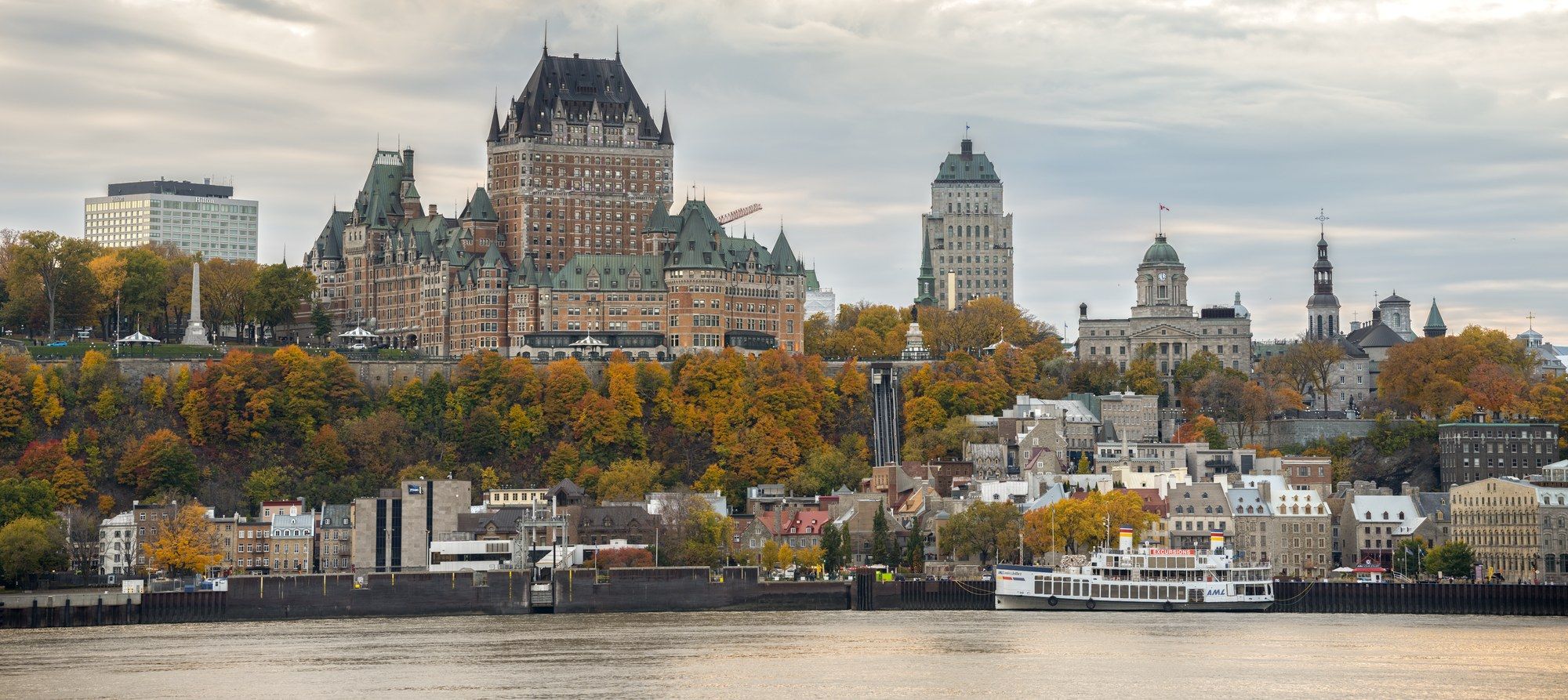
Château Frontenac and Old Quebec's rooftops seen across the St. Lawrence River in autumn

Wilfredor / Wikimedia Commons, CC0 1.0

Canada

Where to Stay in Quebec City

Quebec City sits on a cliff above the St. Lawrence River, its walled colonial core — Old Quebec, a UNESCO World Heritage Site — the only fortified city wall still standing north of Mexico. Almost every visitor's trip centers on this compact core: the clifftop streets of Upper Town around the Château Frontenac, the riverside lanes of Lower Town at the base of the cliff, and, just outside the walls, the restaurant strip and green space of Grande Allée near the Parliament Building. A funicular and a set of stairs connect Upper and Lower Town, and the whole historic core is small enough to cross on foot in under 20 minutes.

Quick facts

Best time to visit
Visit in May–June or September–October for mild, walkable weather without midsummer crowds or a winter that regularly drops well below freezing. Winter has its own appeal — the Château Frontenac and stone streets under snow, plus the Quebec Winter Carnival in February — but expect real cold and icy cobblestones.
Renting a car
Skip a rental car for a trip centered on Old Quebec and Grande Allée. Parking is expensive and limited inside the walls, streets are narrow and one-way in places, and Old Quebec and Grande Allée are walkable or a short taxi ride apart.

Where to stay

Compare neighborhoods

AreaBest forAdvantageTrade-off
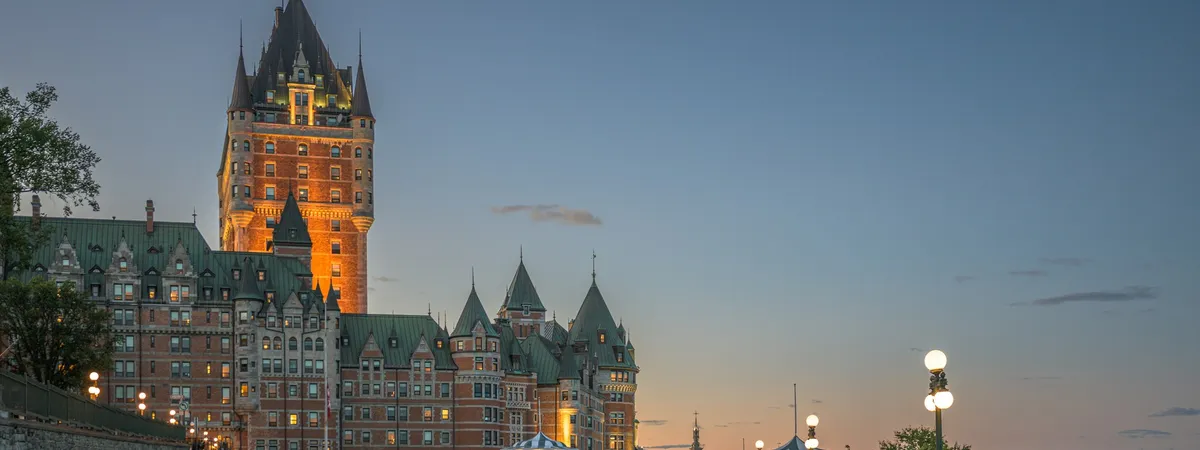
Upper Town (Haute-Ville)First-time visitorsThe most iconic, walkable base for the Château Frontenac, Dufferin Terrace, and Old Quebec's best-known streets.Steep, uneven cobblestone streets and hotel rates that price at a premium for the location.
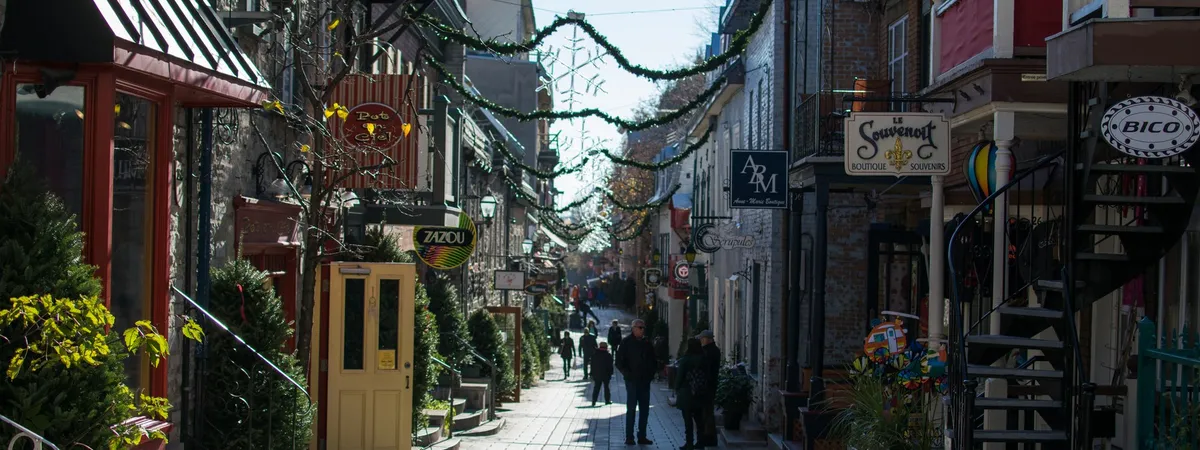
Lower Town (Basse-Ville)CouplesA quieter, more intimate base right by Place Royale and Petit-Champlain, with easy funicular access up to Upper Town.Fewer hotels than Upper Town, priced at a premium, and a hill or funicular ride away from the Château Frontenac.
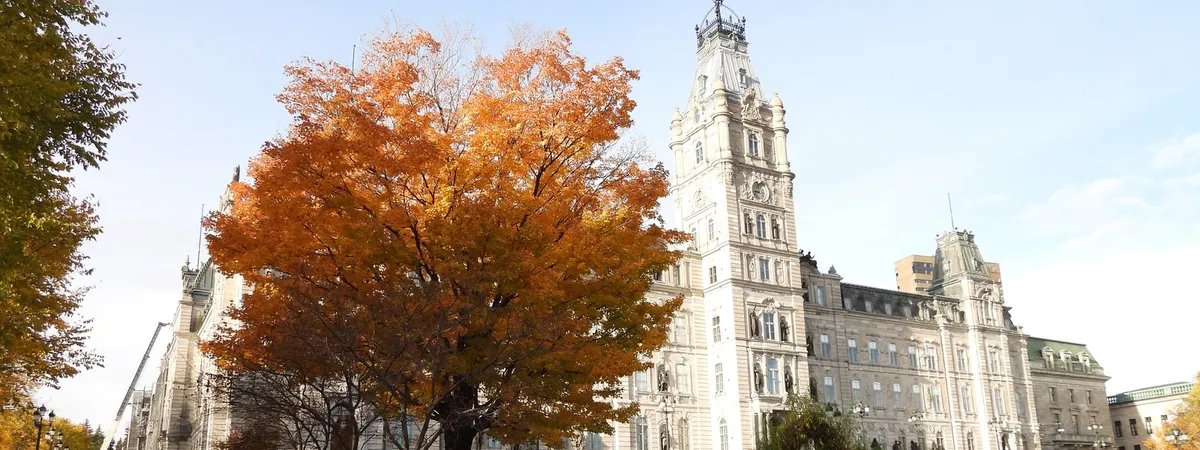
Grande AlléeNightlifeA modern, convention-friendly base with an evening restaurant scene, right beside the Plains of Abraham and a short walk from Old Quebec's walls.Outside the historic walls, and the Grande Allée strip itself can be noisy on weekend nights.

Our picks for Quebec City

A handful of editorial calls across every neighborhood above, not just the highest star rating — see each hotel's own card further down for the full case for and against it.

A couple of hotels in Upper Town (Haute-Ville)

Upper Town (Haute-Ville) is the top-recommended area to stay in Quebec City.

Hotel Clarendon

★★★★
  • 🏆 Our overall pick

Our take A well-run, characterful hotel in the middle of Upper Town that delivers real historic atmosphere at a more reasonable price than its famous neighbor.

Highlights

  • Quebec City's oldest operating hotel, with 1870 origins and 1927 Art Deco details
  • A two-minute walk from the Château Frontenac and Old Quebec's main streets
  • An on-site Art Deco jazz bar gives the hotel a distinct evening atmosphere

What to know

  • Rue Sainte-Anne is a busy pedestrian street, so street-facing rooms can pick up some noise in summer evenings
  • No on-site parking; nearby lots are the practical option for drivers
Check availability on Booking.com

Hotel Manoir Victoria

★★★★
  • 👨‍👩‍👧 Best for families

Our take A practical, well-equipped base for families or anyone who wants hotel amenities beyond a heritage lobby, still genuinely inside Old Quebec.

Highlights

  • Indoor pool, sauna, and fitness room — a rarer combination among Upper Town's boutique-scale hotels
  • Indoor valet parking is a real convenience in a district where street parking is scarce
  • Close to the Château Frontenac and the walk down to Gare du Palais

What to know

  • Toward the edge of Upper Town on Côte du Palais, so a longer walk to Dufferin Terrace
  • Breakfast is not included in every rate plan — check before booking
Check availability on Booking.com

Useful travel information

The Canadian dollar is the currency. Quebec City is overwhelmingly French-speaking, more so than Montreal — English is common in hotels and major tourist spots, but less so once you step off the main tourist streets, so a few basic French phrases go further here. The RTC runs city buses, though most visitors barely need them since Old Quebec, Grande Allée, and the Plains of Abraham are all walkable from each other. Old Quebec and Grande Allée are generally safe at most hours, with the usual big-city caution around late-night streets.

Tips

  • A few basic French phrases (bonjour, merci, l'addition s'il vous plaît) are genuinely useful here — Quebec City sees fewer English-first tourist interactions than Montreal.
  • Old Quebec's streets are steep and cobblestone in places, and the connection between Upper and Lower Town is either a long staircase or the paid Old Quebec Funiculaire — comfortable shoes make a real difference.
  • Book well ahead for a summer stay — Old Quebec has a limited hotel supply for a UNESCO-listed core this popular, and rates rise sharply in July and August and around the February Winter Carnival.

Frequently asked questions

Where should first-time visitors stay in Quebec City?
Stay in Upper Town (Haute-Ville) to be steps from the Château Frontenac, Dufferin Terrace, and the walled city's main sights. Prefer a quieter, more romantic setting closer to the river? Lower Town (Basse-Ville), around Place Royale and Petit-Champlain, is a great alternative, connected to Upper Town by a short funicular ride or staircase.
Is Quebec City walkable?
Yes, within Old Quebec and Grande Allée — both are compact and walkable, though the streets connecting Upper and Lower Town are steep. A funicular covers that one hill for visitors who'd rather skip the stairs.