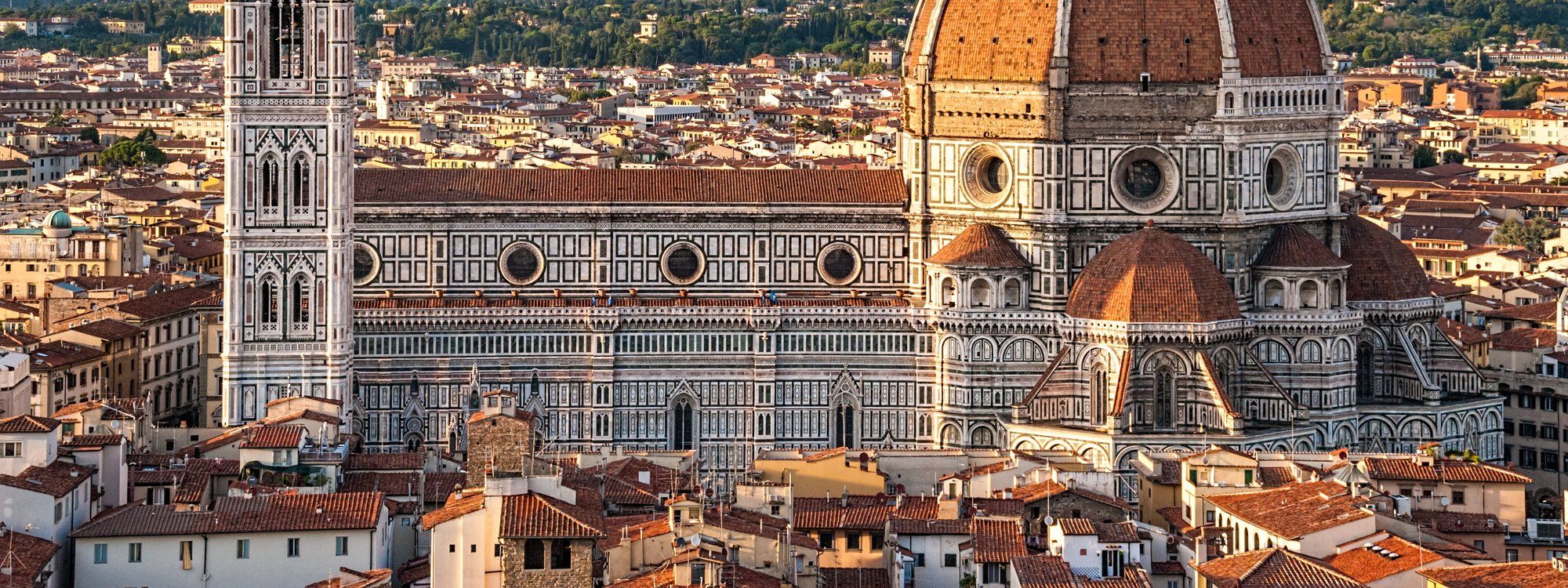
Florence Cathedral (the Duomo) with Brunelleschi's dome and Giotto's bell tower, seen above the terracotta rooftops of the historic center

Gary Campbell-Hall / Wikimedia Commons, CC BY 2.0

Italy

Where to Stay in Florence

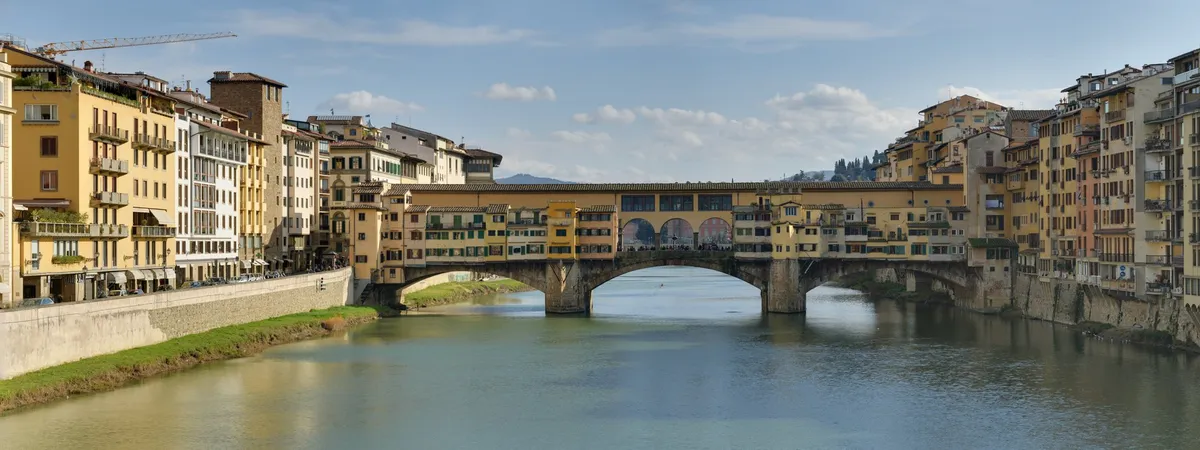
Florence sits in a valley on the Arno River in central Tuscany. Its historic center is compact — small enough to cross on foot in under half an hour — and dense with Renaissance landmarks: the marble-clad Duomo and its dome, the Uffizi Gallery, the Ponte Vecchio, and Piazza della Signoria. Most of what visitors come to see sits within this walkable core, with the more local, artisan-oriented Oltrarno district just across the river.

Quick facts

Best time to visit
April–May or September–October bring milder weather and somewhat thinner crowds than the July–August peak, when the historic center can feel very crowded and hot. Winter is quieter still and sometimes cheaper, though some outdoor sights and gardens have shorter hours.
Renting a car
Florence's historic center is a camera-enforced limited traffic zone (ZTL): non-resident vehicles that enter without prior authorization can be fined, even for a brief drop-off. If you're driving to Florence, plan to park outside the ZTL or at your hotel (if it can register your plate) and get around the center on foot.

Where to stay

Compare neighborhoods

AreaBest forAdvantageTrade-off
Historic Center (Duomo)First-time visitorsThe highest concentration of major sights in Florence, almost all reachable on foot.The most crowded and typically the most expensive part of the city, especially at midday in peak season.
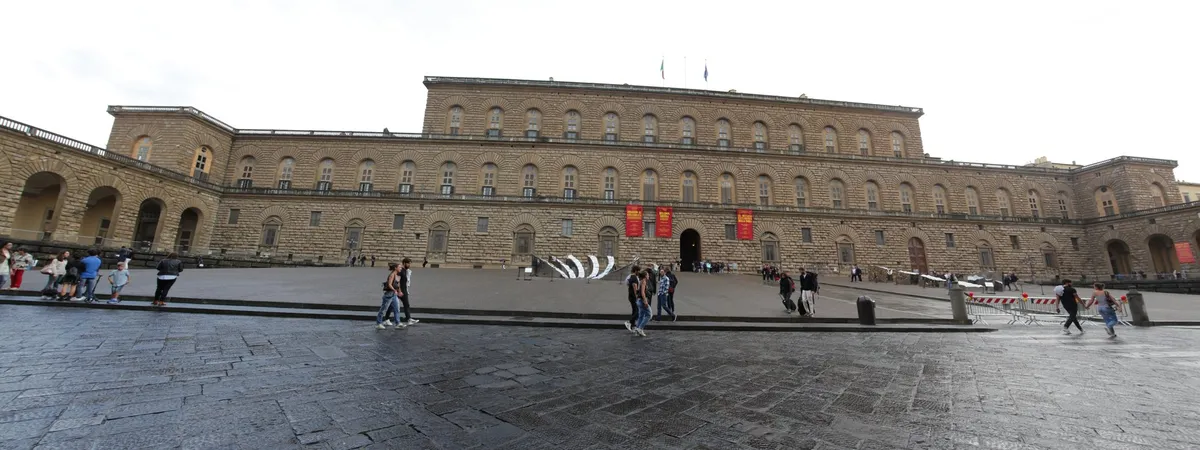
OltrarnoCouplesA more local, less crowded feel than the historic center, while still a short walk from the main sights.Adds a bridge crossing or short walk to reach the Duomo, Uffizi, and Ponte Vecchio compared with staying directly in the historic center.
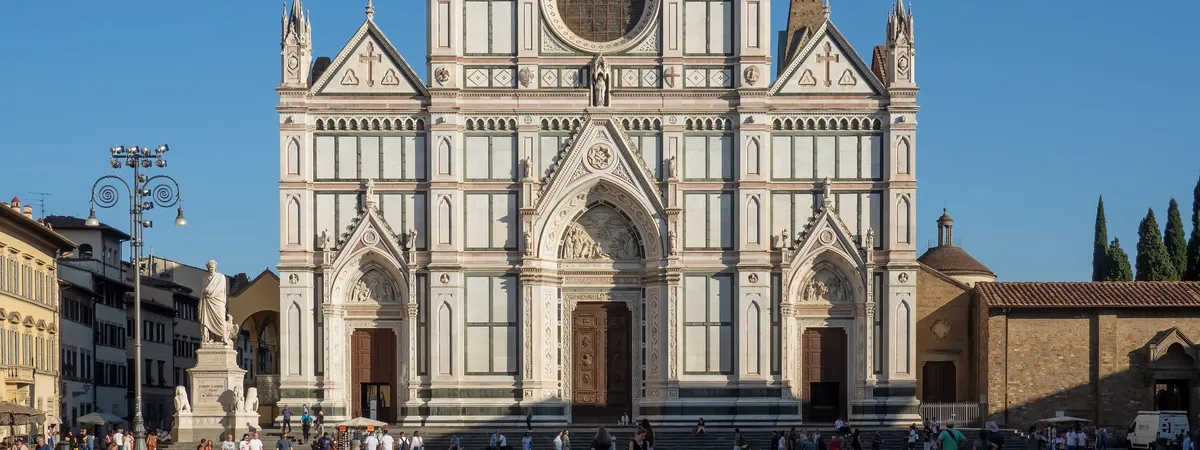
Santa CroceFirst-time visitorsClose to the main historic-center sights with a livelier restaurant and bar scene than the streets right around the Duomo.Streets near the main bar cluster can stay noisy into the late evening, especially on weekends.

Our picks for Florence

A handful of editorial calls across every neighborhood above, not just the highest star rating — see each hotel's own card further down for the full case for and against it.

A couple of hotels in Historic Center (Duomo)

Historic Center (Duomo) is the top-recommended area to stay in Florence.

Hotel Davanzati

★★★

Our take Runs like a pricier hotel — attentive family ownership and a genuinely central address — at a 3-star rate.

Good for

  • First-time visitors
  • Budget travelers
  • Couples

First-time visitors who want a central, well-run base without paying luxury prices.

Why we like it

  • Family-owned and run, with the kind of attentive, personal service that's hard to find at this price point in the historic centre
  • Housed in a medieval building on Via Porta Rossa, a minute's walk from Piazza della Signoria
  • Includes a daily wine and cheese hour in the late afternoon

What to know

  • Some rooms are compact, typical of a historic centre building this age
Check availability on Booking.com

Antica Torre di Via Tornabuoni 1

  • ❤️ Best for couples

Our take Small and personal rather than full-service, but the tower setting and rooftop terrace view are hard to match at this scale.

Good for

  • Couples
  • Architecture lovers

Couples who want a small, quiet, historic stay on Florence's most elegant street.

Why we like it

  • Occupies a medieval tower building furnished with period antiques throughout
  • A rooftop terrace looks out over Florence's rooftops toward the Duomo
  • Sits directly on Via de' Tornabuoni, Florence's main shopping street, with rooms set back from the street

What to know

  • Runs more like a small guesthouse than a full-service hotel — don't expect a 24-hour front desk or restaurant on site
Check availability on Booking.com

Useful travel information

Italy uses the euro. Most visitors arrive by train at Firenze Santa Maria Novella, on the edge of the historic center, or fly into Florence Airport (Peretola) or Pisa Airport with a bus or train connection into the city. The historic center is entirely walkable — most major sights are within 20–30 minutes of each other on foot — and a large part of it is a limited traffic zone (ZTL), where camera-enforced restrictions apply to non-resident vehicles.

Tips

  • Book timed-entry tickets for the Uffizi Gallery and the Accademia (to see Michelangelo's David) well in advance, especially between April and October — popular time slots can sell out days or weeks ahead.
  • The Ponte Vecchio and the streets around Piazza della Signoria get very crowded by mid-morning. Visiting early or later in the day can mean a calmer experience.
  • Pisa and Siena both make reasonable day trips: Pisa is roughly an hour away by train, and Siena about 1.5 hours by regional train or bus, both from Santa Maria Novella station.
  • If you're driving into the city, confirm your hotel can register your license plate for ZTL access, or plan to park outside the restricted zone — the cameras don't make exceptions for tourists.

Frequently asked questions

Where should first-time visitors stay in Florence?
The historic center around the Duomo puts you within walking distance of most major sights, including the Uffizi and Ponte Vecchio. Santa Croce is a nearby alternative with a similar walkable location and a livelier evening scene.
Is Florence walkable?
Yes — the historic center is compact and easy to cross on foot, and most major sights sit within a 20–30 minute walk of each other. Streets can be narrow and crowded around the top attractions, especially in the middle of the day.
How many days do you need in Florence?
Two to three days is enough to see the main sights in the historic center without rushing. Add a day if you want to visit the Oltrarno's museums and gardens at a slower pace, or another for a day trip to Pisa or Siena.