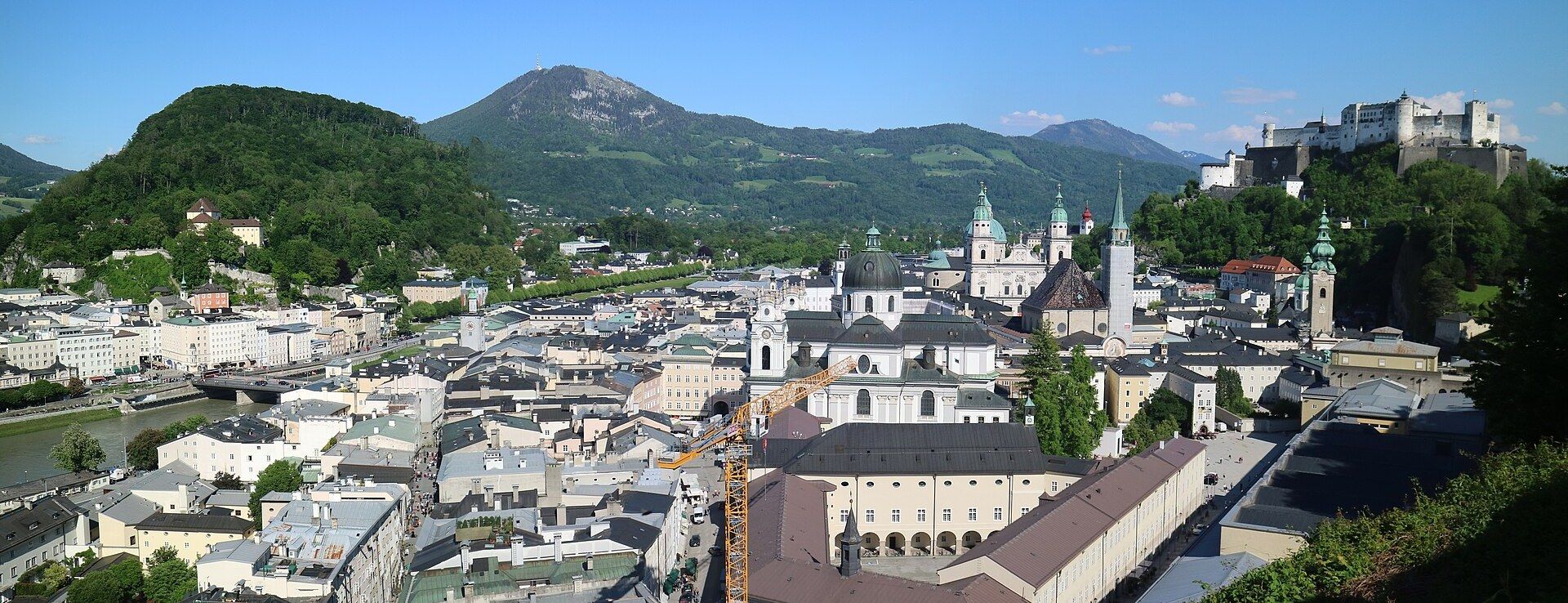
Salzburg's old town skyline of baroque church domes and Hohensalzburg Fortress above the rooftops

Clemens Stockner / Wikimedia Commons, CC BY-SA 4.0

Austria

Where to Stay in Salzburg

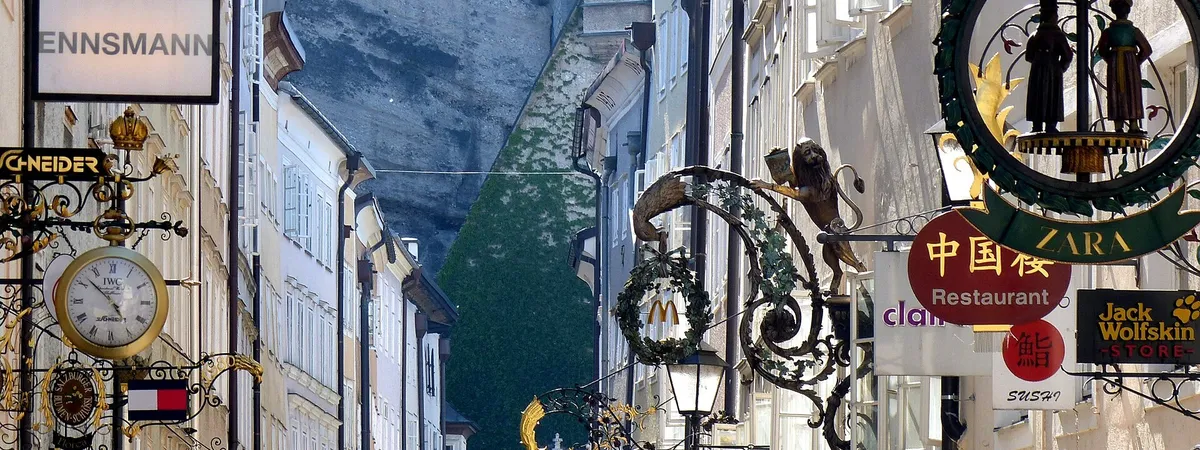
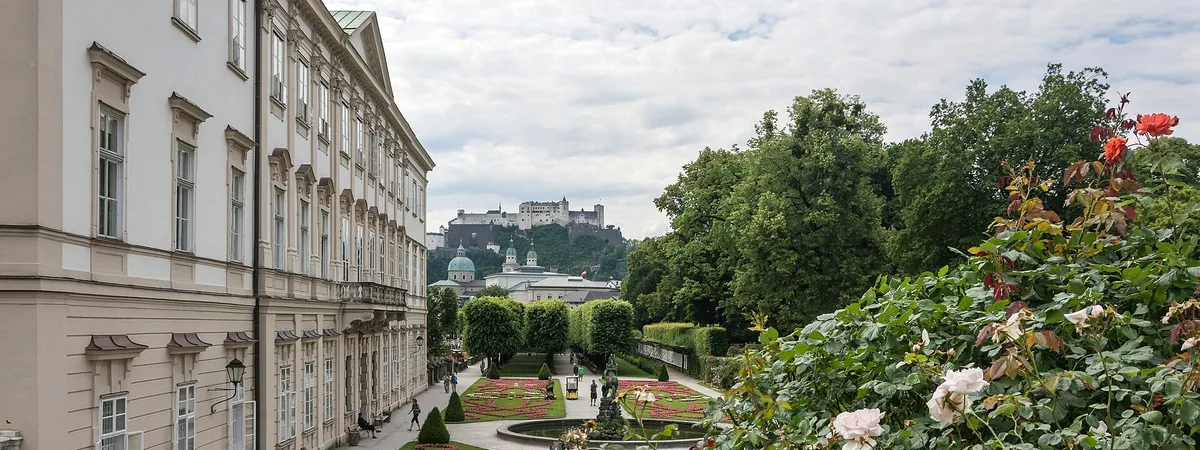
Salzburg is small enough to see most of it on foot and dense enough that a couple of days rarely feels like enough. The Salzach river splits the historic centre in two: the Altstadt on the left bank, hemmed in against the Mönchsberg cliffs and watched over by Hohensalzburg Fortress, and the more open Neustadt on the right bank, built up around Mirabell Palace once the old town ran out of room. Mozart was born here in 1756, and his birthplace on Getreidegasse and family home near Mirabellplatz are still two of the city's most-visited addresses. The whole historic centre, both banks, has been a UNESCO World Heritage Site since 1996, and it shows: baroque church domes, cobbled squares, and a skyline that hasn't changed much since the prince-archbishops ruled here. Salzburg is also the Sound of Music city for a lot of visitors, with several of the film's real locations, including Mirabell Gardens, scattered through town, and the Salzburg Festival fills the city with classical music and opera every summer.

Quick facts

Best time to visit
May-June and September offer mild weather with smaller crowds than midsummer. July and August bring the Salzburg Festival and the biggest crowds of the year, especially around the cathedral and Getreidegasse. December has its own draw for the Christmas markets on Residenzplatz and around the Dom, though it's cold and days are short.
Renting a car
Salzburg's historic centre is compact, largely pedestrianized, and easy to cross on foot in under half an hour. Streets in the Altstadt are narrow and often closed to traffic, parking is limited and metered, and city buses connect the areas covered in this guide directly. A car mostly adds cost and hassle for a city-centre stay — save it for day trips into the surrounding Salzkammergut lakes, if you need one.

Where to stay

Compare neighborhoods

AreaBest forAdvantageTrade-off
AltstadtFirst-time visitorsNearly everything a first-time visitor wants to see is within a 10-minute walk.It's the busiest and most expensive part of Salzburg to book a room in, especially in summer.
NeustadtFirst-time visitorsSimilar walking access to Salzburg's main sights as the Altstadt, often for less money.You lose a bit of the old town's dense, cobbled-lane atmosphere once you're a few blocks from the river.

Our picks for Salzburg

A handful of editorial calls across every neighborhood above, not just the highest star rating — see each hotel's own card further down for the full case for and against it.

A couple of hotels in Altstadt

Altstadt is the top-recommended area to stay in Salzburg.

Hotel Goldener Hirsch

★★★★★
  • ✨ Best luxury

Our take Goldener Hirsch has been Salzburg's grand traditional hotel for generations, and the antique-furnished rooms and Getreidegasse address deliver on that reputation for guests who want a five-star stay with real heritage rather than a modern build.

Good for

  • Luxury travelers
  • Couples
  • Architecture lovers

Couples and travelers who want a full-service five-star stay with genuine history, right on Salzburg's most famous street.

Why we like it

  • Directly on Getreidegasse, a few steps from Mozart's birthplace and the Festival Hall.
  • Rooms furnished in classic Austrian style with antiques, in a building dating from the 15th century.
  • Full five-star service in a property with genuine history rather than a modern luxury build.

What to know

  • Getreidegasse can be busy with foot traffic during the day, though it quiets down in the evening.
Check availability on Booking.com

Hotel Wolf

★★★★

Our take Hotel Wolf's building does a lot of the work here — a genuinely old structure with individually furnished rooms, right off one of the Altstadt's central squares, at a scale that stays personal rather than corporate.

Good for

  • Couples
  • Architecture lovers

Couples and travelers who want individually designed rooms with real character, steps from the cathedral and Getreidegasse.

Why we like it

  • Housed in a medieval building from 1429, just off Mozartplatz.
  • Individually designed rooms rather than a uniform chain layout.
  • Breakfast is consistently well-reviewed, a good starting point for a day of sightseeing on foot.

What to know

  • Rooms facing the square or nearby streets may pick up some evening foot-traffic noise in peak season.
Check availability on Booking.com

Useful travel information

Austria uses the euro (€). English is widely spoken in hotels, restaurants, and shops. Buses cover the city thoroughly and a single ticket or a 24/48/72-hour pass usually works out cheaper than buying tickets one at a time if you're moving around a lot. Tipping isn't obligatory, but rounding up or adding roughly 5-10% at restaurants is common practice.

Tips

  • Buy a 24, 48, or 72-hour public transport pass if you're using the bus network a lot, or plan to walk everywhere — the historic centre is compact enough that many visitors barely need transit.
  • Book timed-entry tickets for Hohensalzburg Fortress and the major museums a few days ahead in July and August, when the Salzburg Festival draws the year's biggest crowds.
  • The SalzburgCard covers public transport and entry to most major sights and can be worth it if you're planning to see several attractions in a short stay — do the math against individual ticket prices first.

Frequently asked questions

How many days do I need in Salzburg?
Two to three days covers the historic centre comfortably — the Altstadt, Hohensalzburg Fortress, and Mirabell Palace and Gardens on the other bank. It also works well as a shorter stopover of a day or two on a longer Austria trip.
Is Salzburg walkable?
Yes. The historic centre on both banks of the Salzach is compact and largely pedestrianized, and the two halves are connected by a handful of footbridges a few minutes apart. Most visitors can cover the main sights on foot without needing transit.
Is Salzburg only about The Sound of Music?
No, though several film locations, including Mirabell Gardens, are genuinely worth visiting on their own merits. Salzburg's baroque old town, its Mozart history, and the Salzburg Festival draw plenty of visitors who have never seen the film.