

Last updated August 23, 2026

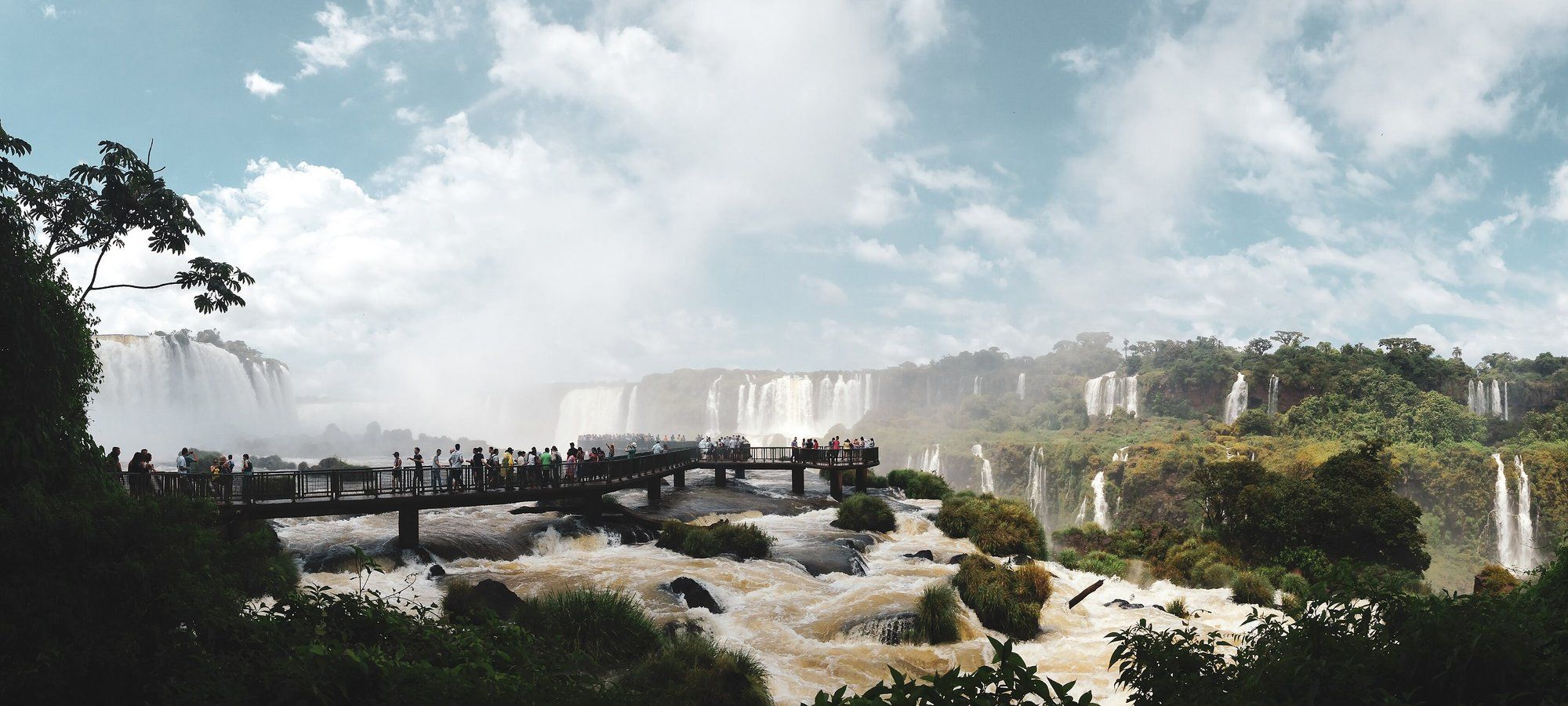
Tourists on the walkway at Iguaçu Falls' Brazilian-side viewpoints, with multiple cascades of the waterfall system framed by rainforest

Gruhh / Wikimedia Commons, CC BY-SA 4.0

Brazil

Where to Stay in Foz do Iguaçu

Foz do Iguaçu is a city in Brazil's western Paraná state, at the point where the Iguaçu and Paraná rivers meet and the borders of Brazil, Argentina, and Paraguay converge. It exists largely to serve visitors to Iguaçu Falls, part of Iguaçu National Park, a UNESCO World Heritage site a short drive from town, where roughly 275 individual falls and cascades cut through the rainforest along the Iguaçu River. The Brazilian side gives a wide, panoramic view of the falls system from a network of walkways, a different vantage than the closer, more immersive Argentine side across the river in Puerto Iguazú.

Quick facts

Best time to visit
Foz do Iguaçu has a subtropical climate with no clearly dry season, so rain is possible year-round. The shoulder months of April–May and September–October tend to bring a comfortable balance of warm days and manageable humidity. December–February is hot and humid, with highs regularly above 32°C (90°F), while June–August is milder and drier but can occasionally bring cooler snaps. Water flow at the falls varies a lot with rainfall upstream, so they can look noticeably different depending on when you visit, regardless of season.
Renting a car
A rental car isn't necessary for a visit built around Iguaçu Falls and the city itself. City bus line 120 ("Parque Nacional") connects the downtown bus terminal and the hotels along Avenida das Cataratas to the national park entrance roughly every 20–30 minutes, and taxis and rideshare apps cover the rest. A car becomes more useful only if you're planning to visit sights further out, like the Itaipu Dam, independently.

Where to stay

Compare neighborhoods

AreaBest forAdvantageTrade-off
Avenida das CataratasFamiliesThe closest area to Iguaçu National Park, with resort-style pools and grounds most downtown hotels don't have.Not walkable as a neighborhood — hotels are spread over several kilometers, and getting between them or into town means a taxi or the bus.
CentroFirst-time visitorsThe most practical, walkable base in Foz do Iguaçu, close to restaurants, shops, and the bus terminal for the falls.A functional downtown rather than a scenic one — you won't get the pool and resort feel of the Avenida das Cataratas hotels, and it's a bus or taxi ride from the park entrance.

Our picks for Foz do Iguaçu

A handful of editorial calls across every neighborhood above, not just the highest star rating — see each hotel's own card further down for the full case for and against it.

A couple of hotels in Avenida das Cataratas

Avenida das Cataratas is the top-recommended area to stay in Foz do Iguaçu.

Viale Cataratas Hotel & Eventos

★★★★
  • 🧭 Best for first-time visitors

Our take A practical, mid-tier option on the Cataratas road — closer to the park than a downtown hotel, without the golf-resort scale, and price, of some of its neighbors.

Good for

  • First-time visitors
  • Couples

First-time visitors who want to be closer to Parque das Aves and the park entrance than downtown allows, without paying full resort rates.

Why we like it

  • Two outdoor pools and a spa on-site
  • Positioned toward the downtown end of Avenida das Cataratas, a shorter ride to both downtown and the park
  • Contemporary rooms with air conditioning and a work desk
Check availability on Booking.com

Hotel das Cataratas, A Belmond Hotel

★★★★★
  • ✨ Best luxury

Our take The only hotel actually inside the national park, which is its whole case — guests can reach the falls walkways before the park opens to day visitors and after it closes, a genuine advantage no other property in the city can offer.

Good for

  • Luxury travelers
  • Couples

Couples and travelers prioritizing proximity to the falls above all else — being inside the park means access to the walkways outside the hours day-visitors can enter.

Why we like it

  • Inside Iguaçu National Park itself, within walking distance of the falls' main walkways
  • Access to the walkways before the park opens to day visitors and after it closes
  • A pool, spa, and multiple restaurants on a historic property

What to know

  • Rates run well above the rest of this guide — being the only hotel inside the national park is what the premium buys
Check availability on Booking.com

Useful travel information

Brazil uses the Brazilian real (BRL); cards are widely accepted in hotels and larger restaurants, though small local spots often prefer cash. Portuguese is the local language — English is common in hotels and at the park's visitor facilities, but less so around town, and Spanish is often understood given the steady cross-border traffic. A ticket to Iguaçu National Park is a separate cost from your hotel, and booking online in advance is worth doing in high season. Because Foz do Iguaçu sits on the tri-border with Argentina and Paraguay, some visitors also cross the Ponte Tancredo Neves to see the falls from the Argentine side in Puerto Iguazú, or the Ponte da Amizade (Friendship Bridge) to shop in Ciudad del Este, Paraguay — bring your passport if you plan to cross.

Tips

  • Book your Brazilian park ticket online in advance, especially in high season — entry slots can sell out and walk-up lines add real time to your visit.
  • Bring a light rain layer even on a sunny day — the spray around the walkways can soak you regardless of the weather.
  • If you're planning to see both the Brazilian and Argentine sides of the falls, budget an extra day and bring your passport for the border crossing to Puerto Iguazú.

Frequently asked questions

How many days do I need in Foz do Iguaçu?
One full day covers the Brazilian side's main walkway circuit, which gives you a wide, panoramic view of the falls system in a couple of hours. A second day lets you add Parque das Aves, the bird park next to the falls entrance, or a side trip across the border to see the closer, more immersive Argentine side.
Should I stay downtown or along Avenida das Cataratas?
Centro, the compact downtown area, puts you within walking distance of restaurants and the bus terminal, and tends to be the more budget-friendly choice. Hotels along Avenida das Cataratas, the road toward the park, trade that convenience for pools and resort-style grounds closer to the park entrance — a fair trade if you don't mind a taxi or bus ride into town.
Do I need a passport to see Iguaçu Falls?
Not for the Brazilian side itself. You only need it if you plan to cross into Argentina to see the falls from Puerto Iguazú, or into Paraguay via Ciudad del Este.