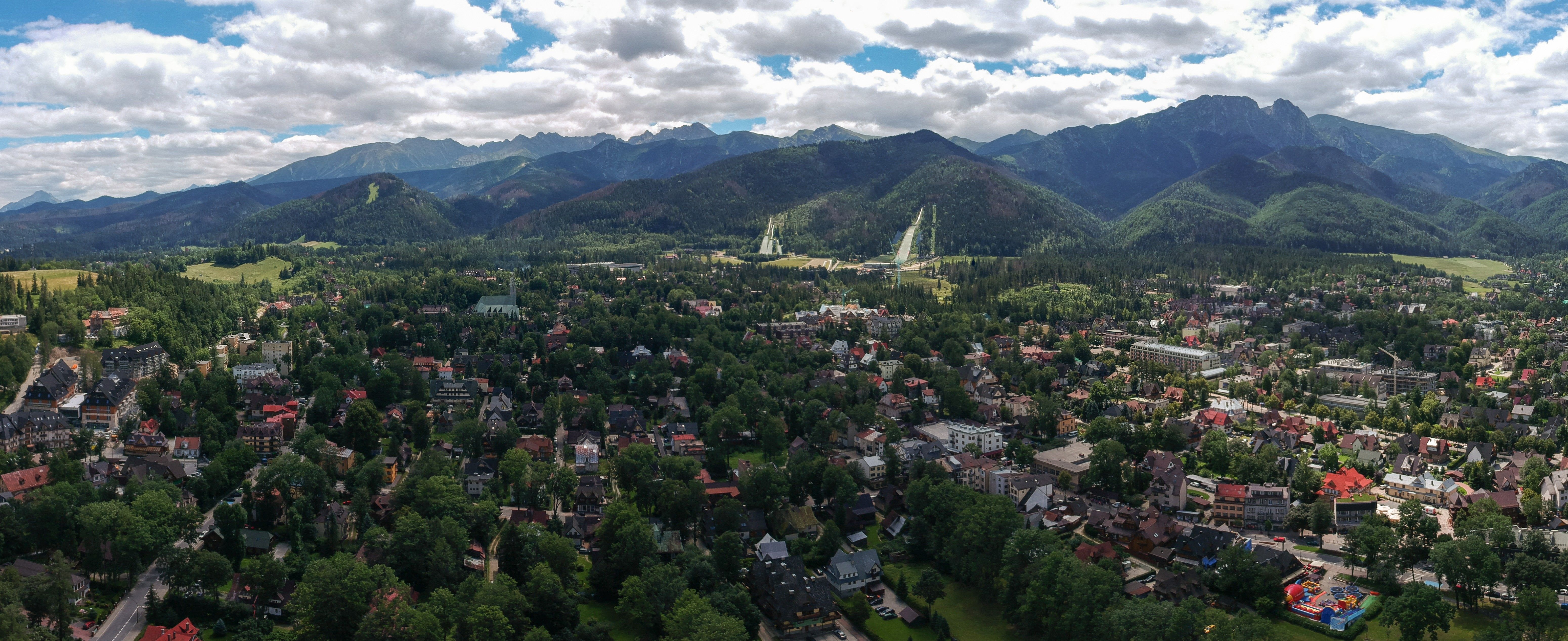
Aerial view of Zakopane spread across a forested valley, with the Wielka Krokiew ski jump towers and the Tatra Mountains rising behind the town

Maksym Kozlenko / Wikimedia Commons, CC BY-SA 4.0

Poland

Where to Stay in Zakopane

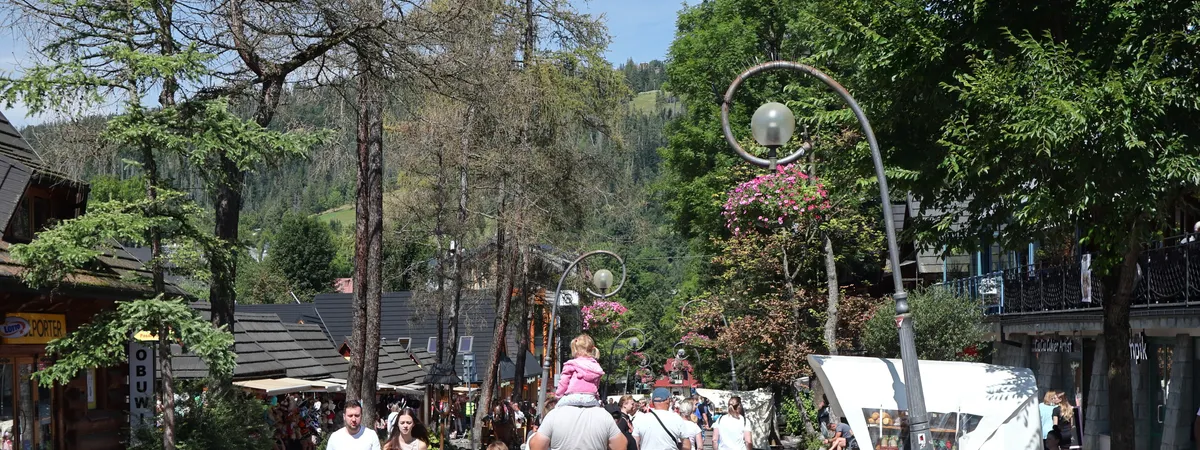
Zakopane is a mountain resort town in southern Poland, built into a valley at the northern foot of the Tatra Mountains, right on the border with Slovakia. At 800-1,100 meters above sea level it's the highest-situated town in Poland, and part of the Tatras within its own administrative limits climbs to the summit of Świnica at 2,301 meters. Known as "the winter capital of Poland," Zakopane has drawn visitors since the late 19th century, when it grew from a small highland settlement into a fashionable health resort for Kraków and Warsaw's artists, writers, and mountaineers. That era left it a distinctive wooden building tradition, the Zakopane Style, developed by the architect and writer Stanisław Witkiewicz out of local Podhale highlander carpentry. The town centers on Krupówki, a pedestrianized street lined with wooden shopfronts, restaurants, and stalls selling oscypek smoked cheese and highland wool, running gently uphill toward the surrounding hills. From town, cable cars and a funicular reach up into the mountains in different directions: a cog railway to Kasprowy Wierch on the main Tatra ridge, a chairlift and hiking trails toward the Wielka Krokiew ski jump complex, and the older Gubałówka funicular to a ridge with panoramic views back over the town and the peaks beyond it. Locals still speak of Zakopane as the capital of Podhale, the highland region around it, and Goral folk culture — distinctive dress, music, and dialect — remains visibly part of everyday life here, not just a tourist display.
Quick facts

Best time to visit
Zakopane has two distinct high seasons rather than one. Winter, especially the Christmas-New Year fortnight and all of February, brings skiers to Kasprowy Wierch, Gubałówka, and the smaller local slopes, with snow reliably on the ground; hotel prices and Krupówki's crowds peak then. Summer, especially July and August, brings hikers heading into the Tatra National Park's trail network, and it's the only season when most of the high mountain routes and shelters are fully open and free of ice. Late spring (May-June) and September are the quietest stretches: lower prices, thinner crowds on Krupówki, and generally reliable weather for lower-altitude walks, though the highest trails can still hold snow into June and some cable cars run reduced schedules outside the two main seasons.
Renting a car
You don't need a car to enjoy central Zakopane itself — Krupówki and the streets around it are walkable, and the main cable car and funicular base stations are all within a similar easy reach on foot or a short local bus ride. A car becomes genuinely useful if you want to reach the trailheads for the Kościeliska or Chochołowska valleys, visit smaller Tatra villages, or move between ski areas on your own schedule rather than relying on shuttle buses. Weigh that against the Zakopianka road's well-documented weekend and holiday jams, and against parking in the center, which is limited, metered, and often full by mid-morning in peak season — many visitors find a car worth having for day trips but leave it parked once they're back in town.

Where to stay

Good for first-time visitors who want to walk out of their hotel straight onto Zakopane's main street and reach most of the town's restaurants, shops, and cable car or funicular base stations without needing transport. Families benefit from the sheer density of things to do within a short walk, and couples get an easy, atmospheric evening stroll along the promenade.

Our picks for Zakopane

A handful of editorial calls across every neighborhood above, not just the highest star rating — see each hotel's own card further down for the full case for and against it.

A couple of hotels in Krupówki

Krupówki is the top-recommended area to stay in Zakopane.

Hotel Sabała

★★★
  • 📍 Best location
  • 💰 Best value

Our take For a three-star property, Sabała punches above its price point on location alone — it sits directly on Krupówki — while still offering an indoor pool, sauna, and a well-regarded on-site restaurant that a lot of similarly priced central options skip. It's a straightforward, well-run pick for anyone whose main priority is being in the middle of things.

Good for

  • First-time visitors
  • Couples

Good for first-time visitors and couples who want to step straight out onto Krupówki without paying the rates of the area's larger spa resorts.

Why we like it

  • Sits directly on Krupówki, so restaurants, shops, and the Gubałówka funicular base station are all a short walk away.
  • Indoor pool and sauna access are included for guests, unusual for a hotel at this price level.
  • The on-site restaurant serves regional Górale dishes, with live folk music on some evenings.
  • Split across two adjoining buildings, giving a bit more room variety than a single small building would.

What to know

  • Rooms run around 18m², on the compact side, in keeping with the building's traditional layout.
  • Front-facing rooms sit directly above Krupówki's foot traffic, so some street noise can reach them in the evening.
Check availability on Booking.com

Grand Hotel Stamary

★★★★
  • 🏆 Our overall pick
  • 👨‍👩‍👧 Best for families

Our take Stamary earns its four stars with a genuinely well-rounded set of facilities — a real indoor pool and spa, not just a token gym, plus a two-storey playroom that's rare to find at this level of hotel. The building's early-20th-century character comes through in the public spaces, and the location keeps you close to both the station and Krupówki without sitting on top of either.

Good for

  • First-time visitors
  • Families
  • Couples

Good for families who want real kid-focused facilities alongside proper spa amenities, and for first-time visitors who want a polished, central base close to both the train station and Krupówki.

Why we like it

  • A dedicated two-storey children's playroom, with seasonal kids' classes, is a genuinely unusual amenity for a hotel this size.
  • Indoor pool, sauna, steam bath, and hot tub are included for guests rather than walled off as a paid add-on.
  • About 650 meters from Krupówki and 290 meters from Zakopane's railway station, so it works well whether you arrive by rail or want to walk into the center.
  • Rooms run larger than average for central Zakopane, with some suites and apartments reaching 35m².
Check availability on Booking.com

Useful travel information

Poland uses the złoty (zł), not the euro; cards are widely accepted in the center, though small mountain shelters and stalls often prefer cash. Polish is the local language, but Krupówki's hotels, restaurants, and shops generally have enough English to get by, especially in high season. Zakopane has its own train station with direct services from Kraków (roughly 2-3.5 hours depending on the route) and Warsaw, plus a station on the funicular-adjacent local line, but most visitors arrive by bus or car along the DK47/S7 road from Kraków, known locally as the Zakopianka — a route notorious for slow-moving weekend and holiday traffic in both winter and summer peak season. The town center around Krupówki is compact and walkable; local buses and minibuses cover routes further out toward the cable car base stations and outlying valleys.

Tips

  • Buy Tatra National Park trail tickets and, in peak season, timed cable car tickets for Kasprowy Wierch online in advance — both routinely sell out or build long queues on clear-weather weekends.
  • Travel to or from Zakopane on a weekday if your schedule allows it; the Zakopianka road from Kraków is far more reliable outside Friday-to-Sunday peak traffic.
  • The Gubałówka funicular queue is shortest early in the morning or right after a train departs — arriving mid-afternoon on a clear day can mean a long wait.
  • Pack layers and proper footwear even for a short summer visit — weather on the exposed higher trails changes fast, and afternoon thunderstorms are common in the Tatras.

Frequently asked questions

How many days do I need in Zakopane?
Two to three days covers a walk down Krupówki, one cable car or funicular ride, and a half-day hike. Add extra days if you want to properly explore the Tatra National Park's trail network or ski multiple areas.
Is Zakopane worth visiting outside ski season?
Yes — summer is arguably Zakopane's other true high season, with hiking trails, mountain shelters, and most cable cars all fully open, and it's the easiest time to get onto the higher Tatra routes without ice or snow gear.
Do you need a car in Zakopane?
Not for the town center, which is compact and walkable, but a car helps for day trips to trailheads outside the center, like the Kościeliska or Chochołowska valleys. Many visitors arrive by bus or train and only rent a car for specific day trips, since the access road can be heavily congested on peak weekends and center parking is limited.