Last updated August 1, 2026
Chrisking1977 / Wikimedia Commons, CC BY-SA 4.0
North America
Canada Travel Guide
Canada is the world's second-largest country by total area, and its cities are spread far enough apart that most trips focus on just one or two regions rather than trying to cover the whole map. Toronto anchors the country's biggest skyline and its financial center, about a 90-minute drive from the thundering drop of Niagara Falls. Vancouver sits between mountains and ocean on the Pacific coast. Montreal mixes French language and architecture with a laid-back, café-lined old town, and nearby Quebec City goes even further back, its walled Old Town the only one left north of Mexico. Those five cities are the ones most first-time visitors build a Canadian trip around.
Quick facts
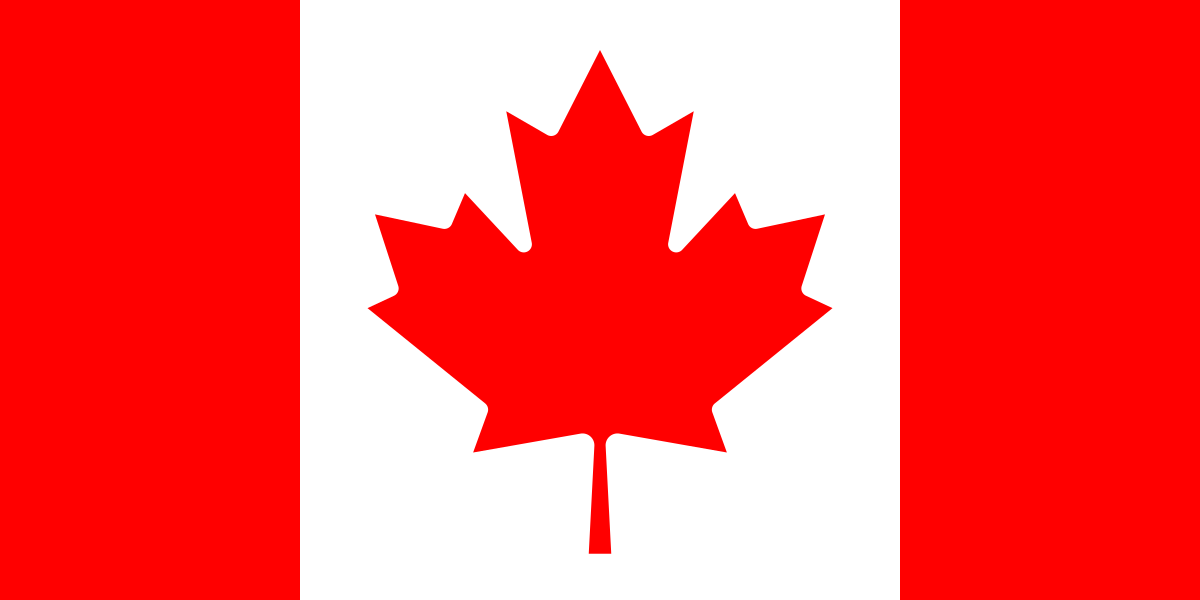
- Flag
- Canada
- Capital
- Ottawa
- Language
- English, French
- Currency
- CAD ($)
- Timezone
- Six time zones, Newfoundland to Pacific (UTC-3:30 to UTC-8); most of the country sets clocks forward an hour each summer
- Calling code
- +1
- Driving side
- Right-hand side
Planning your trip
- Best time to visit
- Late spring through early fall (May–October) is the easiest window almost everywhere in Canada — mild-to-warm weather, long daylight hours, and every attraction open. Winters are genuinely cold across most of the country, though December–March also brings skiing, snow festivals, and a real chance of seeing the northern lights farther north. Check each city guide for specifics, since the coasts and the interior swing differently.
- Good to know
- The Canadian dollar (C$) is the currency; most places take card payment, and cash is rarely needed. Tipping around 15-20% is expected at restaurants and bars, similar to the US. Canada is officially bilingual — English and French — though French is mainly the everyday language in Quebec; English works everywhere else. Most visitors from visa-exempt countries need an Electronic Travel Authorization (eTA) before flying in, arranged online in a few minutes.
Cities
Where to stay in each of Canada's cities — pick one below to see its best neighborhoods and hotels.
Dillonscheenaard / Wikimedia Commons, CC BY 3.0
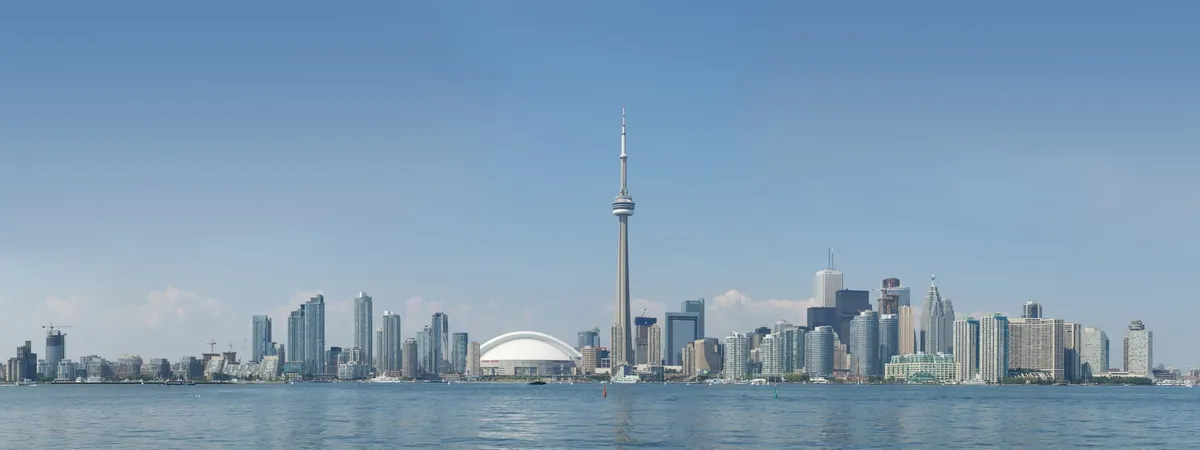
Toronto
Best for: First-time visitors, Couples, Families, Architecture lovers, Nightlife

Pierre André Leclercq / Wikimedia Commons, CC BY-SA 4.0
Niagara Falls
Best for: First-time visitors, Couples, Families, Nightlife

Ueutyi / Wikimedia Commons, CC BY-SA 4.0
Vancouver
Best for: First-time visitors, Couples, Families, Beach time, Architecture lovers

Taxiarchos228 / Wikimedia Commons, CC BY 3.0
Montreal
Best for: First-time visitors, Couples, Families, Architecture lovers, Nightlife
Wilfredor / Wikimedia Commons, CC0 1.0
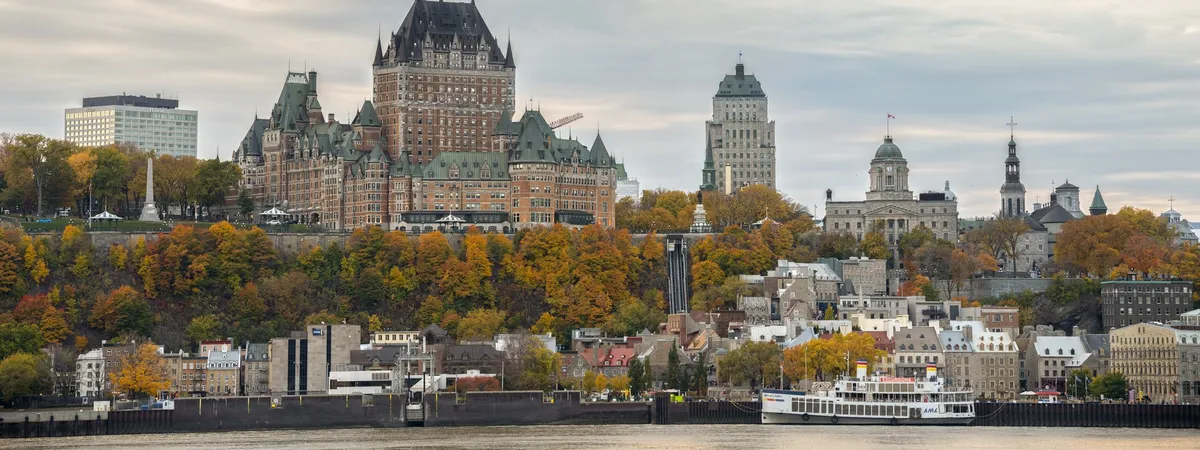
Quebec City
Best for: First-time visitors, Couples, Architecture lovers, Families
Tips
- Sales tax is added at checkout, not included in the sticker price, and the combined federal/provincial rate varies by province — so the total is always a bit more than the tag says.
- Distances between cities are large. Toronto to Vancouver is a full transcontinental flight, so most trips pick one region — Ontario/Quebec or the west coast — rather than trying to see both.
- Pack layers even in summer. Evenings cool off quickly once the sun sets, especially near the coast or in the mountains.
Good to know
- Canada is the world's second-largest country by total area, spanning six time zones from Newfoundland to the Pacific.
- It's officially bilingual — English and French are both federal official languages, and French is the majority everyday language in Quebec.
- Banff, established in 1885 in the Alberta Rockies, was Canada's first national park and is one of the oldest in the world.
Frequently asked questions
- Do I need a visa to visit Canada?
- It depends on your nationality. Citizens of many visa-exempt countries can travel with an Electronic Travel Authorization (eTA) instead of a visa — apply online before you fly, it's linked to your passport. Others need a full visitor visa.
- Is it easy to get around Canadian cities without a car?
- In the main cities, yes — Toronto, Vancouver, and Montreal all have solid public transit within the areas visitors stay in, and Quebec City's Old Town is compact and walkable. A car becomes more useful for day trips outside the city, like reaching Niagara Falls' surrounding wine region or the mountains north of Vancouver.
- How much should I tip in Canada?
- Around 15-20% at restaurants and bars is standard, similar to US norms. Many card payment terminals prompt for a tip percentage automatically.