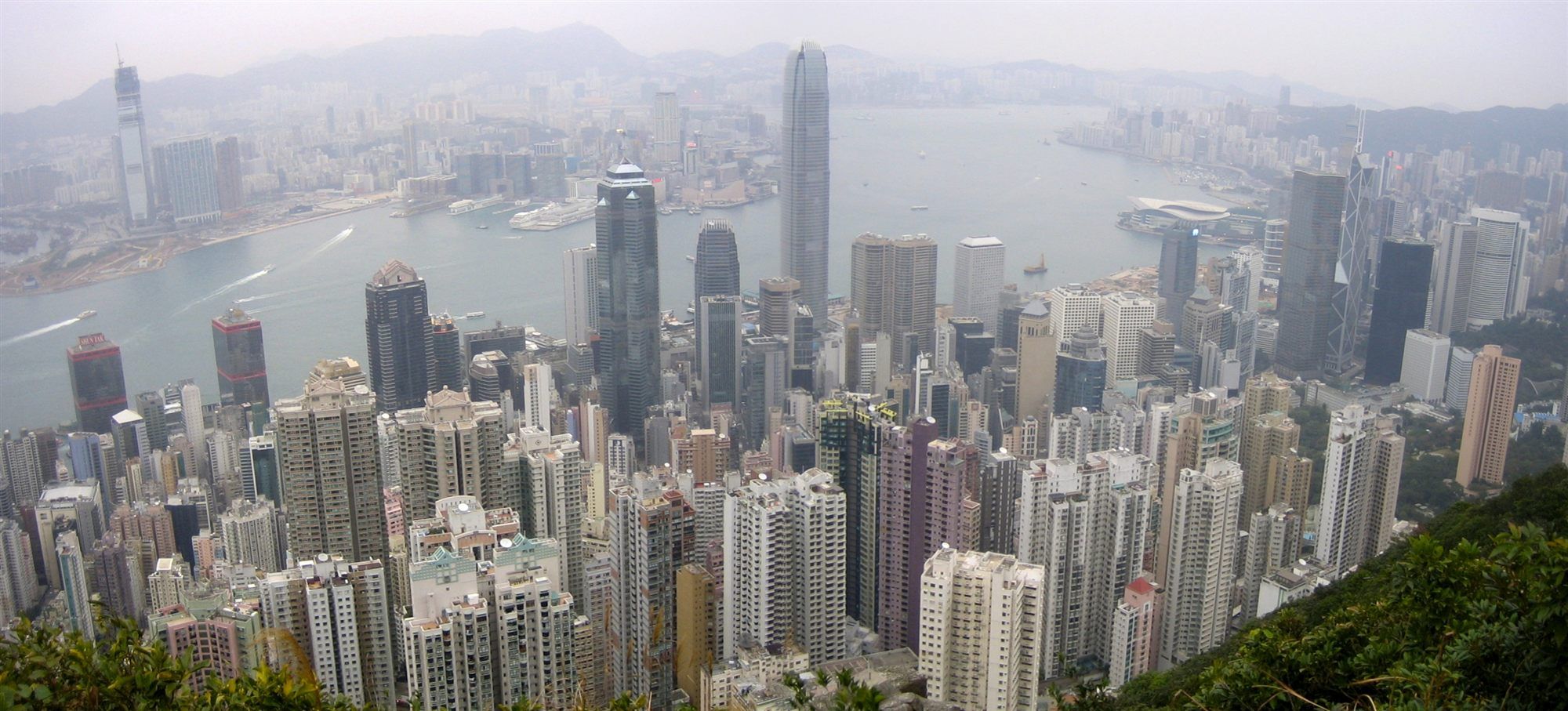



Hong Kong Island's skyscraper skyline seen from Victoria Peak

Romain Pontida / Wikimedia Commons, CC BY-SA 2.0

Hong Kong

Where to Stay in Hong Kong Island

Hong Kong Island is the harbour-facing half of the city that gives Hong Kong its skyline — a dense wall of towers along Victoria Harbour, backed by the steep, green slopes of Victoria Peak. This guide covers the neighborhoods on the Island that work best as a base: Central's financial core and Soho lanes, Causeway Bay's shopping streets, and Wan Chai's mix of nightlife and convention-centre business travel. Don't miss a Star Ferry crossing to Kowloon at dusk, a ride up the Peak Tram, and a walk through the Central–Mid-Levels Escalator's back streets.

Quick facts

Best time to visit
October through December is the best stretch — dry, mild, and clear, with November offering the best balance of comfortable temperatures and low rainfall. Summer (June–September) is hot, humid, and the main typhoon season, which can disrupt ferries and outdoor plans; winter (December–February) is cooler and driest but can turn chilly and damp.
Renting a car
Skip renting a car. Streets in Central, Causeway Bay, and Wan Chai are narrow, steep in places, and parking is scarce and expensive — the MTR, tram, taxis, and Star Ferry cover this guide's neighborhoods faster and more cheaply than driving would.

Where to stay

Compare neighborhoods

AreaBest forAdvantageTrade-off
CentralFirst-time visitorsThe most central base on the Island — Star Ferry, MTR interchange, and Soho's restaurants and bars all within a 10-minute walk.Hotel rates run higher here than almost anywhere else on the Island, and the steep back streets mean some walks involve real stairs.
Causeway BayFamiliesHong Kong's biggest concentration of shopping, right outside your hotel, plus Victoria Park for open space.The core streets are crowded with shoppers most of the day, and it can feel more like a mall district than a neighborhood.
Wan ChaiNightlifeReal nightlife and street life at lower hotel rates than Central, with the Convention Centre right on the waterfront.Lockhart Road's bar strip runs loud late into the night, and the area feels more spread out than Central's compact core.

Our picks for Hong Kong Island

A handful of editorial calls across every neighborhood above, not just the highest star rating — see each hotel's own card further down for the full case for and against it.

A couple of hotels in Central

Central is the top-recommended area to stay in Hong Kong Island.

Hotel Madera Hollywood

★★★★
  • 🏆 Our overall pick
  • 🏛️ Best for architecture & design

Our take A genuinely design-focused boutique stay on one of Central's most walkable heritage streets, with suite-sized rooms that are hard to find this central.

Good for

  • Couples
  • First-time visitors

Couples and first-time visitors who want a design-led, all-suite stay within walking distance of Central's restaurants, galleries, and nightlife.

Why we like it

  • Every room is a suite, giving more space than most hotels in this part of Central
  • On Hollywood Road, steps from PMQ's galleries and shops and a short walk down to Soho's restaurant streets
  • Many rooms have city or partial harbour views from the higher floors
  • Small enough to feel personal, with a boutique layout and service style rather than a big chain

What to know

  • Hollywood Road slopes uphill, so expect some walking to reach the hotel from the nearest MTR exit
  • As a suite-only boutique property, room count is limited, so it can book out earlier than larger hotels nearby
Check availability on Booking.com

The Landmark Mandarin Oriental, Hong Kong

★★★★★
  • ✨ Best luxury
  • 📍 Best location

Our take About as central as a hotel gets on Hong Kong Island — built directly into The Landmark mall — with a quieter, more residential style than a typical grand hotel.

Good for

  • Luxury travelers
  • Couples

Travelers who want a full luxury stay in the exact center of Central's financial district, with high-end shopping and dining reachable without going outside.

Why we like it

  • Built into The Landmark, so international shopping, dining, and the Central MTR interchange are all reachable without stepping outside
  • Rooms are large by Hong Kong standards, with a calm, residential feel rather than a typical hotel-tower layout
  • Several Michelin-starred restaurants sit on site, run independently of the hotel's own room service
  • A short, flat walk to the Star Ferry pier and Central's harbourfront

What to know

  • Being built into a mall means the entrance and check-in area can be easy to miss from street level on a first visit
  • Rates sit at the top of the market for the neighborhood
Check availability on Booking.com

Useful travel information

Hong Kong uses the Hong Kong dollar (HKD). An Octopus card, sold at the airport and any MTR station, covers the MTR, buses, the historic north-shore tram, the Star Ferry, and most convenience-store purchases with a single tap. English is an official language alongside Cantonese and is widely used on signage and by staff. The territory is very safe to walk at night, though the terrain is genuinely hilly in parts — expect stairs and slopes once you're off the flat harbourfront.

Tips

  • Get an Octopus card as soon as you land — it works on nearly every form of transport and at convenience stores, and saves you from buying single paper tickets.
  • Ride the Star Ferry between Central and Kowloon at least once. It's one of the cheapest, most scenic harbour crossings anywhere, and it's still a working commuter line, not just a tourist ride.

Frequently asked questions

Where should first-time visitors stay on Hong Kong Island?
Central is the easiest first base — it's walkable, sits right on the Star Ferry and MTR network, and puts Soho's restaurants and PMQ's shops within a short walk. Causeway Bay is a strong alternative if shopping is the priority.
Is Hong Kong Island walkable?
Each neighborhood in this guide is walkable on its own, though the terrain climbs steeply once you head inland from the harbour. You'll use the MTR or tram to move between areas — both are fast, frequent, and easy to navigate.