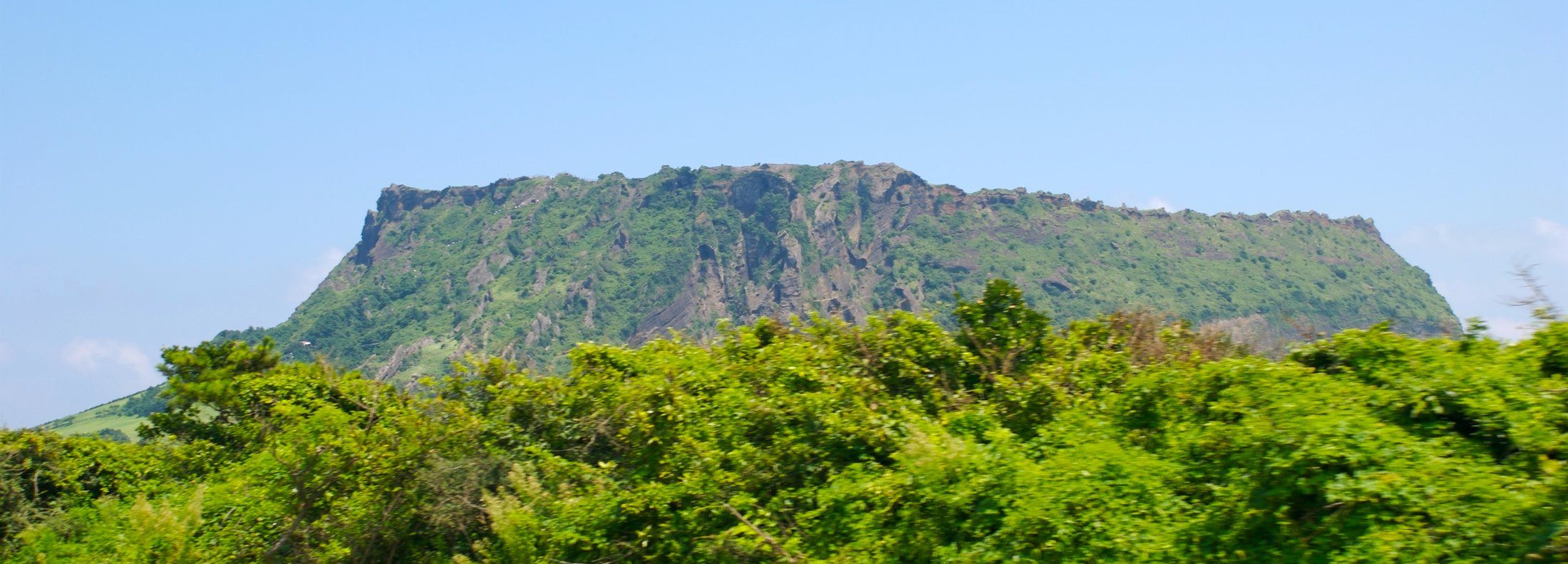
Seongsan Ilchulbong, Jeju's flat-topped volcanic tuff cone, rising above green coastal scrubland under a clear blue sky

Yoo Chung / Wikimedia Commons, CC BY-SA 3.0

South Korea

Where to Stay in Jeju

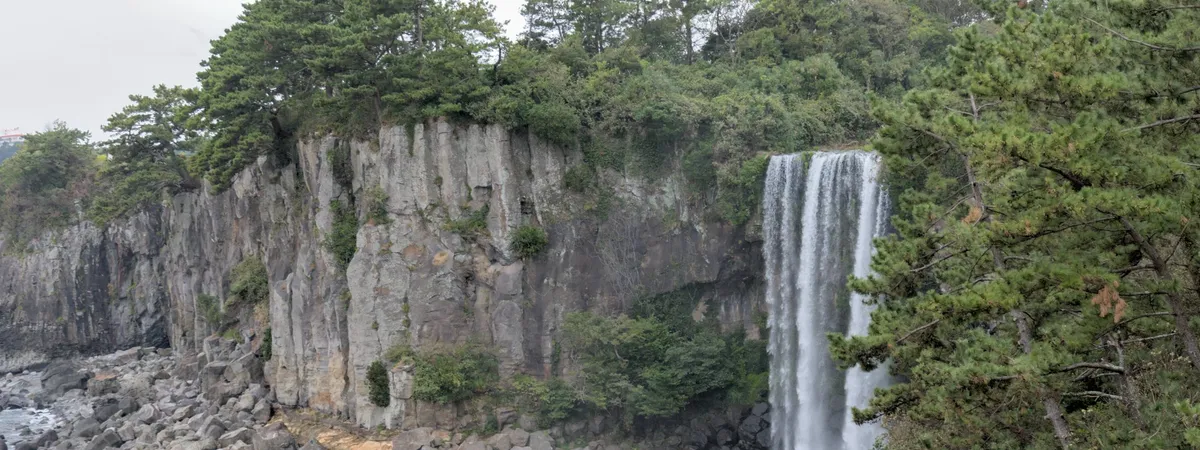
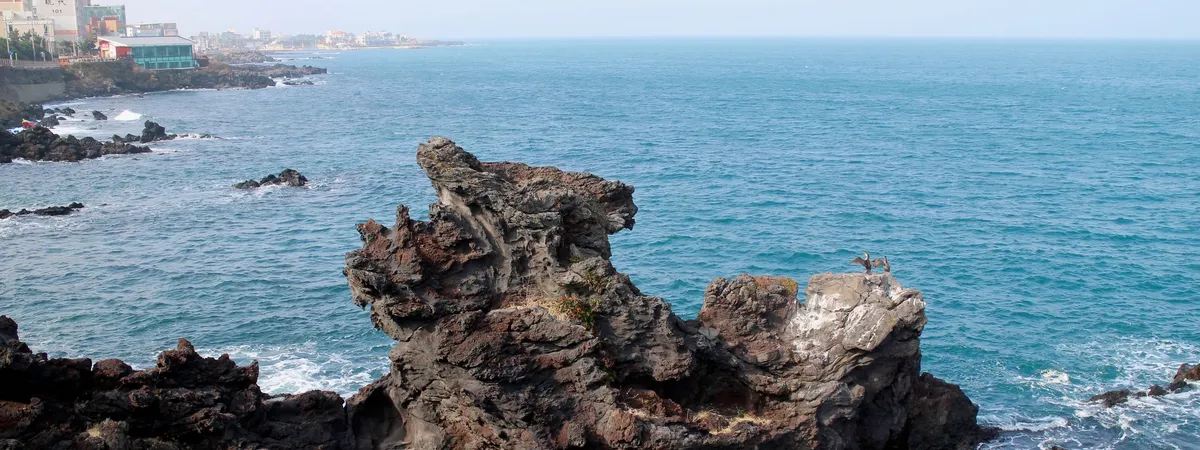
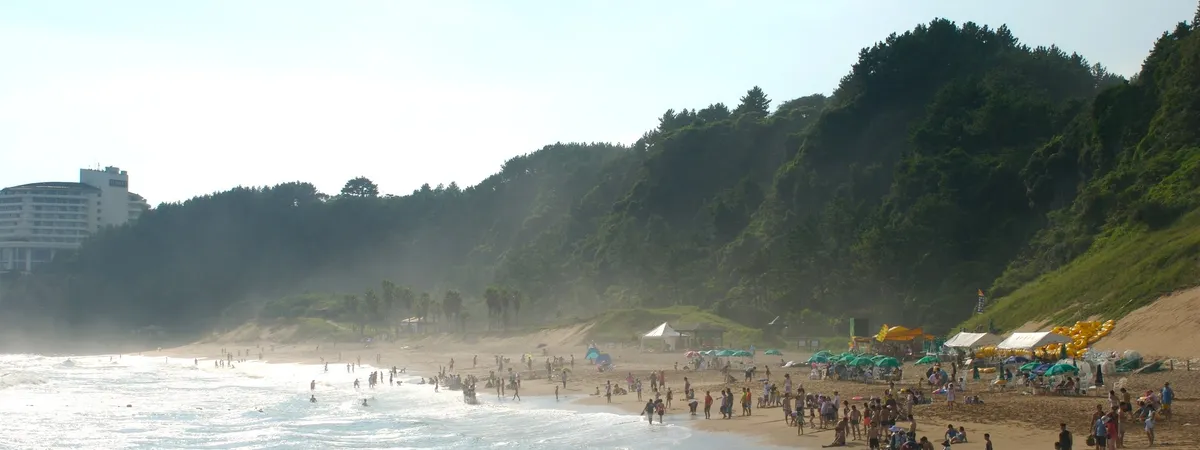
Jeju is a volcanic island off South Korea's southern coast, and the country's most distinct getaway — somewhere between a domestic beach resort and its own small nation. Hallasan, a dormant volcano and South Korea's highest peak, dominates the interior, while the coastline shifts from black lava-rock shorelines to white sand beaches within a short drive. Unlike the mainland, the island runs on a milder, subtropical climate, and its volcanic geology — tuff cones, lava tube caves, and columnar basalt cliffs — earned it UNESCO World Heritage status. Most visitors split their time between three parts of the island: Jeju City in the north, the main entry point with the airport and the island's biggest concentration of hotels and restaurants; Seogwipo on the south coast, a smaller, slower city known for its waterfalls and the Olle coastal trail; and Jungmun, a purpose-built resort strip between the two, with the island's biggest international hotels lined up above Jungmun Saekdal Beach. Unlike Seoul or Busan, getting around comfortably usually means renting a car — Jeju's sights are spread across the whole island, and the bus network, while functional, runs far less frequently than mainland cities' subways.
Quick facts

Best time to visit
Spring (April-May) and autumn (September-November) bring the mildest weather and clearer skies. Summer (July-August) is peak beach season — hot and humid with a monsoon window, but also when Jungmun and Seogwipo's beaches are busiest. Winter is mild by Korean standards on the coast, though Hallasan's upper slopes see snow, drawing a smaller hiking crowd.
Renting a car
Jeju's main attractions — waterfalls, cliffs, oreum (volcanic cones), and beaches — are spread across the whole island, and bus connections between them are far less frequent than mainland subway lines. Renting a car is the standard way to see Jeju beyond a single base, and most hotels have parking. If you're staying only in Jungmun or only in Jeju City's Tapdong area, though, a car isn't necessary for that area alone.

Where to stay

Compare neighborhoods

AreaBest forAdvantageTrade-off
JungmunLuxury travelersThe most resort-complete stretch of Jeju, with beach access and the island's biggest international hotel brands side by side.Feels more built for tourism than for everyday local life, and dining inside the complex runs pricier than elsewhere on the island.
SeogwipoFamiliesThe most walkable base for Jeju's waterfalls and the Olle Trail, with a slower, more local pace than the resort strip.No real swimming beach right in town — Jungmun's beach is a short drive away.
TapdongFirst-time visitorsThe most walkable, airport-convenient base on the island, with the city's restaurant scene and Dongmun Market close by.No real beach here — swimming and resort-style pools mean heading to Jungmun instead.

Our picks for Jeju

A handful of editorial calls across every neighborhood above, not just the highest star rating — see each hotel's own card further down for the full case for and against it.

A couple of hotels in Jungmun

Jungmun is the top-recommended area to stay in Jeju.

Lotte Hotel Jeju

★★★★★
  • 👨‍👩‍👧 Best for families
  • ✨ Best luxury

Our take Lotte Hotel Jeju stands out among Jungmun's luxury resorts for how deliberately it's built around families, with a dedicated kids' pool and playground alongside the beach access that makes the whole area appealing.

Good for

  • Luxury travelers
  • Families

Families who want resort-level facilities in Jungmun, including a children's pool, playground, and games built specifically for younger guests.

Why we like it

  • A children's pool, playground, and games built specifically for younger guests.
  • About a 10-minute walk to Jungmun Saekdal Beach.
  • Steps from the Teddy Bear Museum, an easy add-on for families with kids.

What to know

  • The family-oriented facilities mean it can feel busier and more activity-focused than some of Jungmun's other resorts.
Check availability on Booking.com

The Shilla Jeju

★★★★★
  • ✨ Best luxury
  • ❤️ Best for couples

Our take The Shilla Jeju is Jungmun's most complete luxury resort, with grounds that step down toward the coast and put both the beach and the Olle Trail within a short walk, making it a strong pick for a special-occasion stay.

Good for

  • Luxury travelers
  • Couples

Couples and travelers who want a full luxury resort experience in Jungmun, with direct access to the Olle coastal trail and Jungmun Saekdal Beach.

Why we like it

  • Terraced gardens and grounds leading toward Jungmun Saekdal Beach, a short walk away.
  • Direct access to the Jeju Olle coastal walking trail.
  • Multiple restaurants and a full spa and fitness club on site.

What to know

  • It's a large resort spread across extensive grounds, so it suits travelers who want to settle in rather than move between hotels.
Check availability on Booking.com

Useful travel information

South Korea uses the won (₩). Jeju International Airport, in Jeju City, connects to Seoul and Busan by short domestic flights and has some direct international routes as well. English signage is common at the airport and major sights but thinner outside them, and a T-money transit card works on Jeju's buses the same way it does on the mainland, though routes here run less frequently than in Seoul or Busan. Tipping isn't expected.

Tips

  • Rent a car if you plan to see more than one part of the island — Jeju's sights are spread out, and buses between them run far less often than mainland Korea's subways.
  • Book Jungmun's resort hotels well ahead for summer (July-August) — Jeju's beach season fills up fast and prices rise sharply.
  • Bring a light jacket even in shoulder season — coastal wind off the sea and around Hallasan's slopes can make it feel cooler than the temperature suggests.

Frequently asked questions

How many days do I need in Jeju?
Three to four days covers a solid first visit — enough time to split between Jeju City or Jungmun as a base and a day trip to Seogwipo's waterfalls. A week lets you circle more of the island, including Seongsan Ilchulbong and the eastern coast.
Do I need a car in Jeju?
Not if you're staying within a single area like Jungmun or Jeju City's Tapdong, both walkable on their own. But to see more than one part of the island — waterfalls, oreum, and beaches across different regions — a rental car is the practical option, since bus connections are infrequent.
Is Jeju different from mainland South Korea?
Yes, noticeably — it's volcanic rather than mountainous in the mainland sense, has a milder, more subtropical climate, and its own dialect and food culture. It's often described as feeling like its own small country within South Korea.