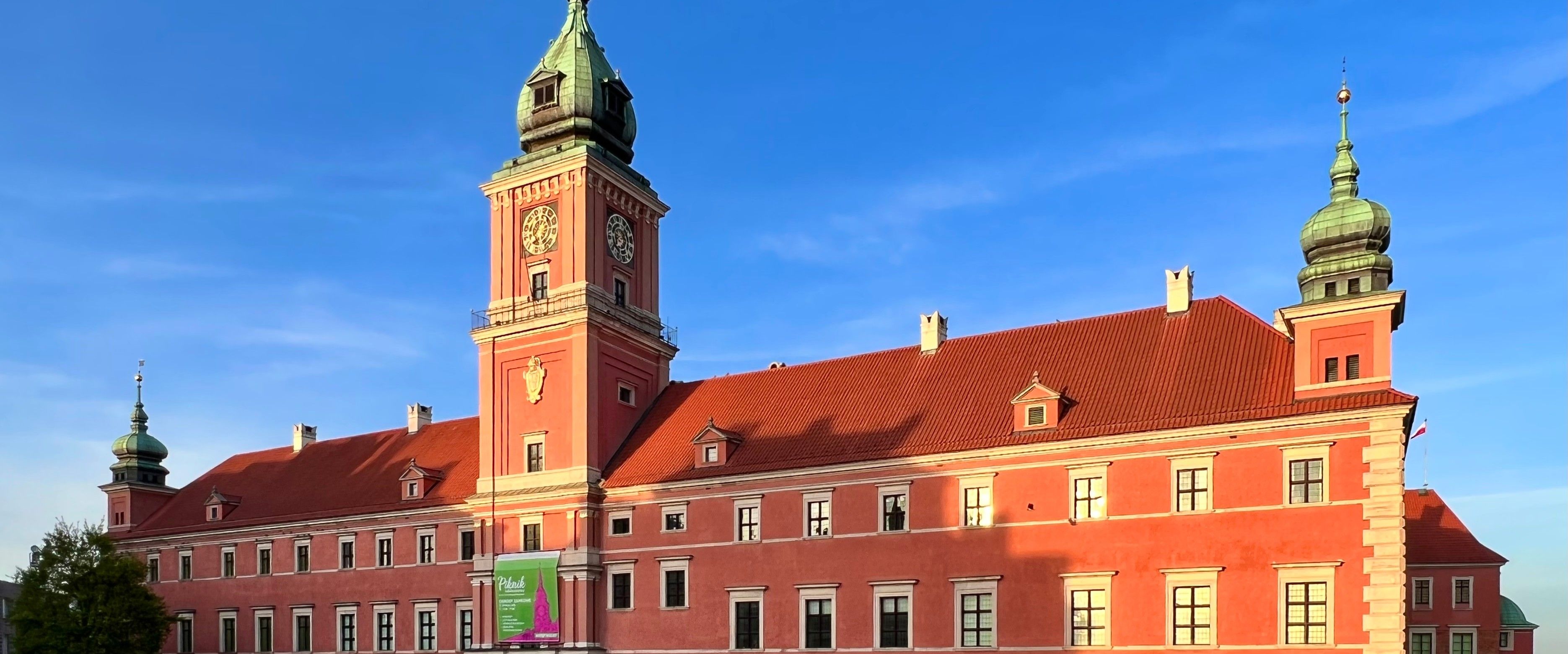
The Royal Castle's red facade and clock tower at Castle Square in Warsaw's Old Town

Chris Olszewski / Wikimedia Commons, CC BY-SA 4.0

Poland

Where to Stay in Warsaw

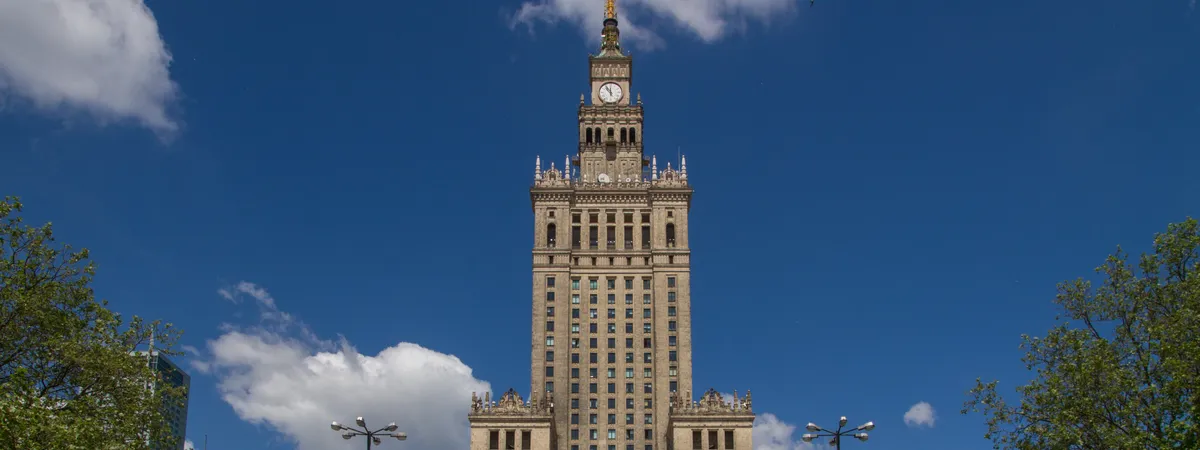
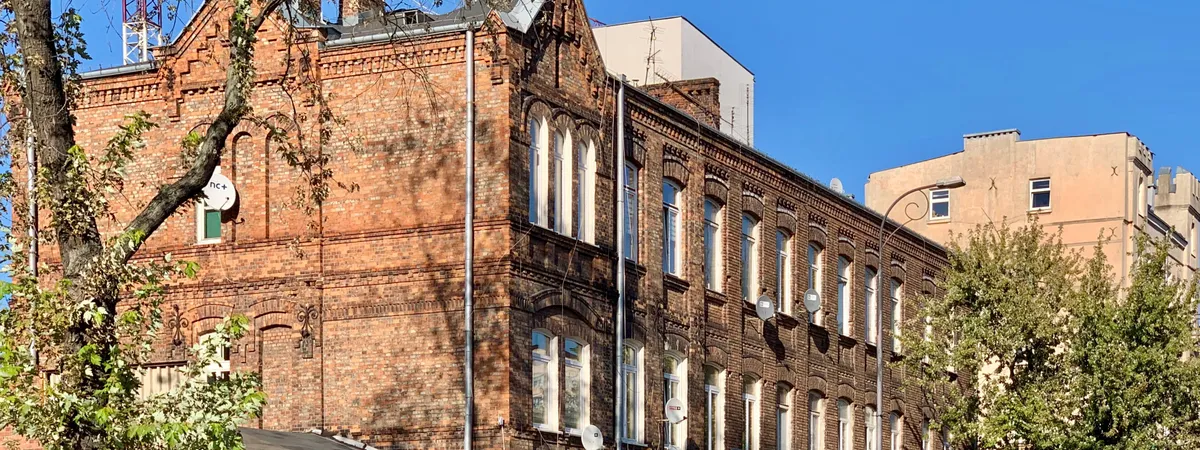
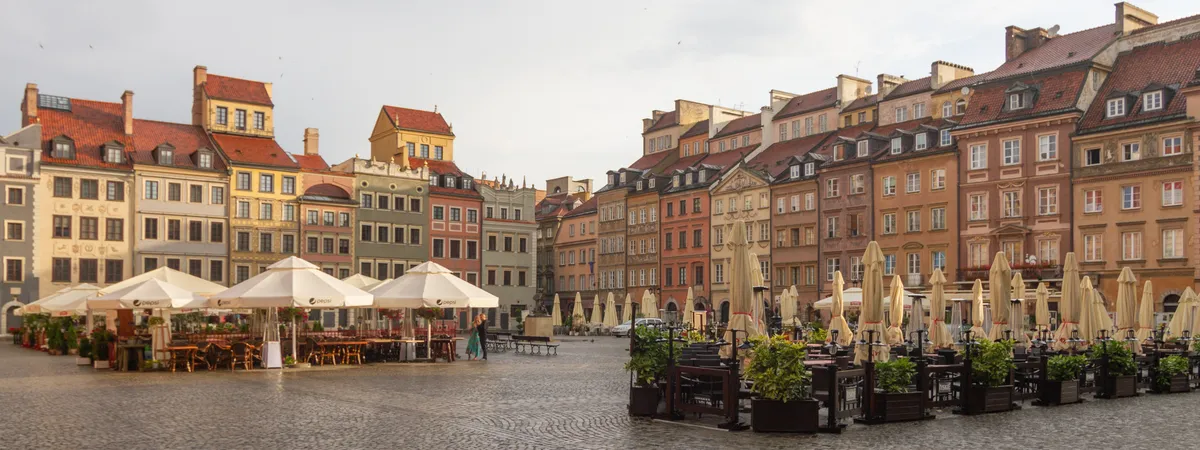
Warsaw doesn't try to hide its history the way some rebuilt cities do. The Old Town looks centuries old, with its market square, city walls, and Royal Castle rebuilt largely from photographs and paintings after the city was almost completely destroyed in 1944 — a reconstruction so thorough that UNESCO listed it specifically for the achievement. Walk a few minutes south along the Royal Route and the city shifts into Śródmieście, its modern center, where 19th-century townhouses share the skyline with the Soviet-era Palace of Culture and Science and a small but growing cluster of glass office towers. Cross the Vistula and Praga, the district that survived the war largely intact, feels like a different city again — worn brick tenements, street art, and a nightlife scene built out of a converted vodka factory. It's also a city that's easy to get around without much planning. The metro, trams, and buses run on one integrated ticket system, the historic core is compact enough to walk in an afternoon, and the contrast between districts — reconstructed, modern, and untouched — means a short walk can change the mood of a trip entirely.
Quick facts

Best time to visit
Late spring (May-June) and early autumn (September) bring mild weather and thinner crowds than midsummer. December has its own appeal for the Christmas market on the Old Town Market Square, though days are short and cold. July and August are warm and busy, with the Old Town at its most crowded.
Renting a car
A car adds cost and hassle without adding much: the Old Town and much of Śródmieście are dense, traffic-heavy, or pedestrianized, and street parking in the center is limited and metered. The metro and tram network reaches every area covered in this guide directly, including across the river to Praga.

Where to stay

Compare neighborhoods

AreaBest forAdvantageTrade-off
Stare MiastoFirst-time visitorsNearly everything associated with historic Warsaw is within a short walk, including the Royal Castle and Market Square.It's the most touristy and reconstructed part of Warsaw, and the cobbled streets can be tough going with luggage or a stroller.
ŚródmieścieFirst-time visitorsThe best transit connections in the city, with most major sights within walking distance too.It's a large, mixed district, and parts of it — especially near the main train station — feel more like a business center than a place to spend an evening.
Praga-PółnocBudget travelersA more authentic, less touristy atmosphere with generally better value than districts on the river's other side.Every trip to the Old Town or central sights means crossing the river, so it's a less convenient base for a short first visit.

Our picks for Warsaw

A handful of editorial calls across every neighborhood above, not just the highest star rating — see each hotel's own card further down for the full case for and against it.

A couple of hotels in Stare Miasto

Stare Miasto is the top-recommended area to stay in Warsaw.

PURO Warszawa Stare Miasto

★★★★
  • 🏆 Our overall pick

Our take PURO combines a genuinely central location with contemporary design and useful extras like free bikes and a sauna, making it one of the more practical all-around picks for a first stay in Warsaw.

Good for

  • First-time visitors
  • Couples
  • Architecture lovers

First-time visitors who want a well-designed, central base next to the Old Town without paying historic-building prices.

Why we like it

  • Right next to Saski Garden, close to Piłsudski Square and a short walk into the Old Town.
  • Free bicycles for guests, useful for covering more of the city than the Old Town alone.
  • A sauna and fitness center on-site, extras that are uncommon at this price point.
  • Soundproofed rooms, which helps given how central the location is.
Check availability on Booking.com

Mamaison Hotel Le Regina Warsaw

★★★★★
  • ✨ Best luxury
  • ❤️ Best for couples

Our take Le Regina's palace setting and private courtyard give it a quieter, more romantic feel than most Old Town hotels, while still keeping the Royal Castle and Market Square within easy walking distance.

Good for

  • Luxury travelers
  • Couples
  • Architecture lovers

Couples and travelers who want an intimate, historic luxury stay close to the Old Town without being right in the middle of its busiest streets.

Why we like it

  • Set in a restored 18th-century palace, with period details carried through the public rooms and courtyard.
  • A private garden courtyard offers a genuinely quiet retreat, rare this close to the Old Town.
  • Suites run large by Warsaw standards, with the largest topping 100m².
  • An indoor pool and spa, uncommon among boutique hotels in the historic center.

What to know

  • It sits at the northern edge of the Old Town on the border with the quieter New Town, a few minutes further from the Royal Castle and Market Square than hotels right on them.
Check availability on Booking.com

Useful travel information

Poland uses the złoty (zł), not the euro — cards are widely accepted, but it's worth carrying some cash for smaller vendors. English is spoken widely in hotels, restaurants, and shops in the center. The metro (two lines), trams, and buses run on one integrated ticket system and cover the city thoroughly — a single ticket or a 24/72-hour pass covers most visits without needing a car. Tipping isn't obligatory, but rounding up or adding roughly 10% at restaurants is common practice.

Tips

  • Buy a 24 or 72-hour public transport pass if you're moving around a lot — it covers the metro, trams, and buses and is usually cheaper than single tickets bought one at a time.
  • The Old Town's reconstruction is genuinely worth understanding before you visit — a stop at the Warsaw Rising Museum or a guided walk adds context that isn't obvious just from walking the square.
  • If you're curious about Praga, go in daylight first — the street art and Koneser complex are easy to find, but the district's mix of restored and still-rundown blocks is easier to read with a bit of daylight.

Frequently asked questions

How many days do I need in Warsaw?
Two to three days covers the Old Town, the Royal Route, and one or two major museums comfortably. It also works well as a shorter stopover, since the airport and main train station both sit close to the center.
Is Warsaw walkable?
The historic core — the Old Town, New Town, and the Royal Route through Śródmieście — is flat and walkable. For areas further out, like Praga across the river, the metro and tram network make getting around simple without a car.
Do I need to speak Polish in Warsaw?
No. English is spoken widely in hotels, restaurants, and shops across the city center, especially among younger staff — a few Polish phrases are appreciated but not necessary for a comfortable visit.