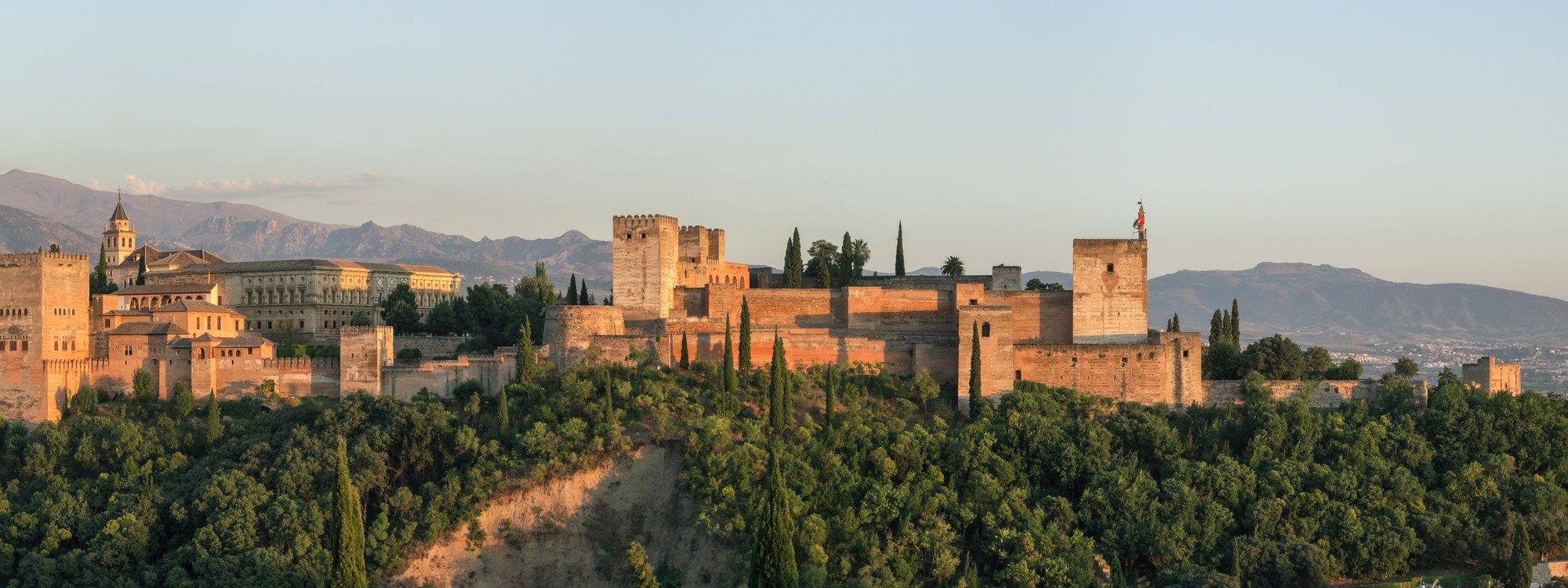
The Alhambra at sunset seen from the Mirador de San Nicolás, with the Sierra Nevada mountains behind it

Slaunger / Wikimedia Commons, CC BY-SA 3.0

Spain

Where to Stay in Granada

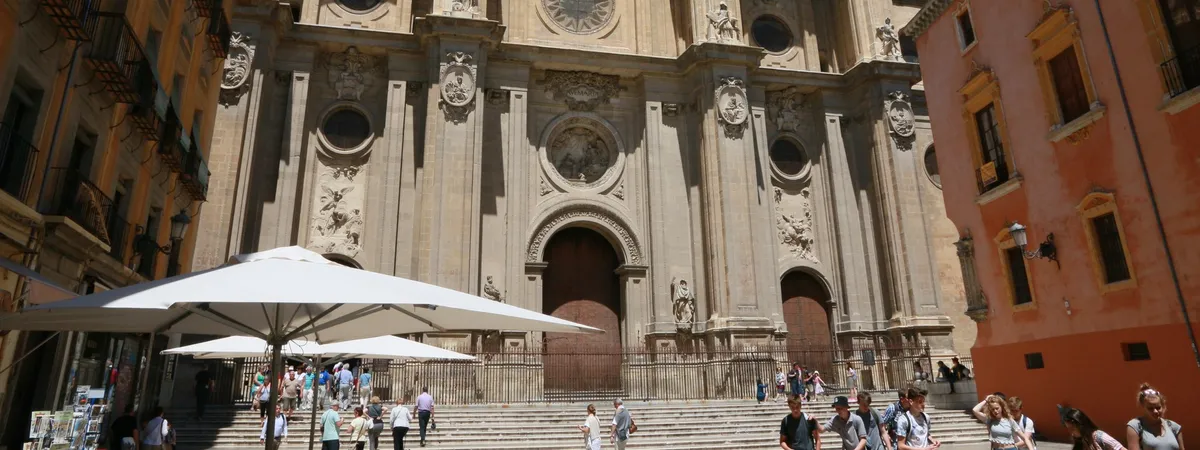
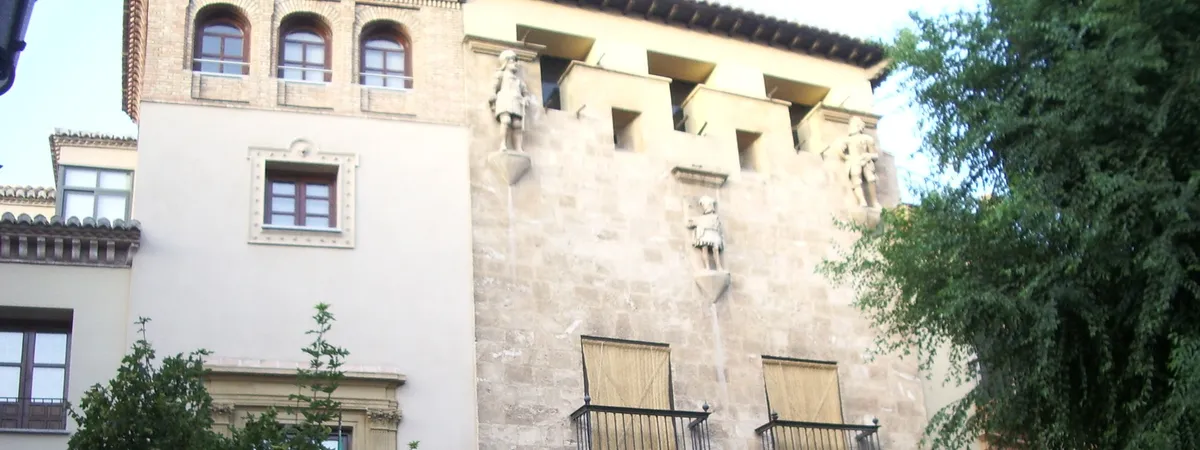
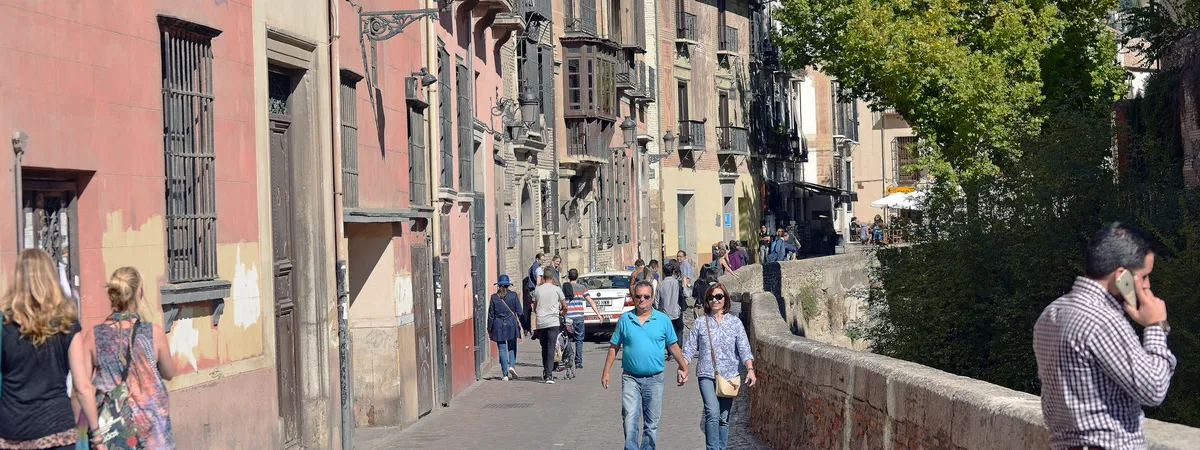
Granada sits at the foot of the Sierra Nevada in southern Spain, built around the Alhambra, the fortified Nasrid palace complex that was the last stronghold of Moorish rule in Western Europe before the city fell to the Catholic Monarchs in 1492. That layered history is still visible everywhere: the Albaicín, the old Moorish quarter across the river from the Alhambra, keeps its medieval street plan of narrow lanes and whitewashed houses, while the Realejo below the Alhambra hill was once the city's Jewish quarter. The cathedral and the Capilla Real, where Ferdinand and Isabella are buried, sit in the flatter center around Gran Vía de Colón. Granada is also one of the few Spanish cities where a drink at a bar still comes with a free tapa, a tradition that's held on here longer than almost anywhere else in the country.

Quick facts

Best time to visit
Visit in April–June or September–October, when daytime temperatures are comfortable for walking the Alhambra's grounds and the Albaicín's hills. Summer (July–August) regularly climbs above 35°C and the midday heat is genuinely hard on sightseeing. Winter is mild by comparison and brings its own reward: clear days with snow visible on the Sierra Nevada peaks behind the Alhambra.
Renting a car
Skip a car if you're staying in the center, the Albaicín, or Realejo. Streets in the old quarters are narrow, steep, and largely closed to non-resident traffic, and parking near any of them is scarce. A car only earns its keep for day trips into the Alpujarras or the Sierra Nevada, where bus service thins out — rent one for those days and return it rather than keeping it for the whole stay.

Where to stay

Compare neighborhoods

AreaBest forAdvantageTrade-off
Granada CentroFirst-time visitorsGranada's most convenient base — flat, central, well connected to buses, and within walking distance of the cathedral, the Albaicín, and the Alhambra approach.Less atmospheric than the Albaicín or Realejo, and Gran Vía's traffic means some hotels on or near it deal with more street noise than a quieter side-street stay.
RealejoArchitecture loversThe shortest walk in Granada to the Alhambra's ticket entrance, plus a quieter, more residential feel than the center or the Albaicín's busiest lanes.Fewer restaurants and shops on your doorstep than the center or the Albaicín, and some streets still climb steeply toward the Alhambra side of the neighborhood.
AlbaicínCouplesGranada's most atmospheric neighborhood to actually stay in, with Alhambra views built into the streets themselves and a real, lived-in feel once you're away from the main viewpoints.Steep, stepped streets that rule out wheeled luggage on the last stretch to many hotels, and no direct public transport to most doorsteps.

Our picks for Granada

A handful of editorial calls across every neighborhood above, not just the highest star rating — see each hotel's own card further down for the full case for and against it.

A couple of hotels in Granada Centro

Granada Centro is the top-recommended area to stay in Granada.

Hotel Palacio de Santa Paula, Autograph Collection

★★★★★

Our take A serious luxury pick for anyone who wants Granada's history built into the walls rather than just visible from the window — the restored cloister and convent architecture carry real weight, on a street that puts the cathedral a few minutes' walk away.

Good for

  • Luxury travelers
  • Architecture lovers

Travelers who want a genuine historic luxury stay right on Gran Vía, within a five-minute walk of the cathedral.

Why we like it

  • Occupies a restored 14th-century mansion and 16th-century convent, built around a historic cloistered courtyard that's rare to find inside a working hotel
  • On Gran Vía de Colón, about a five-minute walk from the cathedral and Capilla Real
  • Full-service extras many nearby hotels don't have: a gym, valet parking, and an on-site restaurant set in the old cloister
  • Family rooms and suites available for travelers who want more space than a standard city-center room

What to know

  • Some rooms face Gran Vía directly, which carries daytime traffic noise — ask for a courtyard-facing room if a quiet night matters more than a street view
  • The Alhambra isn't a short walk from here; plan on a bus or a longer uphill walk to reach it
Check availability on Booking.com

Eurostars Gran Vía

★★★★★

Our take A comfortable, well-located choice for travelers who want a proper spa and rooftop view without leaving Centro — it sits close enough to the cathedral to walk everywhere, with a hydrothermal circuit that's unusual to find at a hotel this central.

Good for

  • First-time visitors
  • Couples

Travelers who want a full-service hotel with a spa, right in the middle of Centro, within easy reach of both the cathedral and the Alhambra buses.

Why we like it

  • About 100 meters from Granada Cathedral, on Gran Vía de Colón
  • A rooftop terrace with views that take in the Alhambra, the cathedral, and the Sierra Nevada on a clear day
  • A hydrothermal spa circuit — steam bath, contrast showers, hot-water pool — available for guests, unusual for a hotel this central
  • Comfortable rooms with air conditioning, a minibar, and satellite TV

What to know

  • The spa's hydrothermal circuit is priced per person as an add-on rather than included in the room rate
  • Rooms facing Gran Vía can pick up street noise — ask about an interior-facing room if that matters to you
Check availability on Booking.com

Useful travel information

Spain uses the euro. Federico García Lorca Granada-Jaén Airport is about 18km west of the city; an airport bus runs to the center for around €3 (roughly 45 minutes), and a taxi takes about 20–25 minutes and costs around €30–40. Granada's old quarters — the Albaicín and much of the Alhambra hill — are built on steep terrain with narrow, largely pedestrian streets, so most sightseeing happens on foot; a small city bus network covers the center and the approach to the Alhambra for visitors who'd rather not climb. Alhambra tickets are capped per time slot and sell out days or weeks ahead in high season, so book online before you arrive rather than planning to buy on the day. Pickpocketing is the main practical risk, especially around the Mirador de San Nicolás at sunset and in crowded stretches of the Albaicín — keep bags zipped and in front of you.

Tips

  • Book Alhambra tickets on the official website as far ahead as you can — visitor numbers are capped per time slot, and the Nasrid Palaces slot on your ticket is a fixed entry window, not a suggestion.
  • Order a drink at almost any bar in Granada and a small tapa comes with it, unordered and unpaid-for — it's one of the last cities in Spain where this is still the norm rather than the exception, so pace your drinks if you want to try several bars.
  • Wear shoes with real grip for the Albaicín and the approach to the Alhambra — the streets are steep and the traditional cobbling (cascajo) gets slippery, especially after rain.

Frequently asked questions

Where should first-time visitors stay in Granada?
Stay in the center near the cathedral for the easiest walking access to shops, restaurants, and transport, or in the Albaicín if you'd rather wake up inside the old Moorish quarter and don't mind steep streets. Realejo, on the Alhambra side of the center, is a good middle ground with easy access to the monument itself.
Do I need to book Alhambra tickets in advance?
Yes. Daily visitor numbers are capped and tickets, especially for the Nasrid Palaces, regularly sell out days or weeks ahead in spring, summer, and around holidays. Book on the official Alhambra website before you travel.
Is Granada walkable?
The center is flat and easy to walk, but the Albaicín and the approach to the Alhambra climb steeply and are built for pedestrians rather than cars. Comfortable shoes matter more in Granada than in most Spanish cities.
Do I need a car in Granada?
No — the historic center, Albaicín, and Realejo are all walkable or connected by local buses, and a car is a liability on the old quarters' narrow streets. Only rent one for day trips to the Alpujarras or Sierra Nevada.