Last updated September 26, 2026
Italy
10-Day Alps Road Trip from Milan, Italy: Lake Como, the Dolomites & Lucerne
Ten days, five bases — Milan, Varenna, Corvara, Innsbruck and Lucerne — and a one-way rental from Milan to Zurich Airport that decides whether the plan works at all. Italy, Austria and Switzerland, with a brief Liechtenstein stop. It is a coverage-first Alps road trip, and it works only because the route never doubles back. It does not work as a relaxed holiday. Five of the ten days put three hours or more behind the wheel, and three Dolomite nights buy a broad first look — Seceda, Alpe di Siusi, Braies, Tre Cime and several of the passes — with almost no depth. Price that Zurich drop before booking anything else; the quote decides whether the trip works as written.
Quick facts
- Duration
- 10 days
- Pace
- Packed
- Best time to go
- June to September
Route map
Trip overview
| Day | Region | Main highlights | Book ahead | Pace |
|---|---|---|---|---|
| Day 1 | Milan on Foot, Car Tomorrow | The Duomo and its roof terraces | The Duomo and its roof terraces | Relaxed |
| Day 2 | Out of the City, Onto the Lake | Collect the car at Milano Centrale; Como, and the funicular if you want the view; Up the eastern shore to Varenna | Collect the car at Milano Centrale | Packed |
| Day 3 | Como by Boat, Car Left Behind | Ferry to Bellagio and the Villa Melzi gardens; Across to Tremezzo for Villa Carlotta; Back to Varenna, and Villa Monastero last | — | Packed |
| Day 4 | The Long Run East, With Trento in the Middle | A stop in Trento; Up the Val Badia to Corvara | — | Balanced |
| Day 5 | Seceda and Alpe di Siusi | Seceda, first thing; Alpe di Siusi in the afternoon | Seceda, first thing | Balanced |
| Day 6 | The Eastern Loop: Braies and Tre Cime | Lago di Braies before the traffic restriction; Rifugio Auronzo and the first stretch of the Tre Cime trail | Lago di Braies before the traffic restriction; Rifugio Auronzo and the first stretch of the Tre Cime trail | Balanced |
| Day 7 | Two Passes, Then Austria | Innsbruck's old town | — | Relaxed |
| Day 8 | Across Two Borders to Lucerne | Lucerne's old town and the Chapel Bridge | — | Relaxed |
| Day 9 | A Mountain Day on Pilatus | The Golden Round Trip | The Golden Round Trip | Relaxed |
| Day 10 | Down the Brünig, and Out Through Zurich | Brienz on the lake; Interlaken between two lakes; The run to Zurich Airport | — | Packed |
Transportation & practical information
A self-drive route with three deliberate exceptions. Day 1 in Milan runs on the metro and on foot, and the car is collected on Day 2 morning at Milano Centrale — collecting there avoids driving into Area C, Milan's weekday access charge, altogether. Day 3 on Lake Como moves entirely by ferry with the car left in Varenna, and Day 9 on Pilatus runs on boat, cogwheel railway and cable car with the car parked in Lucerne. Every other transfer is by car, and the itinerary contains roughly 24 hours of scheduled driving in total — every leg, not just the moves between bases — before parking, traffic and optional detours, with five days at three hours or more. Italy, Austria and Switzerland all charge for the roads on this route, but they do it in three different ways. Italy: ticket-and-barrier motorways paid on exit, plus camera-enforced limited-traffic zones in most historic centres. Austria: two systems, not one. The A12 through the Inn valley needs a vignette; the A13 Brenner and the S16 Arlberg tunnel don't — they are section-toll roads, paid per trip instead. Switzerland: a single CHF 40 motorway vignette, with no short-stay alternative.
A car is what this route is built on. The Dolomite passes, the valley road to Lago di Braies, the Tre Cime access road, the Brenner crossing and the Brünig run down to Interlaken are impractical to combine at this pace without one, and only Days 1, 3 and 9 work without one. The catch is where it ends: picking up in Milan and dropping in Zurich is an international one-way, the fee for it is set per route and per car category rather than being a flat add-on, and some suppliers want written permission before the car crosses a border at all. Get that figure quoted before you book anything else.
Day-by-day itinerary
Day 1: Milan on Foot, Car Tomorrow
An arrival day that deliberately owns no car. Everything here is within the metro's reach and clustered around the Duomo, which is also the one chance on this route to look down on a city before the mountains take over.
If you land late, drop the Duomo terraces and keep the Navigli: the roof needs daylight and a timed slot, the canals only need the evening. Rain makes the reverse true — the cathedral interior and the Galleria next door absorb a wet afternoon better than a canal walk does.
Tonight: Milan, within walking distance of the Duomo
- Midday · Optional
Land, drop the bags, leave the car alone
However you arrive — Malpensa, Linate or the train — head for the centre without collecting a car. Milan's central Area C restricts weekday vehicle access, parking in the middle is expensive and awkward, and today goes nowhere the metro doesn't. Milano Centrale is the practical anchor: it is where tomorrow's pick-up happens, it sits outside the restricted zone, and the Duomo is a direct ride away on the M3, about ten minutes. Allow half an hour to get from the station to the hotel and be done with logistics for the day.
Time here: 30 min
- Afternoon
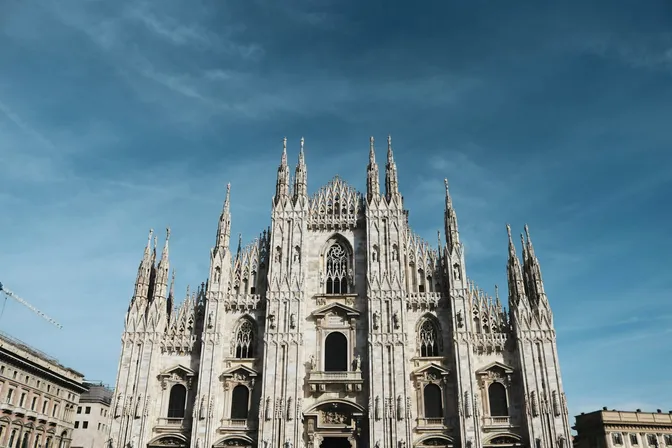
The Duomo and its roof terraces
15 min from the previous stop
Mid-afternoon, and book the terrace slot before you fly rather than joining the queue on the day — the terraces run their own admission timetable, often with a last admission earlier than the cathedral below, so check the slot when you book. The interior takes twenty minutes if it isn't your thing. The roof takes about an hour and is the part worth the ticket: you walk among the spires rather than looking at them, and on a clear day the Alps you are about to drive into sit on the northern horizon. Come down into the Galleria next door and keep walking north-west; Brera is ten minutes on foot and fills any gap before the evening.
Time here: 2 hr
- Evening · Optional
The Navigli after dark
20 min from the previous stop
The canals are about twenty minutes from the Duomo by metro with one change, and are best left until the light goes, which is when the bars along the Naviglio Grande and the Darsena basin fill up. There is nothing to see in the guidebook sense — it is a place to walk slowly and eat late, which is the right shape for a day that started in an airport. Skip it without regret if you landed in the evening; tomorrow starts with a car collection and you want the sleep more.
Time here: 2 hr
Day 2: Out of the City, Onto the Lake
The day the trip turns into a road trip, and the only one that touches Como town. Picking the car up at Centrale keeps you clear of the restricted zone, the southern end of the lake gets its hour, and the drive finishes on the eastern shore where the car can then sit still for two days.
The straight run from Milano Centrale to Varenna is about an hour and a quarter, so Como costs you roughly forty minutes of extra driving plus the stop. If you would rather be on the lake by lunchtime, skip Como entirely and give the afternoon to Varenna and Vezio — nothing later in the trip depends on having seen it.
Tonight: Varenna, Lake Como (two nights)
- Morning
Collect the car at Milano Centrale
Three things should already be settled in writing before you get here, because none of them is fixable at the counter: that the car is permitted into Austria and Switzerland, what the Zurich drop-off has been charged at, and whether the car carries a Swiss vignette. Today is only the handover. Allow forty-five minutes for the paperwork and for working out the car before you drive it. From Centrale the road north leaves the restricted zone immediately, which is the whole reason for collecting here.
Time here: 45 min
Compare car rental prices - Midday
Como, and the funicular if you want the view
1 hr from the previous stop
Just under an hour from Centrale on the A9 in clear traffic. Park in one of the signposted lots rather than aiming for the lakefront — the core is a limited-traffic zone with camera enforcement — and walk in to Piazza Cavour, which opens straight onto the water. Give it a couple of hours: the piazza, the marble cathedral a block back, and the promenade. The funicular up to Brunate leaves from the eastern end of the waterfront and climbs to a balcony over the whole southern arm of the lake; it is worth an hour you have spare and entirely skippable for one you don't. Check the operator's timetable before counting on it.
Time here: 2 hr 30 min
- Afternoon
Up the eastern shore to Varenna
1 hr 10 min from the previous stop
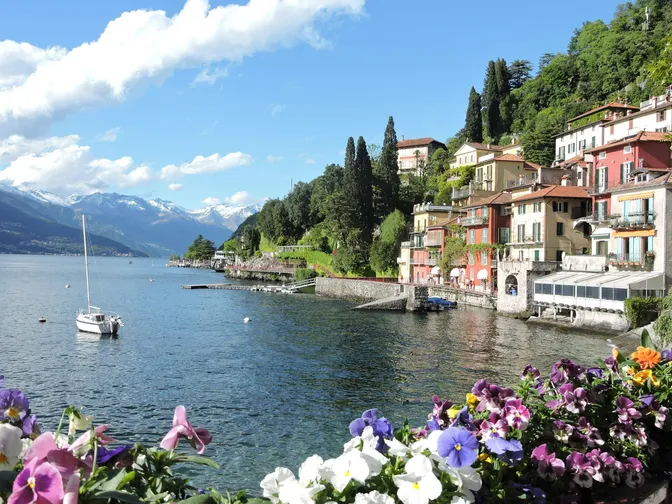
Allow a little over an hour from Como, most of it inland via Lecco rather than along the shore — the lakeside road round the western arm is slower, narrower and worse for parking than the map suggests. Varenna is small, steep and mostly stairs, so the car goes into whatever space the hotel has arranged and stays there until Day 4. Give the rest of the afternoon to arriving properly: the waterfront walkway, the harbour, and the fact that you are no longer driving.
Time here: 1 hr
- Evening · Optional
Castello di Vezio above the village
25 min from the previous stop
A ruined tower on the shoulder above Varenna, about twenty-five minutes up either on foot through the olive terraces or by car and a short walk. The castle itself is slight; the view down the length of the lake to the fork at Bellagio is the point, and late afternoon is when it earns the climb. Purely optional — if the drive has been enough, the same light works fine from the waterfront.
Time here: 1 hr 15 min
Day 3: Como by Boat, Car Left Behind
The least pressured day of the trip, because the car stays parked — though it still schedules the better part of six hours of gardens and boats. The three gardens sit on three different shores, so the boats — not the opening hours — decide what is possible. Check the actual Varenna–Bellagio–Tremezzo departures for your date the evening before and build the day around them: the order below is one that works, not the only one. If the timetable won't give you a clean return from the western shore, drop a garden rather than gamble on the connection.
Wet weather makes the gardens a poor use of the day. The boats run regardless, so a wet Day 3 is better spent riding the central-lake circuit for the shoreline and stopping in Bellagio and Menaggio for the towns rather than the villas. Frequencies drop noticeably outside high summer, and the timetable changes between seasonal blocks, so confirm before you plan around a specific sailing.
Tonight: Varenna, Lake Como
- Morning
Ferry to Bellagio and the Villa Melzi gardens
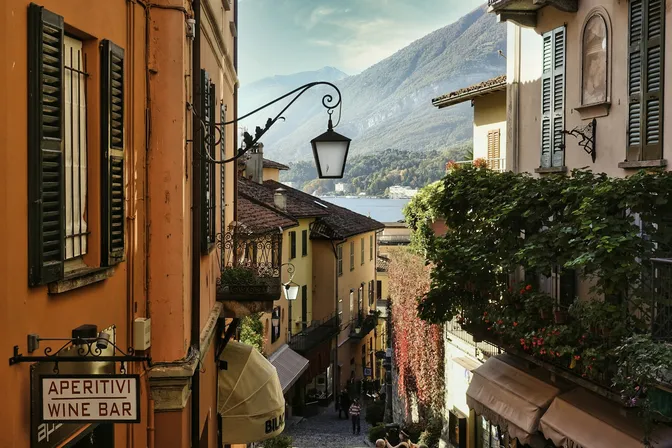
The Varenna pier is a few minutes from the village and the crossing to Bellagio is short — the wait for the right sailing is usually longer than the water time, so check the day's departures before you walk down and allow the twenty minutes before sailing that the operator asks for — more in July and August, when the queue at the ticket office is the real bottleneck. Bellagio itself is a steep grid of stepped lanes and it is busy by mid-morning, so walk through it rather than around it and turn south along the shore to the Villa Melzi gardens — about ten minutes on the lakefront and immediately quieter. The gardens are level, open daily from 10:00 with last admission at 18:30, adult entry is €10, and you don't need to book. Two hours covers the gardens and enough of the town to have seen it.
Time here: 2 hr 30 min
- Afternoon
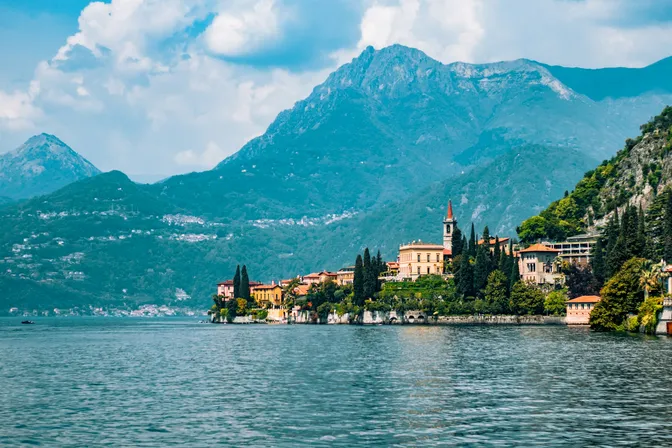
Across to Tremezzo for Villa Carlotta
30 min from the previous stop
Allow around half an hour door to door, counting the walk back to the pier, the wait and the crossing to the western shore. Villa Carlotta is a couple of minutes from the Cadenabbia and Tremezzo landings and is the most formal of the three — a terraced botanical garden climbing away from the water with the house at the centre. Adult admission is €17.50 and the gate is open 10:00 to 19:00 in the main season with the last ticket at 18:00. The villa is rarely the binding constraint, though — check the return sailing before you commit to the western shore, because that is what actually closes the day. If the connections don't line up cleanly, drop a garden rather than force the sequence. Two hours is right; the upper terraces are the part people run out of time for, so start high and work down if you are short.
Time here: 2 hr
- Evening
Back to Varenna, and Villa Monastero last
35 min from the previous stop
Allow a little over half an hour for the return hop, and check the last sailings from the western shore before you commit to the afternoon — this is the leg where missing a boat actually costs you, and Villa Carlotta's closing time is not the binding one. The Varenna landing is five minutes from Villa Monastero, which is why it comes last: once you are back on this shore the rest of the day is on foot. The garden runs nearly two kilometres along the shore below the village and stays open later in high summer than either of the others, to 20:00 from June to August — a reason to put it at the end of the day, not a reason to trust a late ferry. The garden-only ticket is €13; garden plus house museum is €15. Note the Tuesday closure of the house museum in the shoulder months; the garden stays open regardless.
Time here: 1 hr 30 min
Day 4: The Long Run East, With Trento in the Middle
The price of the geography: a five-hour transfer from a lake in Lombardy to a valley in the Dolomites, broken by a proper lunch-and-walk stop in Trento. It is front-loaded on purpose — the three hours to Trento are motorway and flat, the two after it are the ones worth having daylight for.
Bergamo is the obvious alternative stop and it is under an hour in, which leaves four hours still to drive after lunch — the reason this itinerary waits for Trento instead. If you want both, you want an extra night somewhere, not a faster Day 4.
Tonight: Corvara, Alta Badia (three nights)
- Midday
A stop in Trento
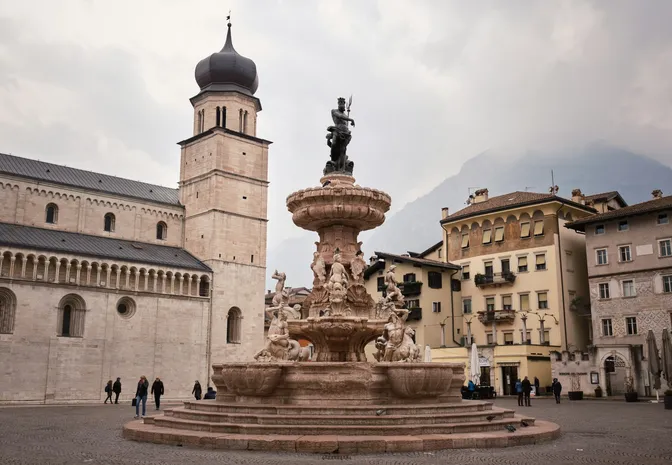
Leave Varenna early; allow about three hours to Trento via Lecco, Bergamo and the A4, and the day gets better the earlier you start it. Trento is the natural break because it sits at the point where the motorway turns into mountains, and because it is a real stop rather than a service station — Piazza Duomo with its fountain and frescoed facades takes an hour to walk and eat in, and the Castello del Buonconsiglio is ten minutes away if you want ninety minutes instead of sixty. Park outside the centre and walk in. Then get back on the road: the better half of the day is still ahead.
Time here: 1 hr 45 min
- Evening
Up the Val Badia to Corvara
2 hr 5 min from the previous stop
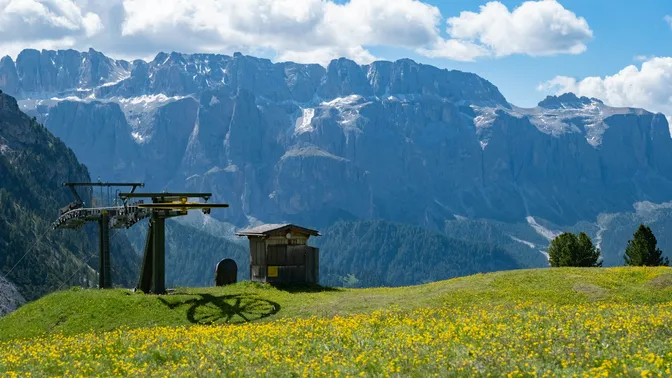
Allow a little over two hours from Trento, north on the A22 through Bolzano and then east and up into the side valleys. The last forty minutes are the reason to do this in daylight — the road narrows, the valley walls turn vertical, and the Sella massif appears ahead of you. Corvara is a working alpine village at 1,570 metres with the lift stations at the edge of it, and for the next three nights it is the middle of everything: under an hour to Ortisei, about an hour and twenty to Lago di Braies, and the Campolongo and Gardena passes starting at the end of the street. Arrive, park, walk for an hour, eat early.
Time here: 1 hr
Day 5: Seceda and Alpe di Siusi
Seceda and Alpe di Siusi are unusually easy to combine, because the access lift for each leaves from Ortisei, about ten minutes apart on foot. Seceda goes first because the ridge wants morning light and clear air, and because if the weather turns you will want to have spent it there rather than on the meadow.
This is a full day and Alpe di Siusi is the part to cut. If the morning on Seceda has been enough, come down, spend the afternoon in Ortisei, and drive back over Passo Gardena in the good light — no part of the rest of the trip depends on having crossed the plateau.
Tonight: Corvara, Alta Badia
- Morning
Seceda, first thing
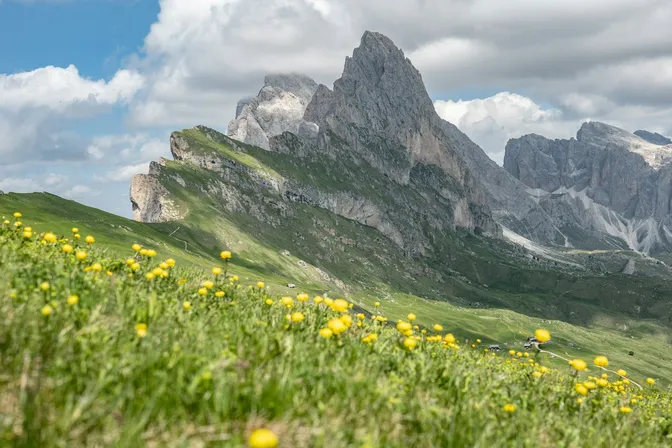
Just under an hour from Corvara over Passo Gardena, so leave by eight. The lifts run in two stages from Ortisei — a gondola to Furnes, then a cable car to the ridge — from 08:30 to 17:30 between 22 May and 2 November, and a return covering both stages is €74. Tickets are sold at the stations, but the operator recommends buying online in advance, and Gardena Card holders have to book on seceda.it. Parking is a separate problem: space in Ortisei is limited, so settle where the car goes before you arrive rather than circling for it. At the top the ground tilts away to the north and the Odle peaks stand along the ridge like a broken wall. Walk along the crest for as long as you like; the first twenty minutes give you the view the ridge is photographed for, and going further mainly buys quiet. Allow three hours including both lift rides.
Time here: 3 hr
- Afternoon
Alpe di Siusi in the afternoon
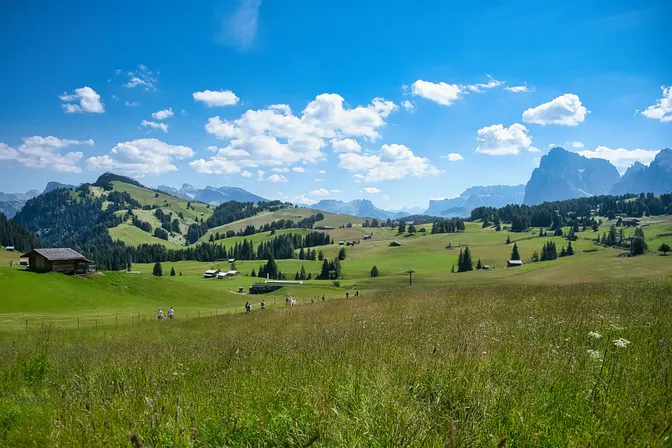
30 min from the previous stop
Back down into Ortisei, ten minutes on foot across town to the Ortisei–Alpe di Siusi gondola, and up again. It runs to 18:00 from 6 June to 16 October, and an adult return is €41. This is a different kind of mountain: a broad, rolling high meadow rather than a ridge, with the Sassolungo sitting on the far side of it and paths running out across the grass in every direction. Two hours of walking toward Compatsch is plenty and you can turn back whenever the legs decide. Watch the last descent time rather than the light; the plateau road is closed to private cars through the day, so the cabin is how you get down.
Time here: 3 hr
- Evening · Optional
Passo Gardena on the way back
55 min from the previous stop
The drive home crosses the pass at 2,121 metres with the Sella massif on one side and the Cir peaks on the other, and late afternoon is when the rock goes orange. Pull into the lay-by at the top for twenty minutes rather than driving through it — you have paid for the road already and this is the free part. From there it is twenty minutes down into Corvara.
Time here: 30 min
Day 6: The Eastern Loop: Braies and Tre Cime
The fullest day of the trip and the one most dependent on paperwork: close to four hours of driving in a loop, with two separate access systems to arrange in advance. It runs as a circle rather than an out-and-back, which is what makes it bearable — you come home over a different pass from the one you left on.
If only one reservation works for your date, keep whichever fits your priorities — Braies for the easier, cheaper, shorter stop, Tre Cime for the bigger mountain — and give the freed half-day to the Sella Ronda passes, which need no booking. If neither does, the passes fill the whole day comfortably and you lose nothing that Day 5 and Day 7 don't already cover.
Tonight: Corvara, Alta Badia
- Morning
Lago di Braies before the traffic restriction
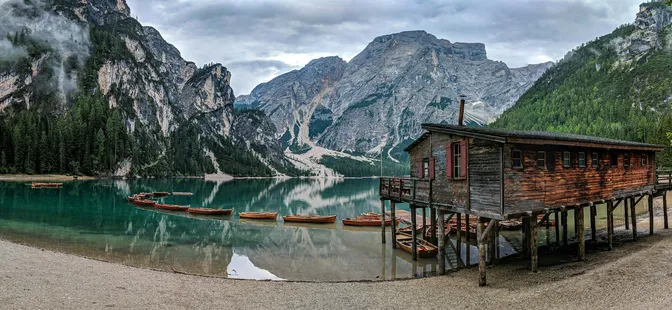
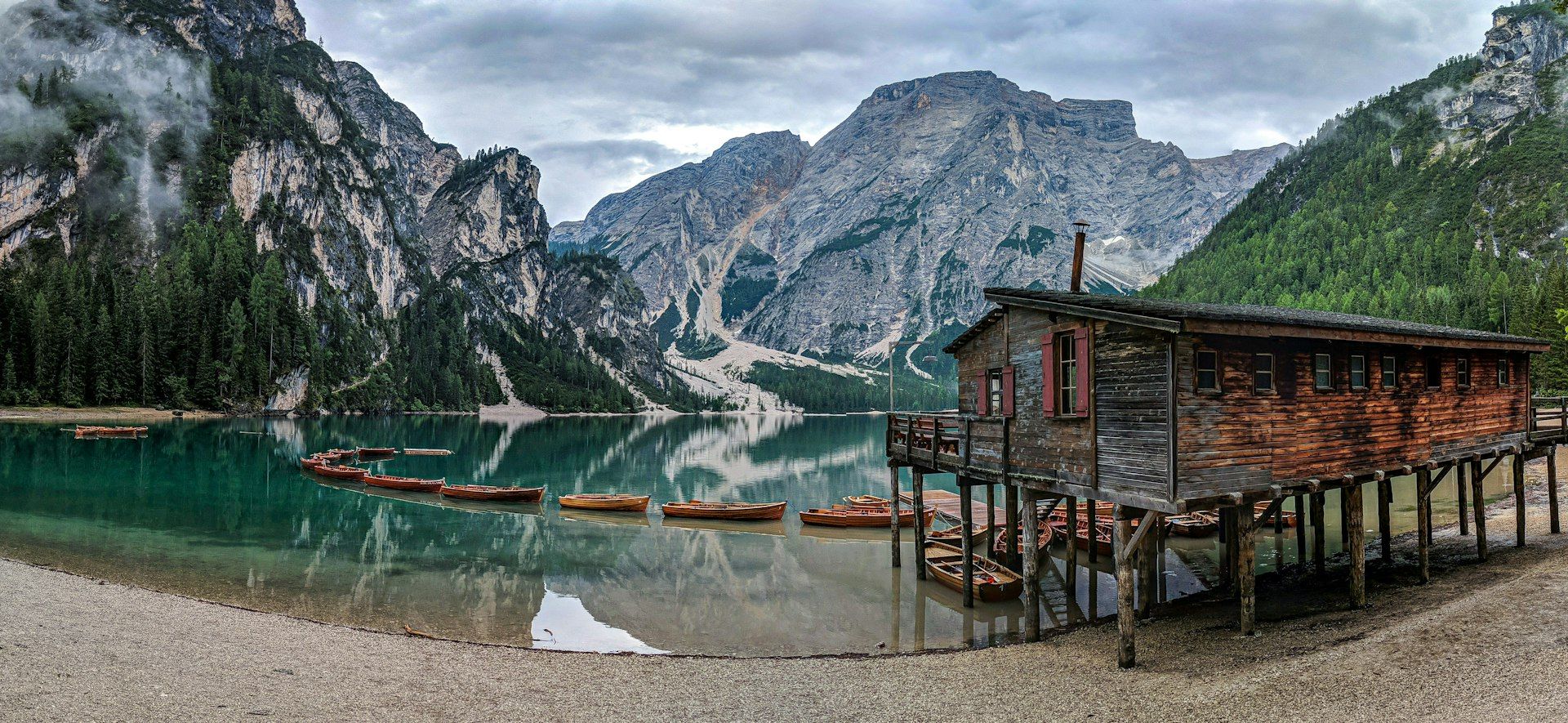
About an hour and twenty from Corvara, and the important thing here is not the drive but the access rules. From 1 July to 15 September the valley road admits only vehicles with a reservation or transit permit between 09:00 and 16:00, alongside buses, bikes and walkers. You can drive in before 09:00, which also gets you the lake without the crowd. Be clear what that buys, though: it gets you past the restriction, not a parking place — the operator says plainly that an early arrival guarantees no space. If you want certainty, book ahead instead. The €44 combination ticket is a vehicle product rather than an entrance fee, since walking to the lake is free: it bundles a full-day transit permit, a guaranteed parking place and a €22 voucher to spend on site, and the voucher is only included when you book in advance. From 16 September the summer traffic restriction ends. The lake itself is an easy loop on a level path with the Seekofel closing the far end; two hours covers the walk and the boathouse without rushing.
Time here: 2 hr
- Afternoon
Rifugio Auronzo and the first stretch of the Tre Cime trail
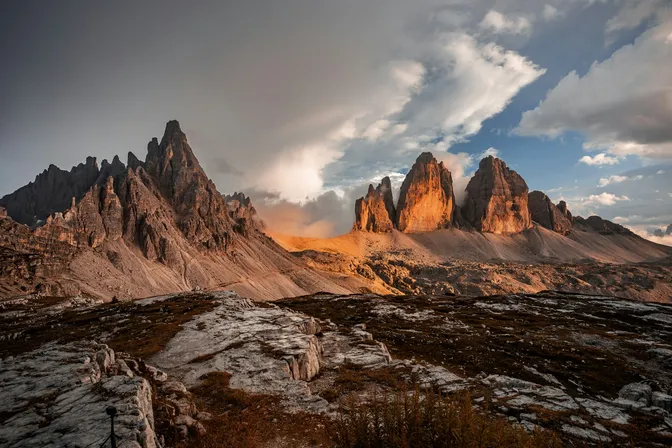
1 hr 5 min from the previous stop
About an hour from Braies round to the toll gate above Misurina. What €40 per car buys is access to the toll road plus a parking place at Rifugio Auronzo, and it must be reserved online in advance — there is no on-site purchase for an unreserved car, so this is done before you leave home or not at all. Two things to keep straight: you book an access slot, and the ticket then runs for twelve hours from the time you picked; the number plate is required too, but it can be added later, up to 23:59 on the day before you arrive. The road climbs to 2,320 metres and leaves you at Rifugio Auronzo with the three towers standing directly above. Be clear about what this is: not the full Tre Cime circuit. That loop is roughly ten kilometres and the best part of four hours, and it needs a day built around it rather than an afternoon. What fits here is the walk east to Rifugio Lavaredo and on to Forcella Lavaredo, about forty-five minutes each way. That puts you directly under the towers with Monte Paterno opposite, which is the best of the southern side — and be clear that it is the southern side. Rifugio Auronzo sits south of the peaks, and the path only rounds onto the northern slope beyond the forcella; the classic north-face view belongs to Rifugio Locatelli, further round the loop. That is a substantial look at Tre Cime, and not the same thing as having done it. Allow three and a half hours including the drive up and the descent.
Time here: 3 hr 30 min
- Evening · Optional
Home over Passo Falzarego
1 hr 5 min from the previous stop
About an hour back down past Misurina and Cortina to the Falzarego pass at 2,105 metres, then half an hour down into Corvara — so the loop closes without repeating any of the outward road. The pass is a genuine stop rather than a waypoint if there is light left: the Lagazuoi cable car runs from the top, and the First World War tunnels driven into the rock here are signposted from the car park. If you are running late, drive it and keep going; this is the flexible part of a day that has already been long.
Time here: 30 min
Day 7: Two Passes, Then Austria
A transfer day with a mountain morning bolted onto the front. The pass loop and the drive north point the same way, so nothing doubles back: you leave Corvara over Campolongo, cross the Pordoi, and carry on down the Val di Fassa toward the Brenner without ever returning to the village.
Cut the pass loop and Innsbruck starts the better part of an hour earlier, which is worth doing if the cloud is down or if you want the Nordkette with time to spare rather than at the end of the day. The direct run from Corvara down the Val Badia is around two hours, against something over three once you go by way of the passes.
Tonight: Innsbruck, one night
- Morning · Optional
Campolongo and Pordoi before you go
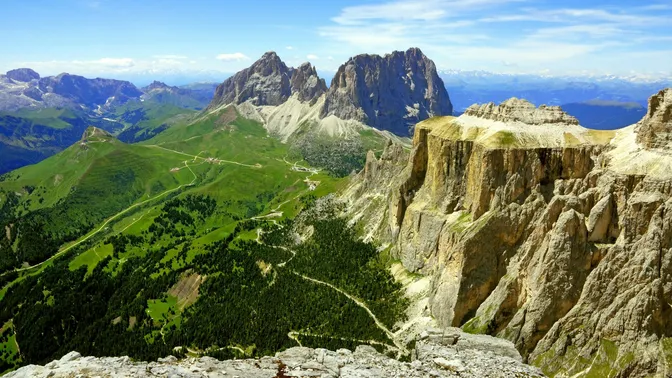
About half an hour from Corvara over the Campolongo to Arabba and then up the Pordoi's switchbacks to 2,239 metres — hairpin after hairpin stacked into the hillside, and the most enjoyable driving on the Italian half of the trip. The passes are open year-round subject to snow closures, but check conditions the night before in late spring or autumn. At the top the Sass Pordoi cable car goes up to a rock terrace at 2,950 metres if you want another hour and another ticket; the pass itself, a coffee and twenty minutes of looking is the version that fits today. From here the road drops into the Val di Fassa and points north.
Time here: 1 hr 30 min
- Afternoon
Innsbruck's old town
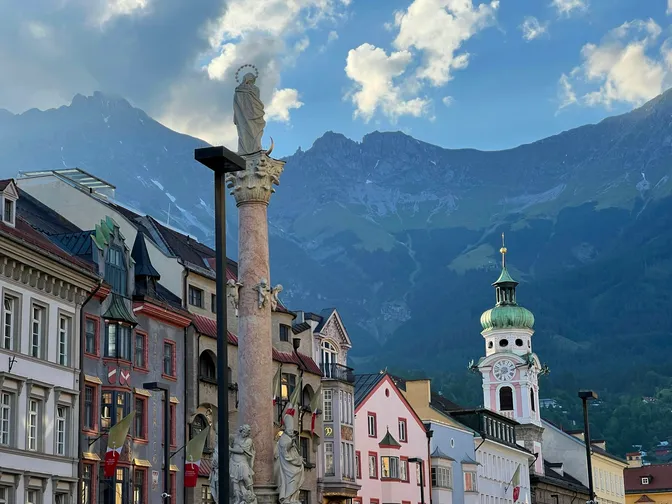
2 hr 45 min from the previous stop
Allow close to three hours from the Pordoi, down the valley to Bolzano and then up the A22 to the Brenner. The Austrian side of that crossing, the A13, is a section-toll road paid per trip — a vignette is not what gets you down it — so have a way to pay ready. Park outside the ring and walk into the Altstadt: it is compact, arcaded and closed in on three sides by mountains that are visibly higher than the buildings. The Goldenes Dachl and the Hofburg are the two set pieces and an afternoon is enough for both plus the Inn riverfront with its painted houses. Two and a half hours here leaves the evening free.
Time here: 2 hr 30 min
Altstadt - Evening · Optional
Up the Nordkette to Seegrube
35 min from the previous stop
The reason to arrive in Innsbruck with the afternoon still going. The Hungerburg funicular starts a ten-minute walk from the old town and the cable car above it reaches Seegrube at 1,905 metres in about twenty minutes more, with the whole city laid out below and the Stubai Alps across the valley. Watch the times: the Seegrubenbahn runs to 18:30 and the Hafelekarbahn to the very top only to 18:00, so this works if you are on the first stage by about half past four. The summer season runs 25 April to 1 November. On the first Friday of the month the Seegrube stage runs until 23:30, which is worth knowing if your date happens to land on one.
Time here: 2 hr
Day 8: Across Two Borders to Lucerne
Close to four hours west with a country in the middle of it. The driving is motorway and easy, which makes this the day to arrive somewhere with the afternoon intact rather than to see anything on the way — Vaduz is a stretch of the legs, not a destination.
Skip Vaduz and you are in Lucerne by early afternoon with time for the lake as well as the old town. It is worth the stop mainly if adding a country appeals; the castle above the town is the Prince's residence and not open to visitors, so the Städtle and the museums are what there is.
Tonight: Lucerne, two nights
- Midday · Optional
A stop in Vaduz
Allow a little over two hours from Innsbruck, west on the A12 and through the Arlberg road tunnel — another section toll charged per trip, so keep a card handy. Vaduz is a small, tidy capital arranged along one pedestrian street, the Städtle, with the castle on the ridge above it and the art museum at the centre. Vaduz is on this route mainly to add a country and break a long drive, so skip it without hesitation if ticking one off holds no appeal — the hour is better spent arriving in Lucerne. If you do stop, an hour is the right amount: walk the street, look up at the castle, get your passport stamped at the tourist office if that amuses you, and go. There is normally no routine passport control at either border, though checks can be reintroduced temporarily, so carry your documents.
Time here: 1 hr
- Afternoon
Lucerne's old town and the Chapel Bridge
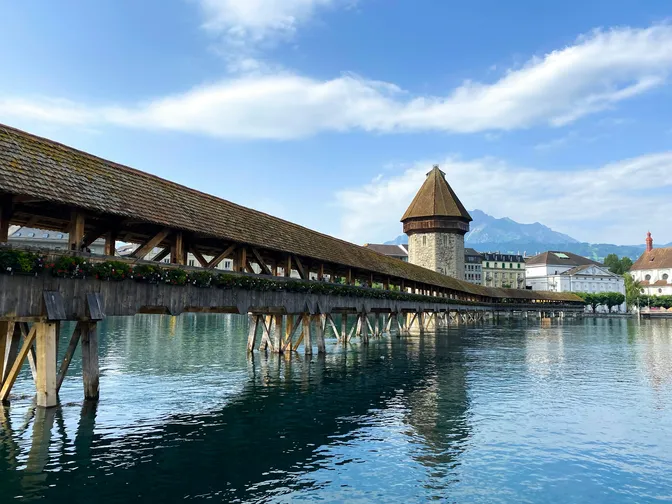
1 hr 40 min from the previous stop
An hour and a half of driving on from Vaduz, skirting Zurich, plus the time it takes to park. Park where the hotel tells you to — the old town around Weinmarkt is pedestrian and the lanes were laid out long before cars — and walk to the river. The Kapellbrücke crosses the Reuss diagonally with its octagonal water tower beside it and painted panels under the roof; it is short enough that crossing it again on the way back costs nothing, and it reads differently in morning and evening light. The squares behind it on the north bank are the painted ones. Give the afternoon two and a half hours and let it wander; this is a town that rewards no itinerary at all.
Time here: 2 hr 30 min
- Evening · Optional
The Lion Monument, ten minutes away
15 min from the previous stop
A dying lion carved into a rock face above a pool, fifteen minutes on foot north-east of the old town, and a short visit by design — you look, you read the inscription, you leave. It is busy in the middle of the day and quiet in the evening, which is the argument for doing it now rather than tomorrow. Forty-five minutes covers it and the walk back.
Time here: 45 min
Day 9: A Mountain Day on Pilatus
The lightest day since Lake Como, and the other one where the car is deliberately left parked. The round trip is deliberately circular — out by water, up by rail, down by cable — so the mountain takes the whole day without any of it being a repeat.
If the summit is in cloud, the round trip is not worth the fare — swap it for Rigi, which is as much about the boat ride and the lake as the view, or spend the day on the water with a lake steamer and keep Lucerne on foot. Both decisions are best made at the quay in the morning rather than the night before.
Tonight: Lucerne
- Morning
The Golden Round Trip
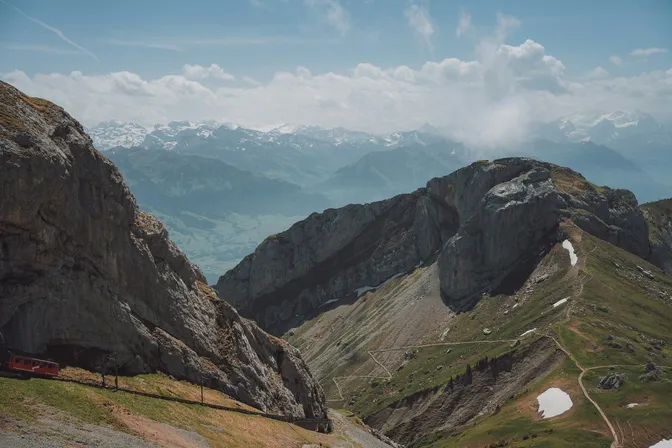
It starts at the boat quay a few minutes from the old town: across the lake to Alpnachstad, then the cogwheel railway up. That railway climbs at gradients reaching 48 per cent and takes about twenty-seven minutes to the top. Pilatus Kulm, a little over 2,000 metres up, has terraces, short ridge paths and a view that takes in the lake and a long stretch of the Bernese Alps behind it. Coming down, the aerial cableway and panorama gondolas drop you at Kriens on the edge of Lucerne and a bus brings you back in. The round trip runs May to October and costs CHF 119.80 for an adult in second class — the CHF 59.90 you will see quoted is the reduced fare, for Half Fare Card holders and children. Reserve a seat on the railway if the forecast is good. Budget the whole day — six hours door to door is realistic and rushing it defeats the point.
Time here: 6 hr
- Evening · Optional
The Musegg Wall at the end of the day
1 hr from the previous stop
Back in town with the evening left, the medieval wall along the ridge behind the old town is a twenty-minute climb and free to walk. Several of its towers open to the public and the walkway between them looks down over the roofs, the river and the bridges you crossed yesterday. An hour, if the legs have anything left. If they don't, the riverfront does the same job with a drink in hand.
Time here: 1 hr
Day 10: Down the Brünig, and Out Through Zurich
A departure day with genuine scenery in it and a real timing risk at the end. Roughly three hours of driving broken into three legs, all of it pointed toward the airport, and none of it enjoyable if you are watching a check-in deadline.
As the flight time tightens, cut Harder Kulm first, then shorten Interlaken; Brienz is the last thing to go, and the airport arrival is the one fixed point everything else bends around. Below about a 16:00 departure, don't attempt all three: either move the airport transfer to the previous evening and stay near Zurich, or skip the stops altogether — Lucerne to the airport is about an hour and a quarter of driving, against an hour and three-quarters from Interlaken — and give the morning back to Lucerne. Add your rental-return and check-in buffer on top of either.
- Morning
Brienz on the lake
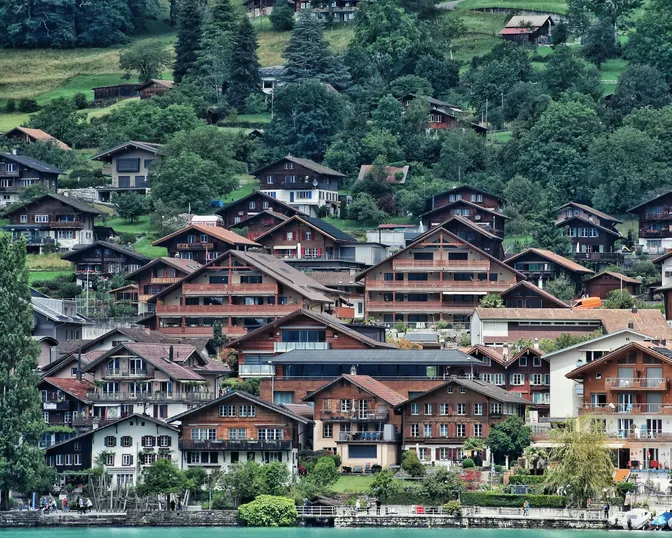
Just under an hour from Lucerne over the Brünig Pass, a modest crossing by the standards of the last week but a pretty one, dropping through forest to the eastern end of Lake Brienz. Brienz itself is a single street of dark wooden houses facing turquoise water, and it is a stop rather than a visit: an hour for a coffee and the lakefront. The steam railway up the Brienzer Rothorn leaves from here, which is a good half-day and not one today has.
Time here: 1 hr
- Midday
Interlaken between two lakes
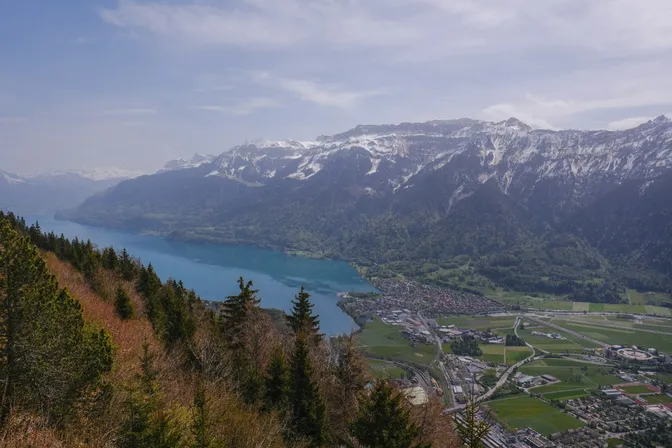
25 min from the previous stop
Around twenty-five minutes on, and the geography is the attraction — the town sits on the flat strip between Lake Brienz and Lake Thun with the Jungfrau massif closing the valley to the south. The Höheweg is the promenade to walk, with the Höhematte meadow deliberately left open so the mountains stay visible from the middle of town. Two hours covers it at a sensible pace. Park once and walk; the centre is compact and the through-traffic is not.
Time here: 2 hr
- Afternoon · Optional
Harder Kulm, if the clock allows
15 min from the previous stop
The funicular base is a few minutes from the promenade and the ride up takes about ten minutes, ending at a viewing platform that juts out over the town with both lakes below and the Eiger, Mönch and Jungfrau opposite. Ninety minutes round trip including the platform. It pushes your departure from Interlaken toward mid-afternoon, so it is the first thing to drop if the flight is early.
Time here: 1 hr 30 min
- Evening
The run to Zurich Airport
1 hr 50 min from the previous stop
Allow close to two hours from Interlaken on a good day, north past Thun and Bern before turning east, and longer whenever the roads are busy. Build in an hour on top of that for the return: refuelling, the drop-off, the walk to the terminal, and the possibility that an international one-way return takes longer at the desk than a domestic one. If the schedule leaves little margin, move the airport transfer to the previous evening rather than trimming the morning.
Time here: 1 hr
Don't do this
- Don't book flights before you have a quoted price for dropping the car in Zurich. Suppliers differ on whether they allow the route at all, and the fee is not a rounding error on a ten-day rental.
- Don't pick the car up on Day 1. Milan's Area C restricts weekday access, central parking is expensive and awkward, and nothing on Day 1 is beyond the metro.
- Don't drive to Lago di Braies or the Tre Cime toll road expecting to sort access on arrival. Car access to the Tre Cime road and its parking needs an online reservation, all season — the bus, a bike and your own legs don't. Braies keeps the middle of the day for permit holders between 1 July and 15 September — inside that window you book from home or arrive before 09:00. Outside it the summer traffic regime doesn't apply, though seasonal parking arrangements still can.
- Don't treat Day 4 as a transfer you can compress. It is about three hours to Trento and two more after it, and the second half is the half you want daylight for.
- Don't plan Brienz, Interlaken and Harder Kulm on Day 10 if your flight leaves before about 16:00. Move the airport transfer to the previous evening instead.
- Don't expect to add Cortina, Val di Funes or the Sella Ronda to these three Dolomite nights. They cover Seceda, Alpe di Siusi, Braies and a look at Tre Cime, and very little else.
Useful travel information
Budget estimate
Not a trip budget — a reference list of the fixed admissions and road charges this route commits you to. The rental, the international drop fee, fuel, motorway tolls, parking, hotels and meals all come on top, and between them they will cost far more than anything below. The two Dolomite days carry most of the admissions: Seceda is €74 return, the Ortisei–Alpe di Siusi cabin €41, the Tre Cime road access and parking €40 per car, and Lago di Braies €44 per car for the summer combination ticket that bundles valley access, a parking space and a €22 voucher. The three Lake Como gardens come to roughly €40 together, and Pilatus's Golden Round Trip is CHF 119.80 for an adult in second class, or CHF 59.90 on a Swiss Half Fare Card. On road charges, the basic vignettes are €12.80 for ten days in Austria and CHF 40 in Switzerland, which sells no shorter version; Austria's section-toll roads are charged separately per trip on top of that, at €12.50 for the Brenner and €13.00 for the Arlberg tunnel. Key prices and access rules checked against operator and authority information in September 2026; recheck all fares, timetables and access conditions before you travel.
Tips
- Book in two tiers. Trip-critical, in this order: the rental — Milan pick-up, Zurich drop-off, permission to cross into Austria and Switzerland confirmed, and the one-way fee quoted before you book any flight; then the Tre Cime toll road, which sells online only and has no gate sales at all; then a Lago di Braies transit permit if you travel between 1 July and 15 September. Miss the rental or the Tre Cime slot and a day of the trip changes shape; the Braies permit only bites between 1 July and 15 September, and outside that window the access rules are different. Worth booking ahead but recoverable: the Duomo roof slot on Day 1, Seceda lift tickets on Day 5, and a seat on the Pilatus cogwheel railway for Day 9 if the forecast is good. If only one of the two Day 6 reservations works for your date, keep it and give the freed half-day to the Sella passes, which need no booking at all.
- Sort the Swiss vignette before you reach the border rather than at it. There is no short-stay version: CHF 40 buys the same vignette whether you use Swiss motorways for three days or for its full 14-month validity. Don't assume a car rented in Italy already carries one: ask the Milan rental desk to confirm, and if it isn't covered, the e-vignette is bought online against the number plate.
- Budget for Austria's section tolls separately from the vignette, and buy them before you travel if you can. The A13 Brenner and the S16 Arlberg tunnel are charged per trip — €12.50 and €13.00 for a car in 2026 — and the vignette is not what gets you through either. Single-trip and multi-trip cards are sold in advance through ÖAMTC and at border service points as well as at the barrier itself. Italy's A4 and A22 are pay-on-exit.
- Don't let the satnav route you through an old centre, and settle parking with each hotel when you book the room rather than on arrival. Como, Varenna and Trento all have camera-enforced limited-traffic zones, Lucerne's old town around Weinmarkt is pedestrian, and this plan leaves the car standing for two full days in Varenna and again in Lucerne.
- Treat the mountain days as a queue rather than a schedule. Days 5 and 6 leave from the same base, neither depends on the other, and nothing later in the trip depends on which order you do them in — so read the forecast each evening and spend the clearest day on Seceda, which loses the most to low cloud because the ridge is the whole point of going up. Braies and Tre Cime hold up better in flat light, and Braies is worth doing in rain if the alternative is not doing it. Day 9 on Pilatus can't be moved, but it has the best fallbacks on the route: Rigi, or the lake on a boat. The Nordkette on Day 7 and the Brunate funicular on Day 2 are both pure bonuses — skip either without a second thought if the top is in cloud.
Good to know (18)
- Switzerland's motorway vignette costs CHF 40, whether as a sticker or an e-vignette, and is valid from 1 December of the previous year to 31 January of the following one. There is no short-stay version: the federal customs office states that the Vignette Act makes no provision for one, so three days on Swiss motorways cost the same as a full year.Checked September 25, 2026
- Austria's 2026 vignette for a car is €12.80 for 10 days, €9.60 for a single day, €32.00 for two months and €106.80 for the year. These prices have applied since 1 December 2025.Checked September 25, 2026
- The A13 Brenner motorway and the S16 Arlberg express road, both on this route, are section-toll roads for vehicles up to 3.5 t, alongside the A9 Pyhrn, A10 Tauern and A11 Karawanken. On section-toll routes a vignette is not mandatory — the trip is paid for separately instead. From 1 January 2026 a single car trip is €12.50 on the A13 and €13.00 through the Arlberg tunnel, and both single-trip and multi-trip cards are sold in advance as well as at the barrier.Checked September 26, 2026
- From 1 July to 15 September 2026, access to the Pragser Tal valley below Lago di Braies between 09:00 and 16:00 is allowed only by public transport, on foot, by bicycle, or on production of an online reservation or a valid transit permit. A combination ticket costs €44 and covers a full-day transit permit, a guaranteed parking space and a €22 voucher for on-site restaurants and shops; the voucher is only included when booked in advance. Arriving before 09:00 is permitted but does not guarantee a parking space. From 16 September 2026 the summer traffic restriction ends.Checked September 25, 2026
- The toll road up to Rifugio Auronzo below the Tre Cime di Lavaredo costs €40 for a car in 2026, and access is allowed only to drivers who have booked a slot in advance through the dedicated online portal. A ticket is valid for 12 hours from the access time chosen at booking, and the number plate can be added up to 23:59 the day before arrival.Checked September 25, 2026
- The Seceda cable cars from Ortisei run 22 May to 2 November 2026, 08:30 to 17:30. A return ticket covering both stages is €74 for adults. Tickets are sold at the stations, but the operator recommends buying online in advance because parking in Ortisei is limited.Checked September 25, 2026
- The Ortisei–Alpe di Siusi cable car, whose top station is Mont Sëuc, runs 1 May to 5 June 08:30–17:00, 6 June to 16 October 08:30–18:00, and 17 October to 2 November 08:30–17:00. The Val Gardena lift-pass site lists an adult ticket at €29 one way and €41 return, with no season stated; other listings quote €39 return, and the separate Siusi–Compatsch cable car onto the same plateau is priced differently again. Confirm the fare for the Ortisei ascent with the operator before you budget it.Checked September 20, 2026
- The Sella, Pordoi, Gardena, Campolongo and Costalunga passes are all listed as open throughout the year, subject to temporary closures for snow and avalanche risk.Checked September 20, 2026
- The Bellagio–Cadenabbia–Varenna–Menaggio ferry timetable is published in seasonal blocks rather than as one year-round schedule — for 2026 a summer timetable covering 1 July to 4 October and an autumn one covering 5 October to 1 November — with separate versions for weekdays and for Sundays and holidays.Checked September 26, 2026
- Navigazione Laghi asks Lake Como passengers to be at the ticket office about 20 minutes before departure, and warns that summer and holiday traffic can produce queues there. Sailings can also be suspended for bad weather or heavy wave motion, with updates from the ticket offices or the operator's freephone line.Checked September 26, 2026
- Innsbruck's Nordkettenbahnen run their summer season from 25 April to 1 November 2026. The Hungerburgbahn funicular from the town runs 07:15–19:15 on weekdays and 08:00–19:15 at weekends and on holidays; the Seegrubenbahn runs 08:30–18:30, and until 23:30 on the first Friday of each month; the Hafelekarbahn to the top station runs 09:00–18:00. All three depart every 15 minutes, and continuously when busy.Checked September 25, 2026
- Mount Pilatus's Golden Round Trip — lake boat, cogwheel railway, aerial cableway and panorama gondolas — runs from May to October. The cogwheel railway from Alpnachstad climbs at a gradient of up to 48 per cent and takes about 27 minutes up and 33 minutes down; seat reservation is recommended in fine weather.Checked September 25, 2026
- The Golden Round Trip costs CHF 119.80 for an adult in second class. The widely quoted CHF 59.90 is the reduced fare, and applies only to holders of an SBB Half Fare Travelcard or a Swiss Half Fare Card and to children aged 6 to 15.Checked September 26, 2026
- The Giardini di Villa Melzi in Bellagio open daily 10:00 to 19:00 with last admission at 18:30. A single-day adult ticket is €10, a multi-day ticket €14, and no advance reservation is needed.Checked September 25, 2026
- Villa Carlotta at Tremezzo opens 20 March to 18 October 2026, 10:00 to 19:00 with the last ticket at 18:00, then 10:00 to 18:00 until 8 November. Adult admission is €17.50.Checked September 19, 2026
- Villa Monastero in Varenna opens daily 09:30–19:30 in April, May and September, 09:30–20:00 from June to August, and 10:00–18:00 in October. In April, May, September and October the House Museum closes on Tuesdays but the botanical garden stays open. The garden alone is €13; garden plus house museum is €15.Checked September 24, 2026
- Milan's Area C access charge costs €7.50 per day and applies Monday to Friday, 07:30 to 19:30 — except Thursdays, when it ends at 18:00. It is suspended at weekends and on public holidays. The wider municipality is also a low-emission zone banning older diesel and petrol vehicles.Checked September 19, 2026
- On a one-way European rental, returning the car to a different station from the pick-up point — within one country or across borders — triggers a one-way fee that varies by route and vehicle category and is shown during booking. Suppliers also ask drivers to make sure they have permission to cross borders with the rental.Checked September 25, 2026
Frequently asked questions
- Is 10 days enough for this route?
- It is enough to drive it, not enough to do it comfortably, and it is worth being clear about that before booking. The Dolomites alone can absorb five to seven days without repeating themselves, and Lake Como and the Swiss lakes are each a trip in their own right; putting all three together, plus Innsbruck, makes ten days deliberately fast. What makes it work at all is the base count — five bases across nine nights, three of them consecutive in the Dolomites — and the fact that the driving is one-way and never doubles back. What it will not give you is a slow day anywhere except Day 3 on the lake, or any margin for a washed-out mountain day, and five of the ten days involve three hours or more of driving. If you find an eleventh or a twelfth day, both belong in Corvara — a fourth and fifth Dolomite night buy Val di Funes, the Sella Ronda or a proper walk, none of which fits as written. Don't spend them on a sixth base.
- Who is this itinerary for, and who should skip it?
- Book this route if you want geographic variety over depth, enjoy driving mountain roads, are happy with three long transfer days, and accept that the Dolomites get three nights rather than a week. It suits a first visit to the Alps particularly well: it shows you the lakes, the Dolomites and central Switzerland in one pass and leaves you knowing which of them you want to come back to. Change the route if you came to hike, because the Dolomite days here are lift rides and short walks, and the route contains no substantial full-day hike; if you dislike changing hotels, because this is five bases across nine nights; if you are travelling with children who don't tolerate long drives, because Days 4, 8 and 10 will be hard going; or if you want the weather flexibility that only spare days buy. Anyone who wants this route slowly should take the same shape over fourteen days, or cut it to the lakes and the Dolomites alone.
- Why base in Alta Badia rather than Val Gardena or Cortina?
- Because Corvara is the only one of the three that reaches everything this trip wants. Ortisei puts Seceda and Alpe di Siusi at the door but leaves Braies about an hour and twenty minutes away and Tre Cime closer to two, which turns Day 6 into four and a half hours of driving. Cortina reverses the problem: it is close to Tre Cime and Braies and around an hour and a half from the Val Gardena lifts. Corvara sits between them — roughly fifty minutes to Ortisei, about an hour and twenty to Braies — and the Campolongo and Gardena passes start at the edge of the village. If you cut the eastern lakes from the plan, Val Gardena becomes the better base and the drive on Day 4 gets shorter too.
- When is the best time to drive this route?
- Three separate things have to line up, and they are not the same question. First, is the mountain infrastructure running: the Seceda lifts run from late May to early November and the Alpe di Siusi gondola from the start of May, Pilatus's round trip May to October, and the Tre Cime toll road from late May until the autumn, weather permitting. Second, are the roads open: the Dolomite passes are listed as open year-round but close at short notice for snow. Third — and this is the one that decides whether the trip was worth taking — does the weather give you usable mountain days, because Days 5, 6 and 9 are all built on visibility. June to September is where all three are most reliably true. Late May and October are possible with thinner lift timetables, more chance of a closed pass and less margin. One quirk worth planning around: Braies restricts its valley road from 1 July to 15 September, so a June trip or one from mid-September removes that booking from Day 6 entirely, while July and August bring the fullest timetables and the heaviest traffic.
- What if the one-way drop in Zurich is too expensive?
- Then the answer is a different trip ending, not a tweak to this one. An international one-way is priced per route and per car category rather than as a flat surcharge, and on an Italy-to-Switzerland return it can be a real line in the budget — get the figure before you book flights. The variant that keeps the rest of the route intact is to fly into and out of Milan and drive back from Lucerne on the last day: it is a shade under three hours down the Gotthard to Malpensa, against roughly the same for the Interlaken run to Zurich. But it is genuinely a different Day 10 rather than a swap. You lose Brienz and Interlaken, you pick up Italian motorway tolls and Milan's approach traffic, and you need to build in the airport return at the far end the same way. Plan it as its own day if you take it.
- Mount Pilatus or Mount Rigi from Lucerne?
- Pilatus if you want the mountain to be the day, Rigi if you want the lake to be. Pilatus's round trip strings together a boat, the cogwheel railway from Alpnachstad, and gondolas down to Kriens, so you cross the water, climb and descend by three different means and return to a different part of town — it fills a day without feeling padded. Rigi is gentler, cheaper and easier to cut short, with more time on the boat and a broader view over the lake rather than down onto it. Both leave the car parked in Lucerne, which is the point of Day 9 either way.