Last updated September 19, 2026
Iceland
14-Day Iceland Road Trip from Reykjavík: Westfjords, Mývatn & Snæfellsnes
Two weeks with a rental car, covering the Ring Road's best stretches and then branching off into the Westfjords — the corner of Iceland most two-week trips skip. The shape is a loop from Keflavík: south coast waterfalls, the glacier lagoons, the East Fjords, two full days around Mývatn instead of one rushed afternoon, whale watching from Húsavík, then west across the north to the Strandir coast and deep into the Westfjords for Dynjandi and the Látrabjarg cliffs. From there the Baldur car ferry crosses Breiðafjörður to Snæfellsnes, which saves a long day of backtracking, and the last stretch runs through West Iceland to Reykjavík with the Golden Circle as its own unhurried day. It's a fuller trip than the ten-day loop rather than a slower one — most days sit between two and three and a half hours of driving, and one repositioning day runs longer.
Quick facts
- Duration
- 14 days
- Pace
- Balanced
- Best time to go
- Late May to September
Route map
Trip overview
| Day | Region | Main highlights | Book ahead | Pace |
|---|---|---|---|---|
| Day 1 | Arrival and the South Coast Waterfalls | Seljalandsfoss; Skógafoss | — | Balanced |
| Day 2 | Glaciers, Icebergs and Diamond Beach | Skaftafell and Svartifoss; Jökulsárlón glacier lagoon | Jökulsárlón glacier lagoon | Balanced |
| Day 3 | The East Fjords | Vök Baths | — | Relaxed |
| Day 4 | Inland to Dettifoss and Mývatn | Dettifoss, west side; Mývatn Nature Baths | — | Balanced |
| Day 5 | A Full Day in the Mývatn Basin | Hverir; Hverfjall; Dimmuborgir | — | Packed |
| Day 6 | Whales and the Capital of the North | Whale watching from Húsavík; Goðafoss | Whale watching from Húsavík | Balanced |
| Day 7 | Across the North to the Strandir Coast | Glaumbær | — | Relaxed |
| Day 8 | Around Ísafjarðardjúp | Arctic Fox Centre, Súðavík; Ísafjörður | — | Balanced |
| Day 9 | Dynjandi and the Road South | Dynjandi | — | Relaxed |
| Day 10 | Látrabjarg and the Baldur Ferry | Látrabjarg — this morning or last night; Brjánslækur and the crossing | Brjánslækur and the crossing | Balanced |
| Day 11 | The Snæfellsnes Peninsula | Kirkjufell; Arnarstapi | — | Balanced |
| Day 12 | Borgarfjörður's Waterfalls and Hot Springs | Hraunfossar and Barnafoss; Deildartunguhver and Krauma | — | Balanced |
| Day 13 | The Golden Circle | Þingvellir; Gullfoss | — | Balanced |
| Day 14 | Reykjavík and Departure | The Blue Lagoon — optional, and have a backup | Relaxed |
Transportation & practical information
A self-drive trip from start to finish; Iceland drives on the right. Route 1 and the main Westfjords roads described here are paved and suitable for a standard rental car in good summer conditions, with two exceptions worth planning around: the last stretch of Route 612 out to Látrabjarg is maintained gravel, and Route 60 over Dynjandisheiði is high, exposed ground that closes in winter weather. The Westfjords portion of this route is realistically a late-May-to-September drive. This itinerary avoids Iceland's F-roads (highland tracks requiring 4x4) entirely, and uses the paved west-side approach to Dettifoss (Route 862) rather than the unpaved east-side Route 864. Fuel stations thin out between Egilsstaðir and Mývatn, along the Strandir coast, and everywhere in the Westfjords — top up whenever you pass one. Check road.is (Vegagerðin) and vedur.is (the Icelandic Met Office) every morning; in the Westfjords especially, conditions can change a day's plan.
The whole itinerary is built around a rental car — no bus network connects these towns on anything like a two-week schedule, and the Westfjords stretch in particular has no realistic alternative. Book from Keflavík back to Keflavík for the full fourteen days, and read the insurance line by line before you sign. Gravel protection matters here because Route 612 out to Látrabjarg is gravel, but the one people miss is sand and ash protection — usually sold separately as SAAP, and not included in a standard collision waiver. Wind-driven black sand off the outwash plains east of Vík can strip paint and pit glass in minutes, and this route spends two days crossing exactly that ground. A standard 2WD car handles every road on this itinerary in summer conditions; the Baldur ferry carries cars and is booked separately.
Day-by-day itinerary
Day 1: Arrival and the South Coast Waterfalls
A travel day with two roadside waterfalls on the way — nothing here needs a fixed schedule beyond how fast the rental queue moves, which is exactly what you want on day one.
Unless you land early and still feel sharp, treat Reynisfjara as tomorrow's first stop rather than tonight's last one. It's about fifteen minutes back west from Vík in the morning — half an hour round trip — and that's a cheap price for seeing the one stop on this route where being tired genuinely matters in good light, on a day that isn't also your arrival day.
Tonight: Vík í Mýrdal
- Morning · Optional
Pick up the car at Keflavík
Collect the rental and head east on Route 1. Keep the whole morning loose — flight timing, the rental desk and the weather can each push things later, and there's nothing today that can't slide. The only thing worth protecting is reaching Vík with some daylight left.
Compare car rental prices - Midday
Seljalandsfoss
2 hr 19 min from the previous stop
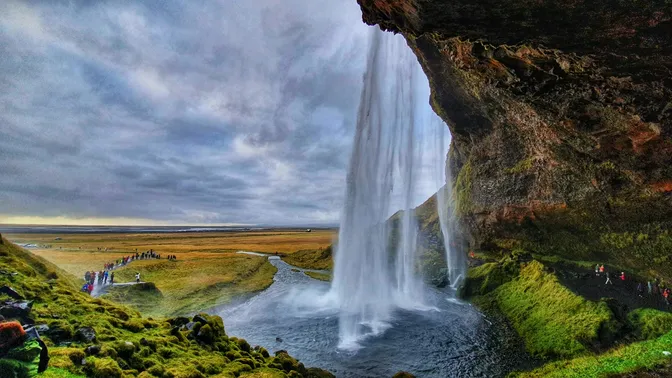
A little over two hours from the airport, Seljalandsfoss drops 60 meters over a cliff with a ledge running behind the water, so you can walk the full circle and look out through it. Bring a rain jacket whatever the forecast says — the spray reaches well past the base, and the path back there stays slick. An hour is right; take the wet section slowly rather than fast.
Time here: 1 hr
- Afternoon
Skógafoss
31 min from the previous stop
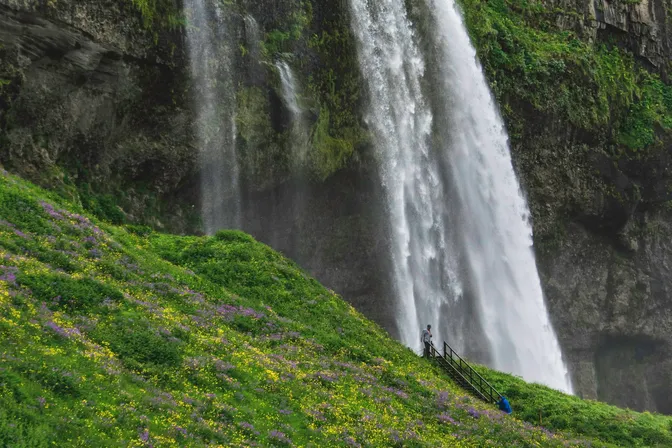
Half an hour further east, Skógafoss is wider and louder, with a 527-step staircase up the cliff beside it to a viewpoint over the lip. On a sunny afternoon the spray throws a rainbow across the base, which is the reason to stand at the bottom first and climb second. An hour covers both.
Time here: 1 hr
- Evening · Optional
Reynisfjara black sand beach — only if you're still sharp
34 min from the previous stop
Another half hour on, Reynisfjara's black sand and basalt columns are genuinely striking — and this is the one stop on the whole route where arriving tired is a safety question rather than a comfort one. The sneaker waves here are unpredictable and have killed people, most recently in 2025, regardless of how calm the sea looks, and reading the water correctly takes attention you may not have after a flight, a rental queue and two hours of driving. If you landed in the morning and feel fine, stop, stay at least 30 meters back and never turn your back on the ocean. If the day has run long at all, drive the twelve minutes into Vík and do this first thing tomorrow instead — it's a short backtrack west, not a lost stop.
Time here: 30 min
Day 2: Glaciers, Icebergs and Diamond Beach
A full sightseeing day rather than a transfer: a basalt-framed waterfall in Vatnajökull National Park, then the glacier lagoon and the ice-strewn beach directly across the road from it.
If you skipped Reynisfjara last night, do it now, before anything else. It's fifteen minutes west of Vík — the wrong direction for today, but only just — and morning light plus a rested head is the whole reason for moving it. Leave Vík by 8:30 and the half hour it costs disappears into the day.
Tonight: Höfn
- Morning
Skaftafell and Svartifoss
An hour and three quarters from Vík across lava fields and glacial outwash plains. From the Skaftafell visitor center a steady, non-technical trail climbs to Svartifoss, a 20-meter fall framed by dark hexagonal basalt columns — the same shapes that influenced Hallgrímskirkja's facade in Reykjavík. Two hours covers the round trip without hurrying.
Time here: 2 hr
- Midday
Jökulsárlón glacier lagoon
48 min from the previous stop
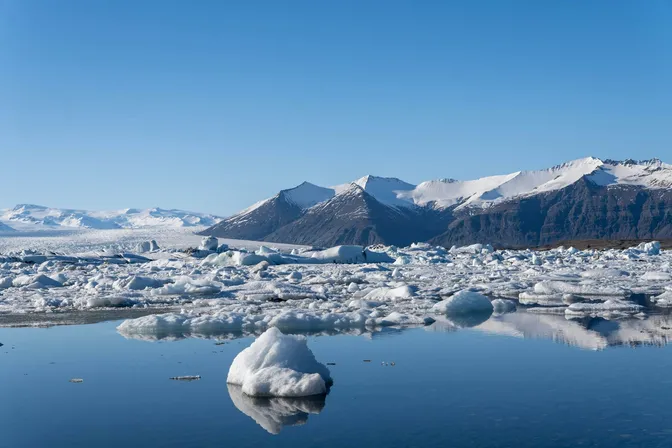
Fifty minutes east. Icebergs calve off the Breiðamerkurjökull glacier tongue and drift slowly toward the sea, some of them house-sized, and the lagoon exists at all because the glacier retreated through the 20th century. If you want a boat tour, book it before the trip rather than on arrival — both amphibious and water-only boats run seasonally and they fill. Even without one, an hour and a half on the shore watching the ice move is the point.
Time here: 1 hr 30 min
- Afternoon · Optional
Diamond Beach
9 min from the previous stop
Straight across Route 1, a few minutes' drive. Ice that escapes the lagoon washes back up on black sand and melts there slowly, which is where the name comes from. Half an hour is plenty unless the light is doing something worth waiting out.
Time here: 30 min
- Evening · Optional
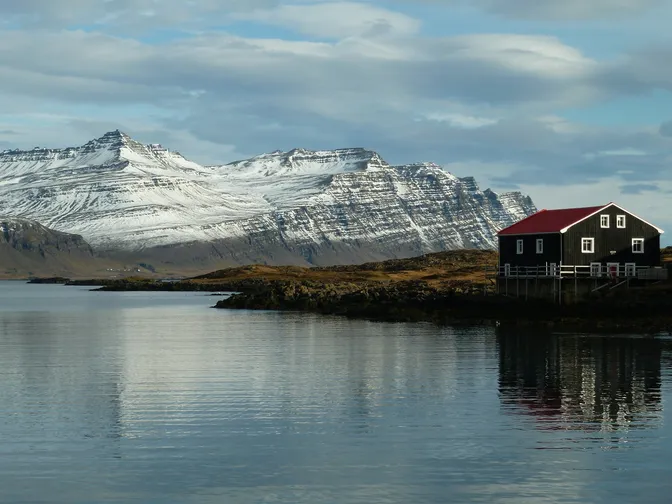
Into Höfn
49 min from the previous stop
Fifty minutes on. Höfn is a working fishing harbor known locally for langoustine, which is worth looking for on a menu tonight. Nothing else is scheduled — it's been a full day.
Höfn Town Center
Day 3: The East Fjords
A slow coastal drive that's genuinely the day's attraction, not the gap between attractions, with two small harbor stops and a geothermal soak at the end of it.
Both village stops are optional. If the weather has closed in or you're running behind, drive straight through to Vök Baths and take a longer soak instead — the fjord road itself is most of what you came for today.
Tonight: Egilsstaðir
- Morning · Optional
Djúpivogur
An hour and a half out of Höfn, a quiet harbor village that's worth half an hour to stretch out and look across the fjord. Nothing more is needed unless you want a coffee.
Time here: 30 min
- Midday · Optional
Stöðvarfjörður and Petra's Stone Collection
1 hr 7 min from the previous stop
An hour further along the fjord road — and allow the full hour, because this coast is consistently slower than the distance suggests. Petra's Stone Collection is a private house and garden filled with minerals gathered from the surrounding hills across decades, which is a stranger and better thing than it sounds. Forty-five minutes covers it.
Time here: 45 min
- Evening
Vök Baths
1 hr 6 min from the previous stop
An hour on, just outside Egilsstaðir, two geothermal infinity pools built out over Lake Urriðavatn — the lake setting is what makes it different from Iceland's other spas, and you can swim out of the warm water into the cold lake if you want. An hour and a half properly unwinds three days of driving.
Time here: 1 hr 30 min
- Night · Optional
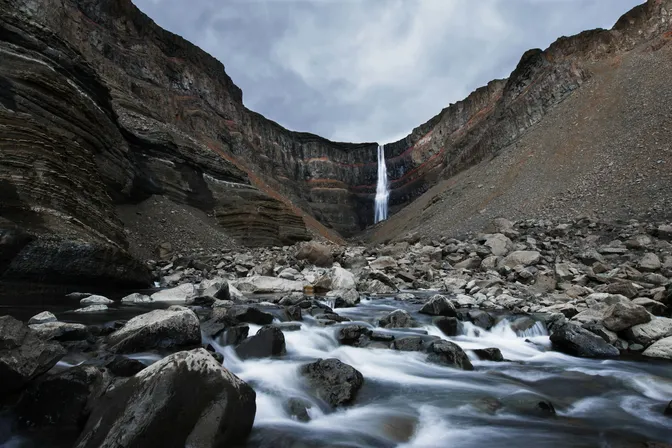
Egilsstaðir
7 min from the previous stop
Seven minutes from the baths. It's a practical town rather than a scenic one, and tonight it's a bed and a restaurant before the drive inland tomorrow.
Egilsstaðir Town Center
Day 4: Inland to Dettifoss and Mývatn
The crossing of Iceland's northeast interior — bare, treeless, volcanic country — with one big waterfall in the middle and a geothermal soak at the end. Moderate driving, deliberately, because tomorrow stays in one place.
If you'd rather skip the Möðrudalur detour, the drive from Egilsstaðir straight to Dettifoss is just under two hours on Route 1 and the paved Route 862.
Tonight: Mývatn (Reykjahlíð)
- Morning · Optional
Möðrudalur
An hour and twenty from Egilsstaðir, a highland farm sitting alone at the top of the pass with a turf church and a café — the only real reason to stop on this stretch, and a welcome one, because there's very little else between here and Mývatn. Half an hour.
Time here: 30 min
- Midday
Dettifoss, west side
54 min from the previous stop
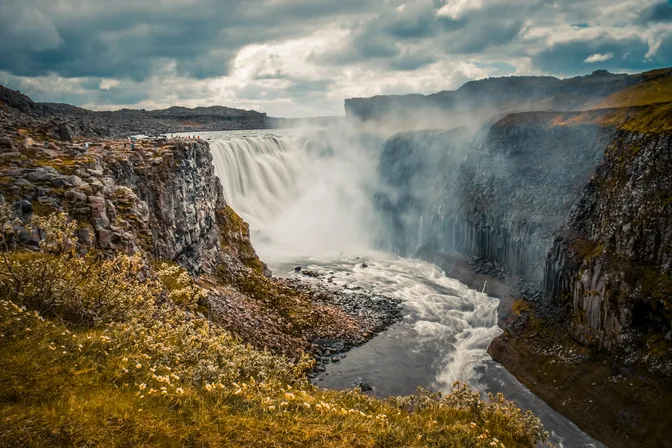
Just under an hour on, approached by the paved Route 862 — take this road and not the unpaved, seasonally closed Route 864 on the east bank. Dettifoss is among the most powerful waterfalls in Europe by volume, and it's a genuinely different animal from the south coast's falls: grey, violent, dropping into a bare canyon with no greenery to soften it. Allow around an hour and a quarter, which is enough to also walk the short path upstream to Selfoss from the same car park.
Time here: 1 hr 15 min
- Evening
Mývatn Nature Baths
37 min from the previous stop
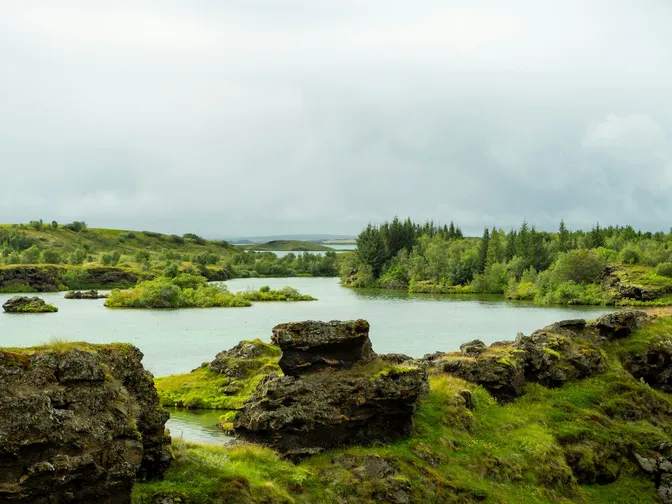
Forty minutes southwest, and the right way to end a driving day. The Mývatn baths (now branded Earth Lagoon) open daily, typically 12:00–22:00, with adult admission from around 7,900 ISK — quieter than the Blue Lagoon and in a landscape that earns the comparison. Two hours, and don't plan anything after it.
Time here: 2 hr
Day 5: A Full Day in the Mývatn Basin
No transfer today. Everything below sits within twenty minutes of the last thing, which is the whole reason this itinerary is fourteen days instead of ten — Mývatn's volcanic landscape rewards being walked rather than driven past.
If you finish early and want more, Skútustaðagígar's pseudocraters on the lake's south shore add an easy 45-minute loop, and the drive right around Mývatn takes about half an hour.
Tonight: Mývatn (Reykjahlíð)
- Morning
Hverir
Ten minutes east of Reykjahlíð over the pass, an ochre-and-grey field of boiling mud pots and roaring steam vents with almost nothing growing in it. Go first thing: it's the busiest of today's stops with tour coaches later, and the steam reads better in cold morning air. Stay on the marked paths — the crust between them is thin and hot. An hour.
Time here: 1 hr
- Midday · Optional
Grjótagjá
10 min from the previous stop
Ten minutes on, a small lava cave with a startlingly blue thermal pool inside. Bathing isn't permitted — the water has run too hot since the 1970s eruptions and the cave is on private land — so this is a look-and-leave stop rather than a swim. Twenty minutes.
Time here: 20 min
- Afternoon
Hverfjall
10 min from the previous stop
Ten minutes south. A near-perfect tephra crater roughly a kilometre across, with a steep gravel path up one side to the rim and a full loop around the top once you're there. The climb is short but relentless and completely exposed to wind; the reward is the whole basin laid out below you. Allow an hour and a half to two hours for the climb, the rim walk and the descent.
Time here: 1 hr 40 min
- Evening
Dimmuborgir
7 min from the previous stop
Seven minutes on, and best late in the day when the low light gets into the formations. Dimmuborgir is a field of collapsed lava pillars, arches and hollow towers left behind when a lava lake drained away beneath its own crust; several marked loops run through it, from fifteen minutes to well over an hour. Take a longer one — after today's driving-free schedule you'll have the legs for it.
Time here: 1 hr 30 min
Day 6: Whales and the Capital of the North
A half-day out on the water, one roadside waterfall, and an early finish in the biggest town outside the capital — a deliberately easy day before tomorrow's long one.
Tonight: Akureyri
- Morning
Whale watching from Húsavík
Forty minutes north of Mývatn. Húsavík is the town Iceland's whale watching is built around, and the boats go out into Skjálfandi bay looking mainly for humpbacks. Book ahead — this is not a same-day proposition in summer. Operators list around two and a half hours on the water, but treat it as a half day once check-in and the gearing-up in overalls are counted.
Time here: 3 hr
- Afternoon
Goðafoss
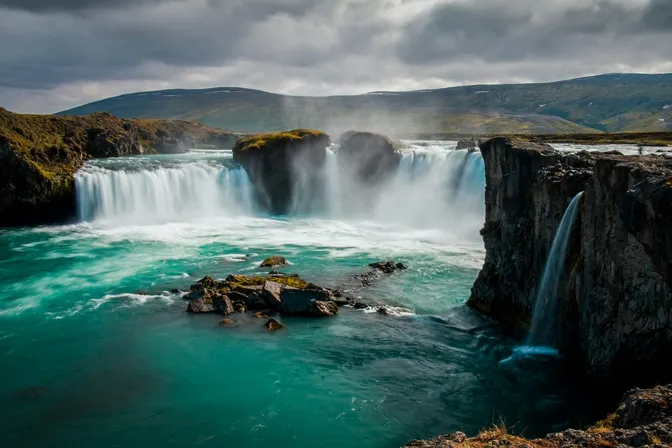
38 min from the previous stop
Forty minutes south, right beside the main road, with no hike involved. Goðafoss drops about 12 meters in a wide horseshoe, and the name — 'waterfall of the gods' — is tied by local legend to Iceland's conversion to Christianity around the year 1000, though that specific story is generally read as a much later embellishment. Forty-five minutes.
Time here: 45 min
- Evening · Optional
Akureyri
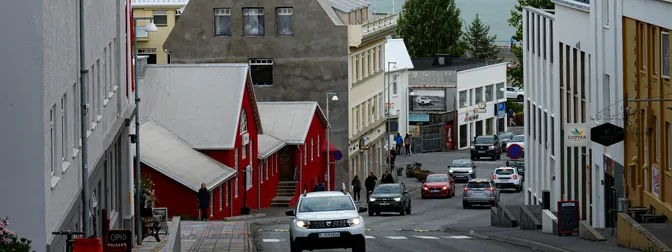
32 min from the previous stop
Half an hour west, and note that the fast route runs through the Vaðlaheiðargöng toll tunnel — a camera reads your plate and you pay 2,216 ISK online at veggjald.is within 24 hours, or your rental company bills you for it with a surcharge. The older Víkurskarð road over the mountain is free and adds about ten minutes. Akureyri itself is walkable, has actual restaurants and a botanical garden, and is the last proper town for a couple of days. Nothing is scheduled — get a good dinner and an early night.
Miðbær (Downtown)
Day 7: Across the North to the Strandir Coast
The repositioning day, and the price of the Westfjords: about four and a half hours of driving to get from the north coast onto the Westfjords' eastern edge. The two stops exist to break it up, not to fill it.
Budget this as a full day, not a drive with stops. Four hours forty of moving time becomes closer to seven door to door once you add the two stops, fuel, photographs and the coastal curves north of Brú, and the last stretch up Strandir is slow single-lane coast road that gets genuinely tiring in rain or fog. Start early. If you're behind by Varmahlíð, drop Kolugljúfur first — it's the shorter stop and the easiest detour to skip — and if you're behind before you even reach Skagafjörður, skip Glaumbær too and push straight through to the coast; its opening hours are seasonal anyway, so check them before you build the morning around it.
Tonight: Hólmavík, Strandir
- Morning
Glaumbær
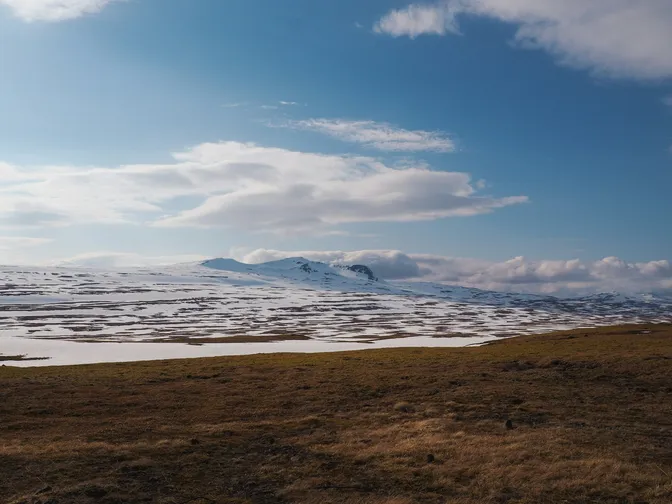
An hour and twenty from Akureyri, in the wide farming valley of Skagafjörður. Glaumbær is a preserved turf farmhouse — a row of gabled fronts backed by a warren of connected turf-walled rooms — and it's the clearest picture you'll get on this trip of how Icelanders actually lived until surprisingly recently. Hours are seasonal, so check before you count on it; an hour is enough inside.
Time here: 1 hr
- Midday · Optional
Kolugljúfur
1 hr 8 min from the previous stop
An hour and ten southwest, a short way off Route 1. A narrow canyon with a waterfall dropping into it and a footbridge over the top, named for a troll woman who supposedly lived in it. There's no admission and no facilities — it's a forty-minute leg-stretch in the middle of a long drive, which today is exactly what's wanted.
Time here: 40 min
- Evening · Optional
Hólmavík
2 hr 14 min from the previous stop
Two hours and fifteen further, the last stretch running north up the Strandir coast on a road with water on one side and nothing on the other. Hólmavík is small, and its one real attraction is the Museum of Icelandic Sorcery and Witchcraft, which covers the 17th-century witch trials in this region — open daily 10:00–18:00 from mid-May to the end of September, with last entry at 17:30. An hour there, then dinner and an early stop.
Time here: 1 hr
Day 8: Around Ísafjarðardjúp
A deliberately light day after yesterday: two and three quarter hours of slow fjord driving with one stop, then an afternoon and evening in the Westfjords' only real town.
The drive around Ísafjarðardjúp is the day's real content — it runs in and out of six fjords, and there are pull-offs the whole way. Take them; nothing today is waiting on you.
Tonight: Ísafjörður
- Midday
Arctic Fox Centre, Súðavík
Two and a half hours from Hólmavík, at the far end of the Ísafjarðardjúp drive. A small research centre and museum on the Arctic fox — Iceland's only native land mammal — usually with a couple of rescued foxes in an outdoor enclosure. It's modest, and it's also the only thing of its kind. An hour, including the café.
Time here: 1 hr
- Afternoon
Ísafjörður
19 min from the previous stop
Twenty minutes on, spread across a sandspit curling into the fjord with mountains straight up on three sides. The old quarter down by the harbor has a cluster of 18th-century timber buildings, one of which holds the Westfjords Heritage Museum, and the town has proper restaurants and a bakery — which after two nights in villages is worth something. Give it the afternoon and the evening rather than treating it as a stopover.
Time here: 2 hr 30 min
Day 9: Dynjandi and the Road South
The Westfjords' signature drive: through the Dýrafjörður tunnel, over the Dynjandisheiði plateau, and down to the southern coast — with the waterfall that most people come to the Westfjords to see in the middle of it.
Unless you're holding a confirmed late-afternoon or evening sailing tomorrow, drive out to Látrabjarg this evening rather than tomorrow morning. It's an hour and twenty each way from Patreksfjörður, the last stretch on gravel; the birds are on the cliffs all day in season and the evening light is better; and doing it tonight means tomorrow is a short drive to a boat instead of a race against one. In June and July you have light until well past midnight — this is the day to use it.
Tonight: Patreksfjörður
- Morning · Optional
Þingeyri
Forty-five minutes from Ísafjörður through the Dýrafjörður tunnel. A small village at the head of its fjord, useful mostly as the last easy coffee and fuel before the plateau crossing. Half an hour, and don't feel obliged to stay longer.
Time here: 30 min
- Midday
Dynjandi
27 min from the previous stop
Under half an hour on, at the head of Arnarfjörður. Dynjandi falls roughly 100 meters in a broad stepped fan that widens as it comes down, with five smaller waterfalls strung below it on the same river; the whole thing was protected as a natural monument in 1981. From the car park it's about fifteen minutes uphill past the lower falls to the base of the main one — paved at first, then rocky and uneven. Ninety minutes gives you the walk up, real time at the top, and the way back down.
Time here: 1 hr 30 min
- Evening · Optional
Over Dynjandisheiði to Patreksfjörður
1 hr 25 min from the previous stop
An hour and twenty-five, and the most exposed driving of the trip: the road climbs onto open high ground with no shelter and no services before dropping to the south coast. It's a fine drive in clear summer weather and a genuinely poor one in fog or wind, so check road.is before you set off from Dynjandi. Patreksfjörður at the end of it is the southern Westfjords' main village — fuel up here tonight for tomorrow.
Day 10: Látrabjarg and the Baldur Ferry
The bird cliffs in the morning, then the crossing of Breiðafjörður that saves this itinerary the better part of a day of backtracking. Everything today keys off your sailing time.
This morning is the one below only if your Brjánslækur sailing is a late-afternoon or evening one. Anything earlier and the cliffs belong to yesterday evening — the round trip from Patreksfjörður is two hours forty of driving plus two hours at the cliffs, and shaving that to catch a boat you can't miss is how the best day of the Westfjords turns into the worst hour of the trip. If you did Látrabjarg last night, this morning is a slow, pull-off-often drive along the Barðaströnd coast instead, and you reach the terminal early and unhurried.
Tonight: Stykkishólmur, Snæfellsnes
- Morning
Látrabjarg — this morning or last night
An hour and twenty from Patreksfjörður, the last twenty kilometres on maintained gravel. The cliffs run about 14 km along Iceland's western edge and rise as high as 441 meters, and in breeding season they're packed with puffins, razorbills, guillemots and fulmars — puffins nest in burrows near the grassy top, which is why people get close to them here and almost nowhere else. Keep well back from the edge: the ground is undercut in places and the wind is the real hazard. Two hours — and confirm your sailing time months ahead rather than days, because that time, not the birds, decides whether this happens now or the evening before.
Time here: 2 hr
- Afternoon
Brjánslækur and the crossing
1 hr 39 min from the previous stop
An hour and forty back east along the south coast to the ferry terminal — build in more buffer than you think you need, because this is the one appointment on the whole trip you cannot miss. The Baldur crossing to Stykkishólmur takes about two and a half hours by way of Flatey island, and the route threads between hundreds of low islands and skerries in Breiðafjörður. Book the car space well ahead.
- Evening · Optional
Stykkishólmur
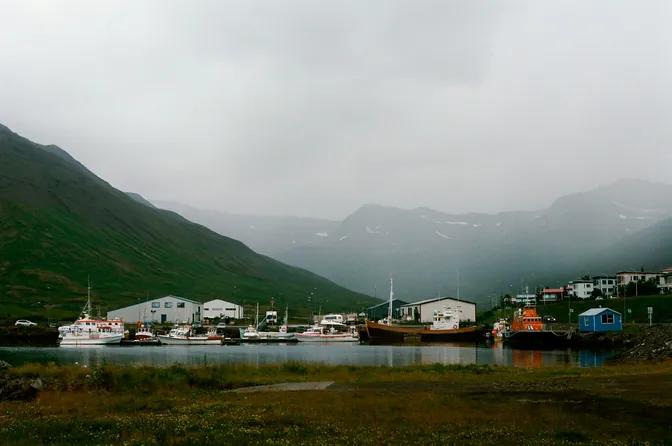
2 hr 30 min from the previous stop
You dock straight into Snæfellsnes, which is the whole trick — no drive tonight at all. Stykkishólmur's old harbor and the small timber-built core above it are worth a walk if there's light left, and there will be in summer.
Stykkishólmur Old Town & Harbor
Day 11: The Snæfellsnes Peninsula
A full loop of the peninsula, which packs mountains, lava fields, black beaches and a glacier into a short drive — and ends at Borgarnes rather than doubling back, which sets up an easy day tomorrow.
Running late by mid-afternoon? Drop Búðir. Djúpalónssandur and Arnarstapi carry the day between them, and the black church is the most skippable of the four.
Tonight: Borgarnes
- Morning
Kirkjufell
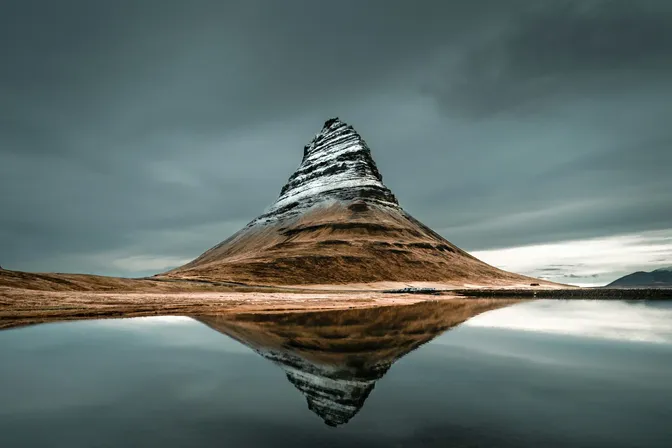
Forty minutes west of Stykkishólmur. A 463-meter peak that stood above the ice sheet during the last glaciation rather than a volcano, with the small Kirkjufellsfoss falls sitting just across the road — the falls are what put the mountain behind them in every photograph you've seen of it. Forty-five minutes covers the short walk and back.
Time here: 45 min
- Midday · Optional
Djúpalónssandur
48 min from the previous stop
Fifty minutes around to the peninsula's tip. A black pebble beach reached down a short uneven path between lava formations, with rusted wreckage from a 1948 trawler still scattered across it, left in place as a memorial. Four lifting stones sit near the path, once used to test whether a man was strong enough to crew a boat. Forty minutes.
Time here: 40 min
- Afternoon
Arnarstapi
15 min from the previous stop
Fifteen minutes on. The sea cliffs here are cut through with arches and stacks full of nesting birds, and a clifftop path runs along them toward the neighbouring hamlet of Hellnar with Snæfellsjökull's ice cap visible inland on a clear day. Forty-five minutes on the path is the right amount.
Time here: 45 min
- Evening · Optional
Búðakirkja
18 min from the previous stop
Under twenty minutes east, a small black timber church standing alone between a lava field and the sea, with nothing else around it. It's a photograph rather than a visit — twenty minutes.
Time here: 20 min
- Night · Optional
On to Borgarnes
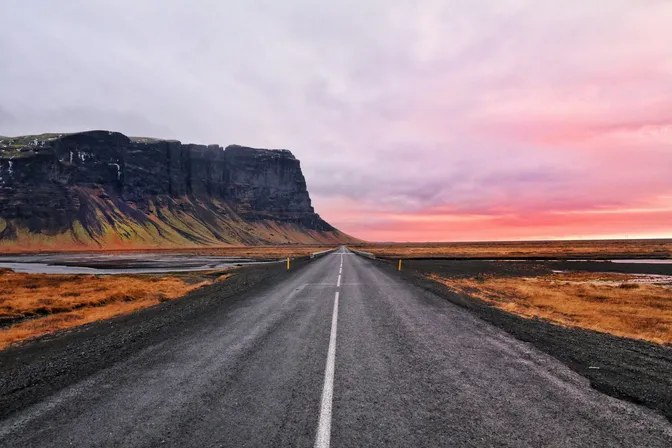
1 hr 24 min from the previous stop
An hour and a half east along the peninsula's south side and across the head of the bay. Stopping here instead of back at Stykkishólmur puts you an hour closer to tomorrow's waterfalls and takes a long stretch out of the morning. Borgarnes sits on a spit with water on both sides and a decent settlement museum if you arrive early.
Borgarnes Town Center
Day 12: Borgarfjörður's Waterfalls and Hot Springs
West Iceland's quieter inland valley — lava-fed waterfalls, a saga site, and a hot-spring bathhouse — then an easy run into Reykjavík for the last two nights.
Tonight: Reykjavík
- Morning
Hraunfossar and Barnafoss
Forty-five minutes inland from Borgarnes. Hraunfossar isn't one waterfall but a kilometre-wide band of them, water seeping out of the base of a porous lava field and running clear into the river below — it looks less like a waterfall than like the ground leaking. Barnafoss, a narrow violent chute, sits a few minutes upstream on the same short path. Forty-five minutes covers both.
Time here: 45 min
- Midday · Optional
Reykholt
15 min from the previous stop
Fifteen minutes on. This was the home of Snorri Sturluson, the 13th-century chieftain and historian who wrote down much of what survives of Norse mythology, and his stone-lined bathing pool is still here, fed by a hot spring. There's a small museum attached. Half an hour, and skippable if the day's running long.
Time here: 30 min
- Afternoon
Deildartunguhver and Krauma
7 min from the previous stop
Seven minutes further, a hot spring pouring out of a hillside at a genuinely startling rate and temperature — you can walk right up to it, and the steam is visible from the road. Krauma, the bathhouse built beside it, mixes that water with cold glacial river water to get it down to a temperature people can sit in. An hour and a half in the pools is a good last soak of the trip.
Time here: 1 hr 30 min
- Evening · Optional
Into Reykjavík
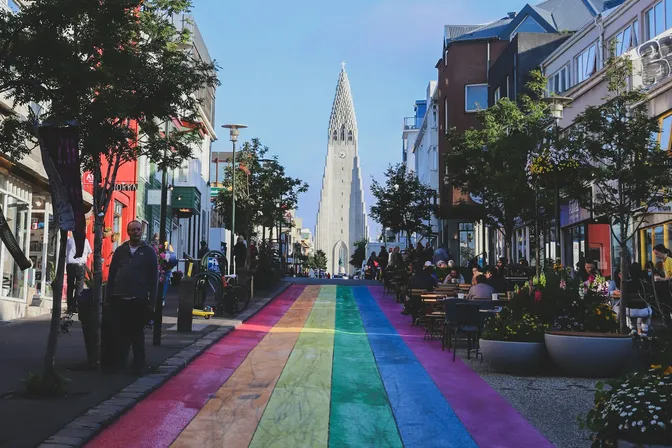
1 hr 30 min from the previous stop
An hour and a half south. After twelve days of villages, arriving in the capital is a jolt; you've got two nights here, so tonight is just dinner and not driving anywhere.
Miðborg (Downtown / 101)
Day 13: The Golden Circle
A loop out of Reykjavík and back, which is what buys it the time the ten-day version can't give it — three of Iceland's most-visited sites without a four-hour transfer bolted onto the end.
Leave by 8:30 and you'll reach Þingvellir well ahead of the coach tours out of Reykjavík, which is worth more here than at any other stop on this trip. If you'd rather cut the day short, drop Kerið — it's a small stop and it's the last one.
Tonight: Reykjavík
- Morning
Þingvellir
Fifty minutes northeast of the city. Iceland's parliament met in this rift valley from 930 AD, and the valley itself is where the North American and Eurasian plates are visibly pulling apart — the walk down through the Almannagjá gorge from the Hakið viewpoint is the thing to do, with the plate wall rising on one side. There's no park entry fee, though parking is charged at the main lots. Ninety minutes.
Time here: 1 hr 30 min
- Midday · Optional
Geysir and Strokkur
57 min from the previous stop
An hour east. Geysir — the geyser all the others are named after — is largely dormant now, but Strokkur, fifty meters away, erupts every six to ten minutes to fifteen or twenty meters, so you'll see it go several times without waiting. Half an hour is enough; the rest of the field is steam vents and a large gift shop.
Time here: 30 min
- Afternoon
Gullfoss
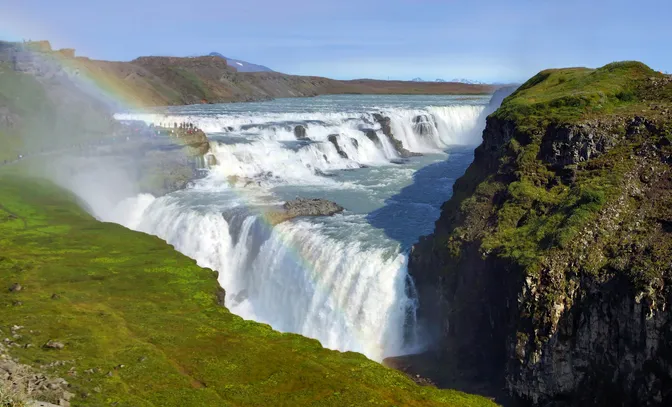
10 min from the previous stop
Ten minutes on. The river drops 32 meters in two stages into a canyon set at an angle to the falls, so from the upper viewpoint the water appears to vanish into the ground. It was nearly dammed for hydroelectric power a century ago; Sigríður Tómasdóttir, the daughter of a co-owner of the land, is widely credited with helping stop that, and it's been protected since 1979. Forty-five minutes covers both viewpoints.
Time here: 45 min
- Evening · Optional
Kerið
45 min from the previous stop
Forty-five minutes south on Route 35, and essentially free on the way back. A crater variously dated between 3,000 and 6,500 years old, with a startlingly opaque green lake at the bottom and red-brown slopes around it; a stairway of 139 steps runs down to the water, and a path circles the rim. There's a 700 ISK service fee. Forty minutes.
Time here: 40 min
- Night · Optional
Back to Reykjavík
1 hr from the previous stop
An hour, arriving in time for a proper last-night dinner in the city rather than a late one.
Miðborg (Downtown / 101)
Day 14: Reykjavík and Departure
How much of today you get depends entirely on your flight — everything below is optional, and the only fixed thing is returning the car with time to spare.
Flying out before early afternoon? Skip the lagoon entirely and go straight to Keflavík from the city — it's fifty minutes, and you want three hours at the airport once the rental return is counted. If you're keeping a soak in, check the Blue Lagoon's status the night before and again in the morning; if it's shut, Sky Lagoon at Kópavogur is the fallback, and taking it means leaving the city later and driving about forty-five minutes to the airport at the end rather than twenty-five.
- Morning · Optional
Downtown Reykjavík
Hallgrímskirkja's tower, Harpa's glass facade down at the old harbor, and the shops and cafés along Skólavörðustígur are all within an easy walk of each other in the city center. Two hours covers the lot at a relaxed pace, which is about right on a departure day.
Time here: 2 hr
Miðborg (Downtown / 101) - Midday · Optional
The Blue Lagoon — optional, and have a backup
49 min from the previous stop
Fifty minutes toward the airport, and only worth including if your flight leaves you genuinely comfortable time. Entry is timed and must be booked in advance. Check its current status first: the site sits on the Reykjanes Peninsula and has closed on short notice repeatedly since 2023 because of volcanic activity nearby, most recently in 2025 — and a closure on your departure morning is the kind you find out about the night before. Decide your fallback now rather than then: Sky Lagoon, on the shore at Kópavogur about fifteen minutes from downtown Reykjavík and roughly forty-five from Keflavík, is off the peninsula entirely and is the straightforward substitute; book it the moment the Blue Lagoon looks doubtful, since it's the obvious alternative for everyone else too. Two hours at either, without rushing.
Time here: 2 hr
- Afternoon · Optional
Keflavík Airport
25 min from the previous stop
Twenty-five minutes from the lagoon, or fifty direct from Reykjavík if you skipped it. Return the car, allow real buffer, and that closes the loop where it started fourteen days ago.
Don't do this
- Don't plan Day 10 before you know your ferry time, and don't treat a morning run to Látrabjarg as the default. The cliffs are two hours forty of driving round trip from Patreksfjörður, most of the last stretch on gravel, plus two hours you'll actually want there — that only fits ahead of a late-afternoon or evening sailing. On anything earlier, drive out on Day 9 evening and keep Day 10 for the coast road and the boat.
- Don't run the Westfjords section outside the summer half of the year without a fallback. Dynjandisheiði sits on open high ground and closes in winter weather, and if it shuts, there's no quick way around — the detour is most of a day.
- Don't take Route 864 to Dettifoss. It's unpaved and closed from the first autumn snow until the spring mud dries; Route 862 on the west side is paved and the approach this itinerary uses.
- Don't drive through the Vaðlaheiðargöng tunnel near Akureyri and forget about it. There are no toll booths — a camera reads your plate, and you pay online at veggjald.is within 24 hours or the rental company bills you the toll plus an administration fee. Pay it from the hotel the evening you arrive in Akureyri, on Day 6, while you're still thinking about it; the deadline runs out somewhere on the road to the Westfjords, and setting a phone reminder for that night costs nothing.
- Don't treat Day 7 as a sightseeing day. Getting from Akureyri to the Strandir coast is four and a half hours of driving, and the two stops along the way are there to break it up, not to fill it. Start early and don't add anything.
Useful travel information
Tips
- Book the Baldur ferry car space as soon as your dates are fixed, and put the departure time somewhere you'll see it again. It's the hinge the second half of this trip turns on, it carries a limited number of cars, and the sailing schedule differs between summer and winter — check ferja.is, confirm the time months out rather than the week before, and let it decide whether Látrabjarg happens on Day 9 evening or Day 10 morning. Anything but a late-afternoon or evening crossing means Day 9 evening.
- Iceland's weather and road conditions change fast. Every drive time here is a good-conditions baseline, and any of them can run long. Check road.is and vedur.is each morning, and treat this schedule as something to bend rather than beat.
- Book the Húsavík whale-watching trip and, if you want one, the Jökulsárlón boat tour well ahead — both are seasonal and fill up in summer.
- Fuel up whenever you can between Egilsstaðir and Mývatn, along the Strandir coast toward Hólmavík, and anywhere in the Westfjords. Gaps of 60–100 km with nothing open are normal out there, and Patreksfjörður is the sensible place to fill the tank before the Látrabjarg run.
- Iceland is close to cashless — cards work almost everywhere, including small guesthouses and self-service pumps, so there's little need to carry krónur.
- The Blue Lagoon has closed on short notice several times since 2023 because of volcanic activity near Grindavík. If Day 14 includes it, check its own site for current status before building a schedule around it — and pick your fallback in advance rather than on the morning. Sky Lagoon at Kópavogur, fifteen minutes from downtown Reykjavík, is the practical one, because it's off the Reykjanes Peninsula entirely and unaffected by whatever closed the other.
Good to know (16)
- The Baldur car ferry crosses Breiðafjörður between Stykkishólmur and Brjánslækur via the island of Flatey, and the crossing takes roughly 2.5 hours. It runs two sailings a day in the summer season (1 June – 31 August); in winter it runs one round trip on Mondays and Wednesdays, two on Tuesdays, Thursdays, Fridays and Sundays, and none on Saturdays. Advance booking is important when traveling with a vehicle; winter-season fares are 6,300 ISK for an adult and 6,300 ISK for a car up to 5 meters.Checked September 19, 2026
- Dynjandi drops about 100 meters in a wide, stepped fan, with five smaller waterfalls below it on the same river. It and its surroundings were protected as a natural monument in 1981. From the car park it's roughly a 15-minute walk up to the main fall, paved for the lower section and rocky and uneven above that.Checked September 18, 2026
- Látrabjarg stretches about 14 km along Iceland's western edge and rises as much as 441 meters above the Atlantic, with puffins, razorbills, guillemots and fulmars nesting there in the breeding season. The cliff edges are unstable and the ground exposed — keep well back, particularly in strong wind, fog or wet weather.Checked September 18, 2026
- Most of the main road network in the Westfjords is paved, and a 4x4 is not normally required on those roads in good conditions. Some side roads and roads to individual attractions still include gravel sections, and some remote roads are seasonal and stay closed in winter.Checked September 18, 2026
- Vaðlaheiðargöng, the tunnel on Route 1 just east of Akureyri, is Iceland's only toll road. A passenger car under 3.5 tonnes pays 2,216 ISK for a single trip, and payment must be made within 24 hours before or after driving through.Checked September 18, 2026
- Dettifoss has two access roads. Route 862, on the west side, is paved but has limited winter maintenance. Route 864, on the east side, is unpaved and closes with the first autumn snowfall, reopening in spring only once the wet mud on the track has dried.Checked September 15, 2026
- Mývatn Nature Baths (rebranded Earth Lagoon) is open daily, typically 12:00–22:00 with seasonal variation; admission starts from around 7,900 ISK for adults, with swimsuit and towel rental available separately.Checked September 15, 2026
- North Sailing, one of the operators running whale-watching tours out of Húsavík, lists tour durations of around 2.5 hours on the water — plan for longer than that once check-in and gearing up are factored in.Checked September 15, 2026
- The Museum of Icelandic Sorcery and Witchcraft in Hólmavík covers 17th-century life in the Strandir region. It opens daily 10:00–18:00 from 15 May to 30 September and 12:00–18:00 from 1 October to 14 May, with no admission to the exhibitions after 17:30.Checked September 18, 2026
- Damage from wind-blown sand or volcanic ash is not covered by a standard collision damage waiver on an Icelandic rental car; rental companies sell it separately, usually labelled Sand and Ash Protection (SAAP), covering paintwork, glass, lights and plastics. Uncovered repairs can run into seven figures in ISK, and the south-coast sand plains between Vík and Kirkjubæjarklaustur are where it most often happens.Checked September 18, 2026
- Reynisfjara's sneaker waves are unpredictable and have caused fatalities, including as recently as 2025 — stay at least 30 meters back from the waterline even on a calm-looking day, and never turn your back on the ocean. A flashing-light warning system installed in 2022 signals the danger level.Checked September 15, 2026
- Þingvellir National Park sits on the Mid-Atlantic Ridge, where the North American and Eurasian tectonic plates are visibly pulling apart; there's no general park admission fee, though a service/parking fee applies at some of the more popular access points.Checked September 15, 2026
- Strokkur, the reliable geyser in the Geysir geothermal area, erupts roughly every 6–10 minutes to a height of about 15–20 meters, occasionally more. It sits about 50 meters from Geysir itself, the original but now largely dormant geyser the area is named for.Checked September 15, 2026
- Gullfoss drops 32 meters in two stages (11 meters, then 21 meters) into a narrow canyon. Sigríður Tómasdóttir, daughter of a farm co-owner, is widely credited with helping block early-20th-century plans to dam the falls for hydroelectric power; it became a protected site in 1979.Checked September 15, 2026
- Kerið, the crater lake on Route 35 between the Golden Circle and Selfoss, charges a 700 ISK service fee, and a stairway of 139 steps runs down to the water.Checked September 18, 2026
- As of August 2026, the Icelandic Met Office reports ongoing magma accumulation and ground uplift beneath Svartsengi on the Reykjanes Peninsula, near Keflavík and the Blue Lagoon, with no active eruption underway — the most likely scenario remains a slow build toward a future dike intrusion or eruption rather than an imminent one. Check safetravel.is and vedur.is before this trip and again on Day 14, since the area has erupted repeatedly since 2023.Checked September 15, 2026
Frequently asked questions
- Is 14 days enough for Iceland's Ring Road and the Westfjords?
- Yes, but only if you accept a trade. Experienced planners generally note that two weeks covering both leaves about a day in the Westfjords, and several argue twelve days on the Ring Road alone is the more comfortable trip. This version buys roughly three and a half Westfjords days by dropping the Tröllaskagi peninsula and the northern fishing villages, and by using the ferry instead of driving back out the way you came. If the Westfjords aren't the reason you're going, the ten-day Ring Road loop is the better-paced trip.
- How many days does this route need?
- It works from about 13 to 16 days. To shorten it, cut Day 5's second Mývatn day and Day 13's Golden Circle loop, which you can also do as a day trip on another visit. To stretch it, add a night in Ísafjörður or out at Breiðavík near the cliffs, or a second day on Snæfellsnes. Past about 16 days you're adding Westfjords depth rather than new regions.
- Can I drive this route in winter?
- Not as written. The Ring Road portion runs year-round with care, but the Westfjords section depends on Route 60 over Dynjandisheiði, which sits on exposed high ground and closes in winter weather, and on a ferry that thins to as little as one round trip a day, with no Saturday service. Treat the full loop as a late-May-to-September trip.
- Is the Baldur ferry worth it, or should I just drive?
- Worth it. Driving from Patreksfjörður around to Snæfellsnes by road is the better part of a day; the crossing is about two and a half hours and doubles as the one genuine rest break in the trip. Book the car space ahead — capacity is limited and it's the single reservation this itinerary actually depends on.
- Do I need a 4x4 for the Westfjords?
- Not for this route in summer. Most main Westfjords roads are paved and a standard car handles them in good conditions. The exception is the last stretch of Route 612 out to Látrabjarg, which is maintained gravel — fine in a 2WD, but check that your rental insurance covers gravel before you go.
- How is this different from the 10-day Ring Road trip?
- Four extra days, spent on three things: the Westfjords, a second full day at Mývatn instead of one shared afternoon with Dettifoss, and the Golden Circle as its own loop from Reykjavík rather than tacked onto a long drive from Snæfellsnes. What it gives up is the Tröllaskagi coast and Siglufjörður, which the ten-day version covers.