Last updated June 15, 2026
Akira Takiguchi / Wikimedia Commons, CC BY 2.0
Europe
Croatia Travel Guide
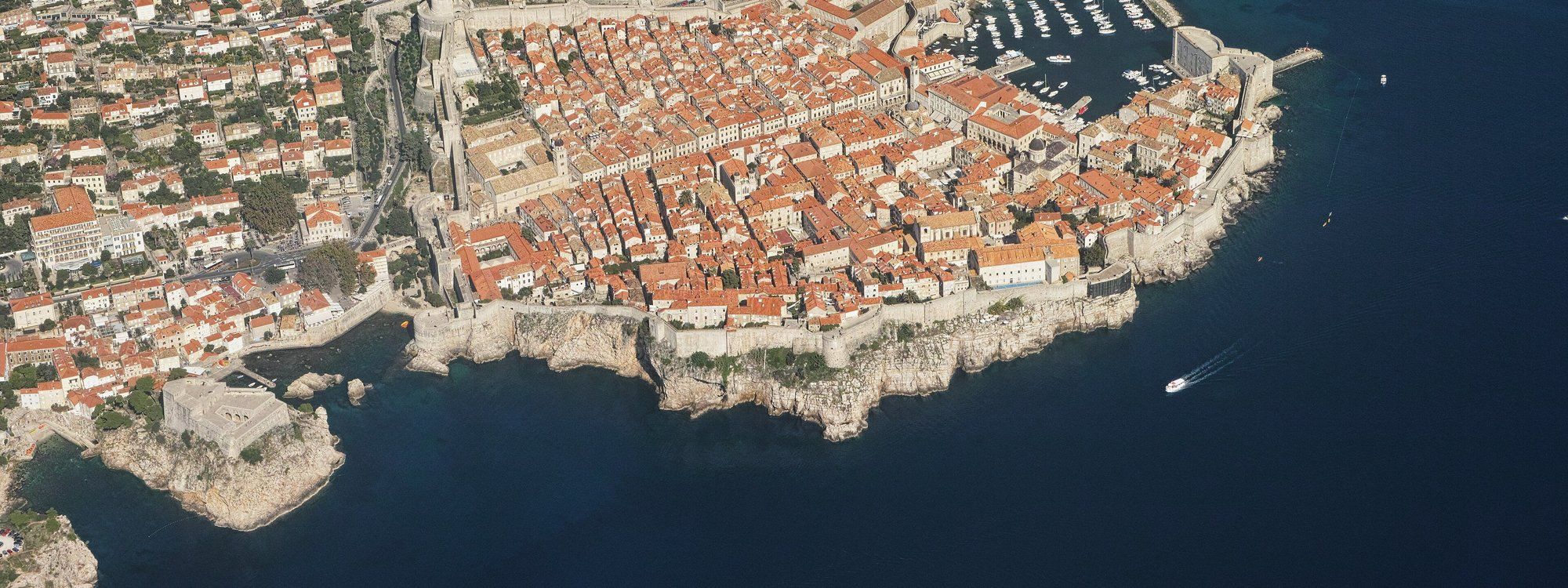
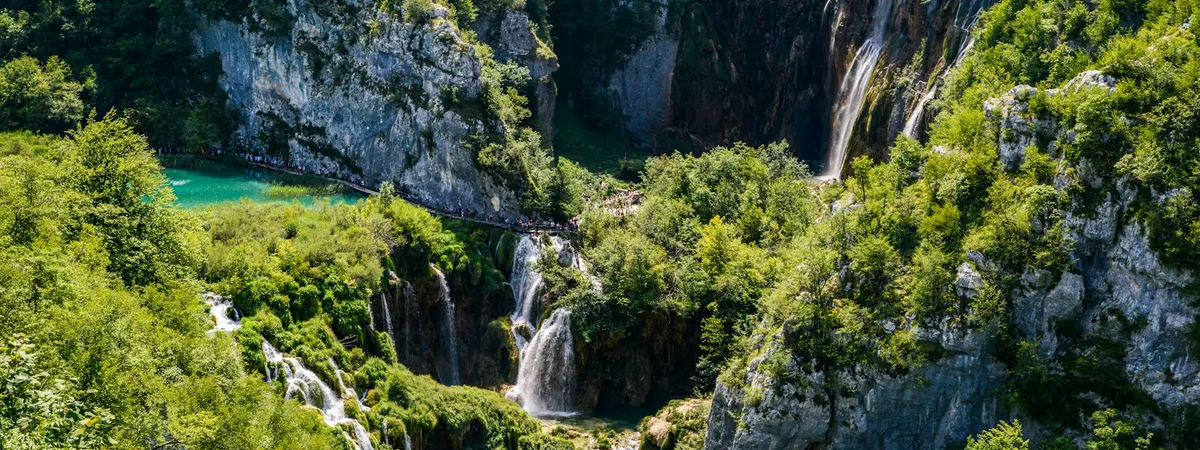
Croatia's main draw is its Adriatic coastline — over 1,700 km of it, backed by pale limestone mountains and scattered with more than a thousand islands, most of them uninhabited. Dubrovnik's walled Old Town is the country's single most photographed sight and the reason many first-time visitors come at all, but the coast runs much deeper than one city: Split centers on a Roman emperor's retirement palace that's still a living neighborhood, Zadar mixes Roman ruins with a modern sound installation built into its waterfront, and the island of Hvar pairs a compact stone harbor town with a lively summer social scene. Inland, the capital Zagreb offers a calmer, more Central European counterpoint — Austro-Hungarian architecture, a big café culture, and none of the coast's summer crush. Plitvice Lakes National Park, a chain of terraced turquoise lakes and waterfalls roughly halfway between Zagreb and the coast, is the country's best-known natural attraction and a common day trip or stopover for travelers connecting the two.
Quick facts
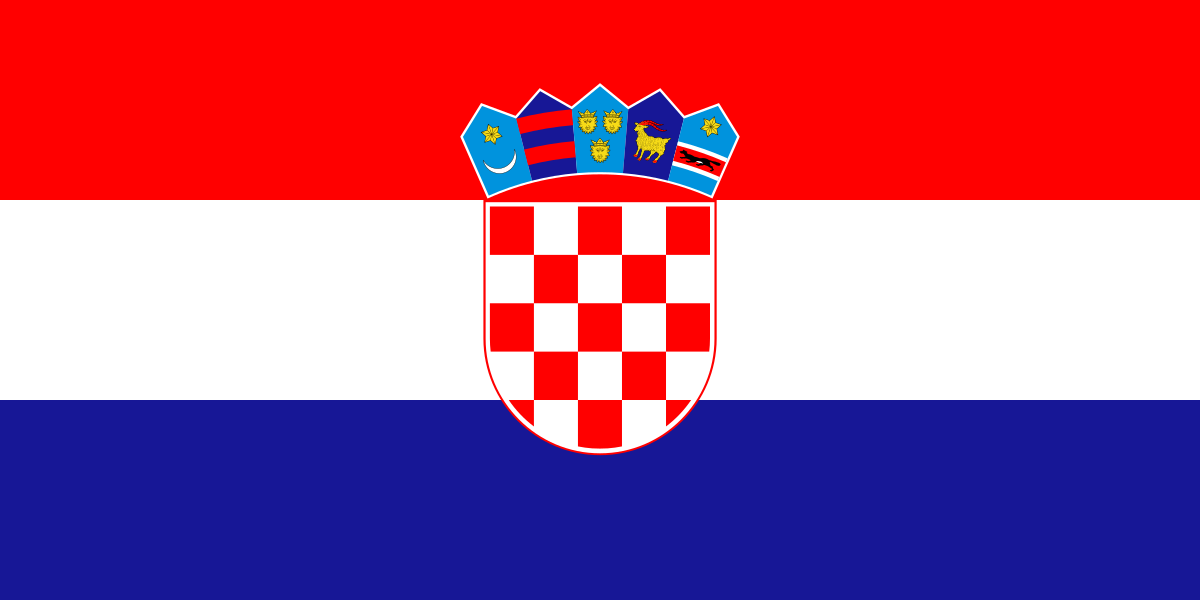
- Flag
- Croatia
- Capital
- Zagreb
- Language
- Croatian
- Currency
- EUR (€)
- Timezone
- Central European Time (UTC+1, UTC+2 in summer)
- Calling code
- +385
- Driving side
- Right-hand side
Planning your trip
- Best time to visit
- Late May to June and September into early October are the sweet spot — warm enough to swim, without July and August's peak crowds, prices, or heat. July and August bring the best beach weather but also the highest hotel rates, busiest Old Town streets, and the most crowded ferries to the islands. Spring and autumn also suit Zagreb and inland sightseeing well, since the capital doesn't have a beach season driving its own calendar. Winter is quiet and mild by Northern European standards, but many coastal hotels, restaurants, and ferry routes scale back or close outside the main season.
- Good to know
- Croatia uses the euro (EUR) and is part of the Schengen Area, both since January 2023, which makes it straightforward to combine with a wider European trip. Card payments are accepted almost everywhere, including small coastal towns. Croatian is the official language; English is widely spoken in hotels, restaurants, and shops across the coast and in Zagreb, with Italian also common in Istria. Tipping around 10% at restaurants is appreciated but not strictly expected. The coast and islands connect by an extensive Jadrolinija ferry and catamaran network, which is worth booking ahead in July and August, when the busiest routes sell out.
Cities
Where to stay in each of Croatia's cities — pick one below to see its best neighborhoods and hotels.
Nick Savchenko / Wikimedia Commons, CC BY-SA 2.0
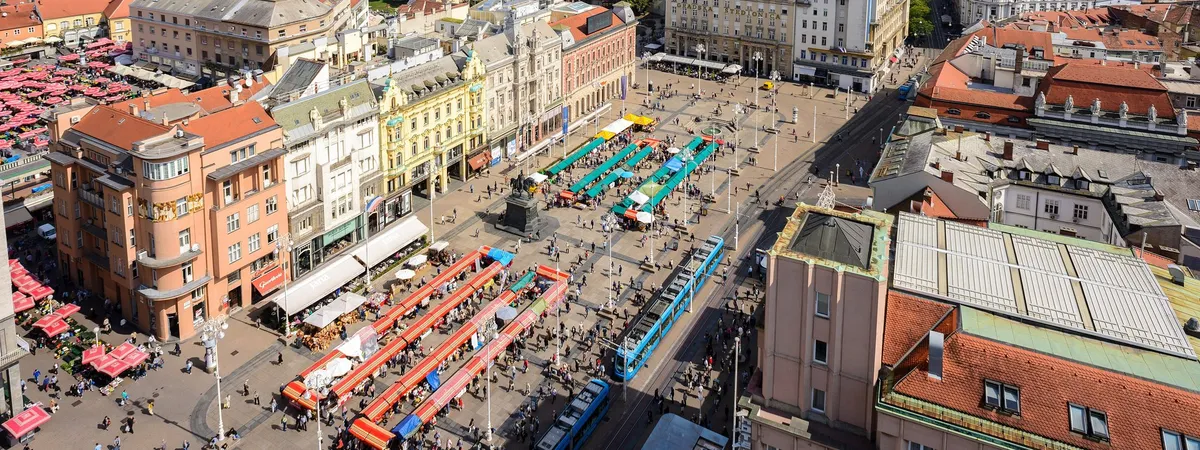
Zagreb
Best for: First-time visitors, Couples, Architecture lovers, Budget travelers
Akira Takiguchi / Wikimedia Commons, CC BY 2.0
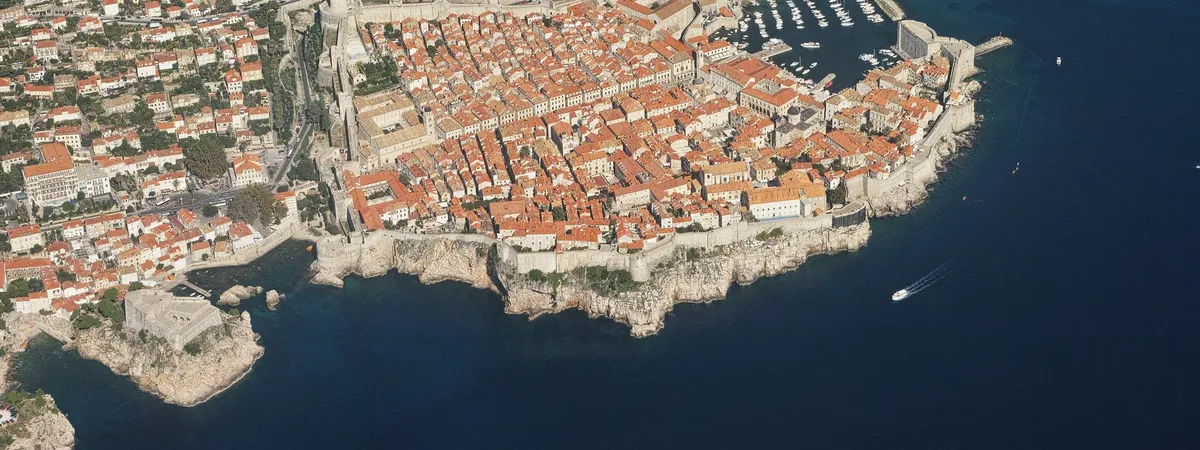
Dubrovnik
Best for: First-time visitors, Couples, Architecture lovers, Luxury travelers
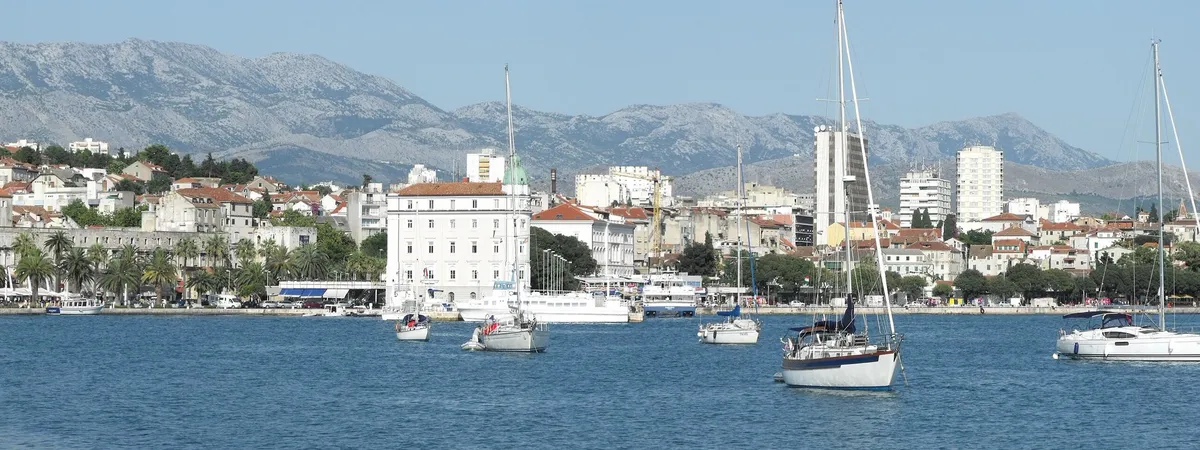
Gordan Sunara / Wikimedia Commons, Public Domain
Split
Best for: First-time visitors, Couples, Architecture lovers, Beach time
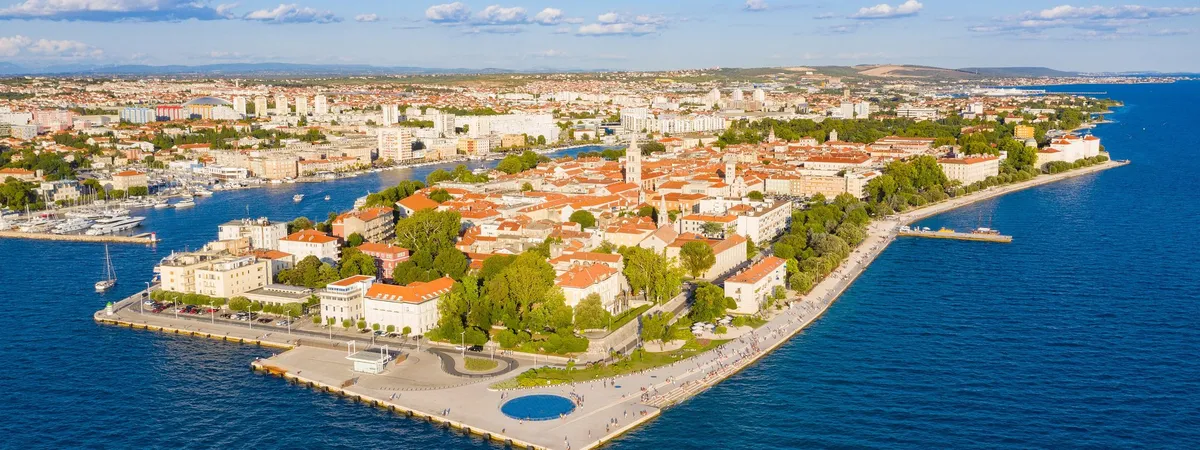
dronepicr / Wikimedia Commons, CC BY 2.0
Zadar
Best for: First-time visitors, Couples, Families, Beach time
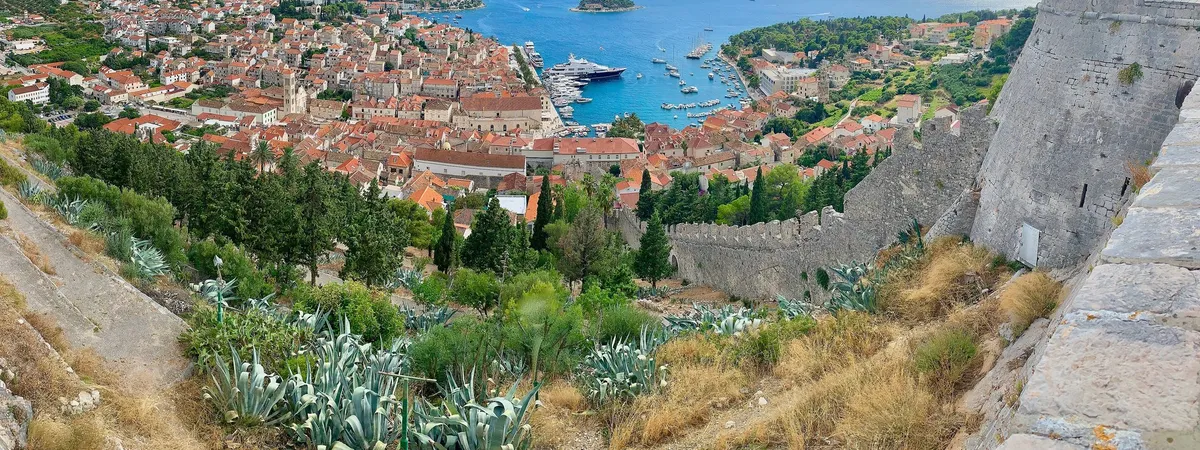
Steve Jurvetson / Wikimedia Commons, CC BY 2.0
Hvar
Best for: Couples, First-time visitors, Nightlife, Luxury travelers
Road trips
Tips
- If you're combining the coast with Zagreb, build in a stop at Plitvice Lakes National Park — it sits roughly on the direct route between the capital and Split, and needs most of a day.
- Book ferries between the mainland and islands like Hvar in advance during July and August — the fastest catamaran departures sell out days ahead in peak season.
- Dubrovnik's Old Town is at its most walkable early in the morning or after sunset, especially on days when cruise ships are in port and the main street gets genuinely crowded by midday.
Good to know
- Croatia has 10 UNESCO World Heritage Sites, including the Old City of Dubrovnik, Diocletian's Palace in Split, and Plitvice Lakes National Park.
- Croatia recorded over 21.3 million tourist arrivals in 2024, a record year and roughly five and a half times the country's own population.
- Croatia has more than a thousand islands along its Adriatic coast, though fewer than 50 of them are permanently inhabited.
Frequently asked questions
- How many days do I need in Croatia?
- Ten days to two weeks gives a realistic first trip covering Dubrovnik, Split, and one island like Hvar, with a stop at Plitvice Lakes if you're also routing through Zagreb. The coast rewards slowing down rather than rushing between every town, since ferry and drive times between destinations add up.
- Is Croatia expensive to visit?
- Dubrovnik and the main coastal towns in peak summer run close to prices in Italy or southern France, especially for accommodation. Zagreb, the shoulder-season coast, and inland towns are noticeably cheaper. Since adopting the euro in 2023, price comparisons with the rest of the eurozone are more direct than they used to be.
- Do I need a car in Croatia?
- It depends on your route. Dubrovnik, Split, and Zadar's old towns are all walkable and well connected by bus and ferry, so a car isn't essential if you're sticking to those. A car (or a well-planned bus/ferry itinerary) becomes more useful if you're adding Plitvice Lakes, driving the coastal road between towns, or visiting islands with limited public transport once you're there.