Last updated July 1, 2026

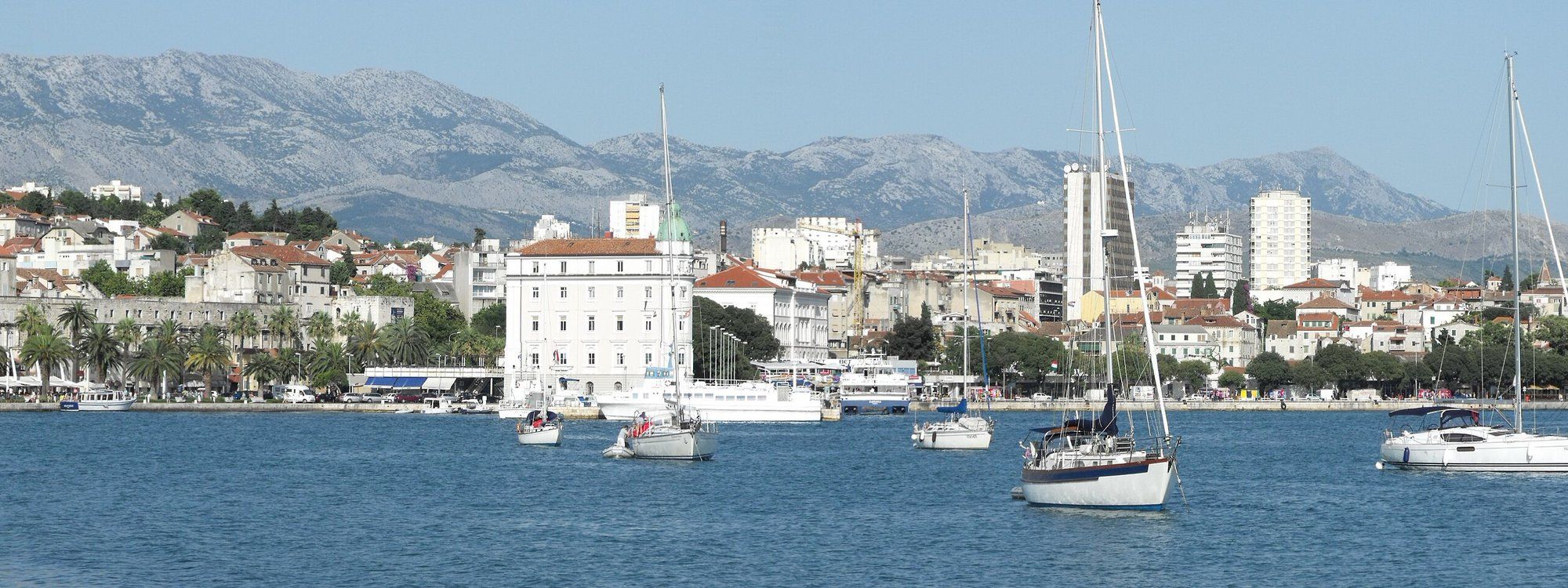
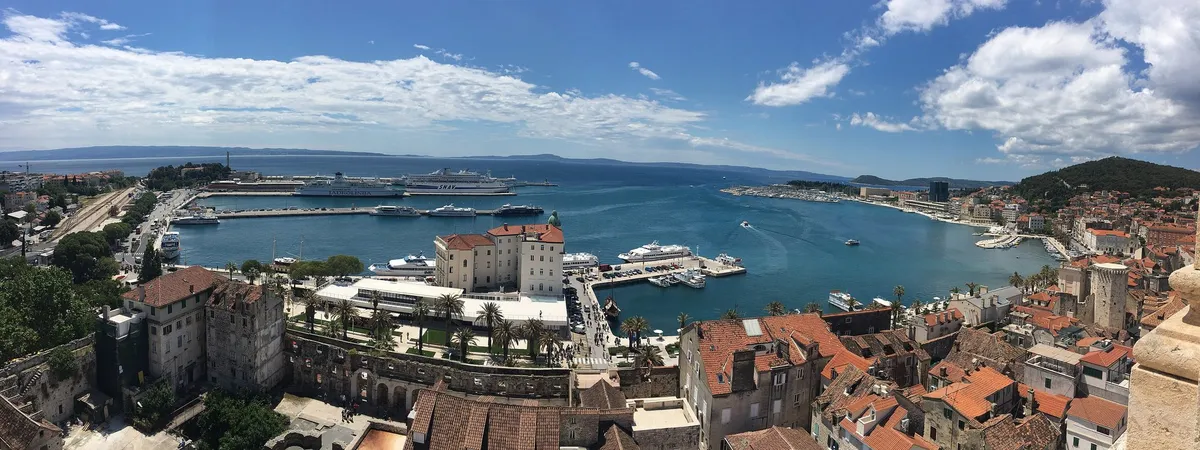
View of Split's harbor, Riva promenade, and the old town from the water

Gordan Sunara / Wikimedia Commons, Public Domain

Croatia

Where to Stay in Split

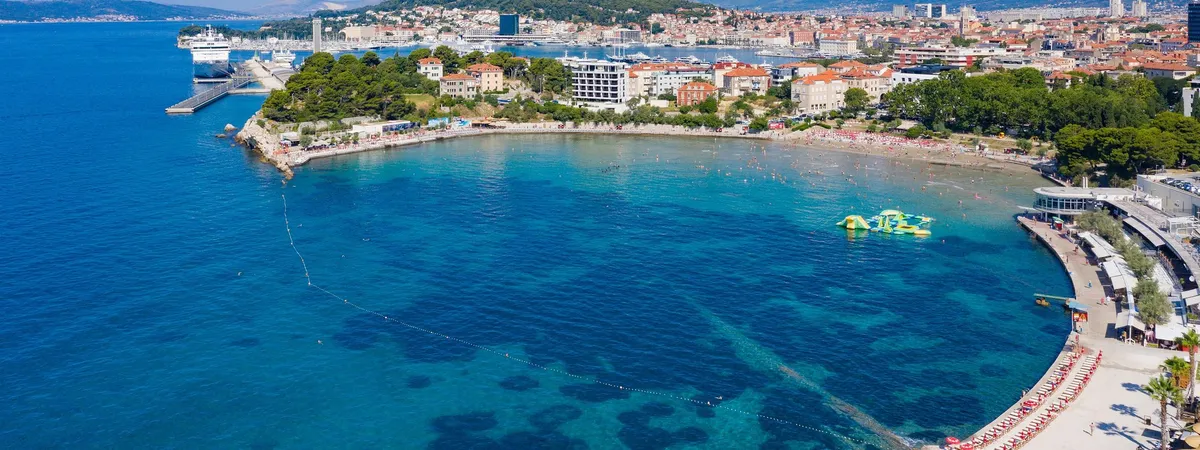
Split is built literally inside a Roman emperor's retirement palace. Diocletian had it constructed on the coast around the year 300 AD, and rather than falling into ruin, it just kept being lived in — for over 1,700 years, right through to today. What's now the old town is the palace: narrow stone streets thread through what were once imperial halls and cellars, opening onto the Peristyle square and the cathedral, with the Riva promenade running along the old sea-facing wall. Split is also a real, working Croatian city rather than a museum piece, which gives it a different feel from a place like Dubrovnik — busier, more local, with a big harbor that sends ferries out to the islands all day. Most visitors base themselves either right in or next to the palace walls, an easy walk to everything, or a few minutes away in Bačvice, the beach and nightlife district southeast of the center. Both put the same sights and the ferry terminal within reach. Split also works well as a jumping-off point for Hvar, Brač, and Vis — the harbor a few steps from the Riva runs frequent connections to all three — so a lot of trips use it as a first or last stop rather than the only stop.

Quick facts

Best time to visit
May, June, and September bring warm weather, a swimmable sea, and noticeably thinner crowds than the peak of July and August, when the Peristyle and Riva get genuinely packed and hotel prices climb. Winter is quiet and mild by Adriatic standards, though some restaurants close, ferries run a reduced schedule, and a handful of seasonal hotels close entirely.
Renting a car
A car is more hassle than help for a stay centered on the old town and Bačvice — both are walkable, connected by a short bus ride or taxi, and parking near the palace is scarce and metered. It's worth renting only if you're planning to explore the coast or the island interiors beyond what you can reach on foot from the ferry docks.

Where to stay

Compare neighborhoods

AreaBest forAdvantageTrade-off
Stari Grad (Diocletian's Palace)First-time visitorsThe most historic base possible — the Peristyle, cathedral, Riva, and ferry terminal are all a few minutes on foot.Loud and crowded in the core during summer days, and priced above comparable rooms in Bačvice.
BačviceBeach timeA real, swimmable sandy beach a short walk from the old town, with more nightlife on the doorstep than staying inside the palace walls.Genuinely loud near the clubs on summer weekend nights, and less historic in character than the old town itself.

Our picks for Split

A handful of editorial calls across every neighborhood above, not just the highest star rating — see each hotel's own card further down for the full case for and against it.

A couple of hotels in Stari Grad (Diocletian's Palace)

Stari Grad (Diocletian's Palace) is the top-recommended area to stay in Split.

Cornaro Hotel

★★★★★
  • 📍 Best location

Our take A modern five-star just outside the palace walls, big enough for reliable availability and for amenities — rooftop bar, spa, breakfast — that smaller old-town properties skip.

Highlights

  • A two-minute walk from Diocletian's Palace, just outside the pedestrian core.
  • A sixth-floor rooftop terrace and hot tub, with views over the old town.
  • A small wellness area with a sauna and jacuzzi.

What to know

  • Being outside the palace walls means it lacks the inside-the-monument feel some smaller hotels have.
  • Street-facing rooms pick up traffic noise from roads open to vehicles.
Check availability on Booking.com

Hotel Vestibul Palace

★★★★
  • 🏛️ Best for architecture & design

Our take The pick here comes down to genuine rarity — few hotels sit literally inside the walls of a 1,700-year-old palace, and Vestibul Palace stays small enough to still feel personal.

Highlights

  • Built into the walls of Diocletian's Palace beside the Vestibule, with Roman stonework still exposed.
  • Small scale and a separate villa keep it quiet for a location this central.
  • Handmade furniture and design details avoid the generic look many luxury hotels default to.

What to know

  • Built into the palace walls, so some rooms have smaller windows or unconventional layouts.
  • No vehicle access to the door, so arriving with luggage means a short walk from the nearest drop-off.
Check availability on Booking.com

Useful travel information

Croatia uses the euro. Cards are widely accepted, including in most old town restaurants and shops, though small konobas and market stalls sometimes prefer cash. English is common in hotels and tourist-facing businesses. The old town itself is fully walkable and largely car-free; the rest of the city runs on the Promet Split bus network, and the ferry terminal for Brač, Hvar, Vis, and Korčula sits a few minutes' walk from the Riva. Tipping around 10% at restaurants is appreciated but not strictly expected.

Tips

  • Book ferry tickets to Hvar or Brač a day ahead in July and August — the popular morning departures sell out, and buying at the dock leaves you stuck waiting for a later boat.
  • Walk the Marjan hill paths on the peninsula west of the old town for a quiet break from the crowds — most visitors never make it past the Riva, so the pine-covered trails and viewpoints stay noticeably calmer.
  • Visit the Peristyle and cathedral bell tower early in the morning — cruise-ship groups and midday heat both peak by late morning in summer.

Frequently asked questions

How many days do I need in Split?
One full day covers the palace, the Peristyle, and the Riva at a comfortable pace. Two to three days lets you add Bačvice beach time, the Marjan hill, and a half-day trip to a nearby island like Brač.
Is Split worth visiting if I'm also going to Dubrovnik?
Yes — they're different enough to both be worth it. Split feels like a lived-in city with a Roman palace at its center, while Dubrovnik is a more purely historic, postcard-perfect walled town. Split is also the more practical base if you're island-hopping, since its ferry connections are more frequent.
Can I stay inside Diocletian's Palace itself?
Yes, and unlike Dubrovnik's Old Town, quite a few small hotels operate within the palace walls, since the complex has always doubled as an ordinary neighborhood rather than a monument-only zone.